
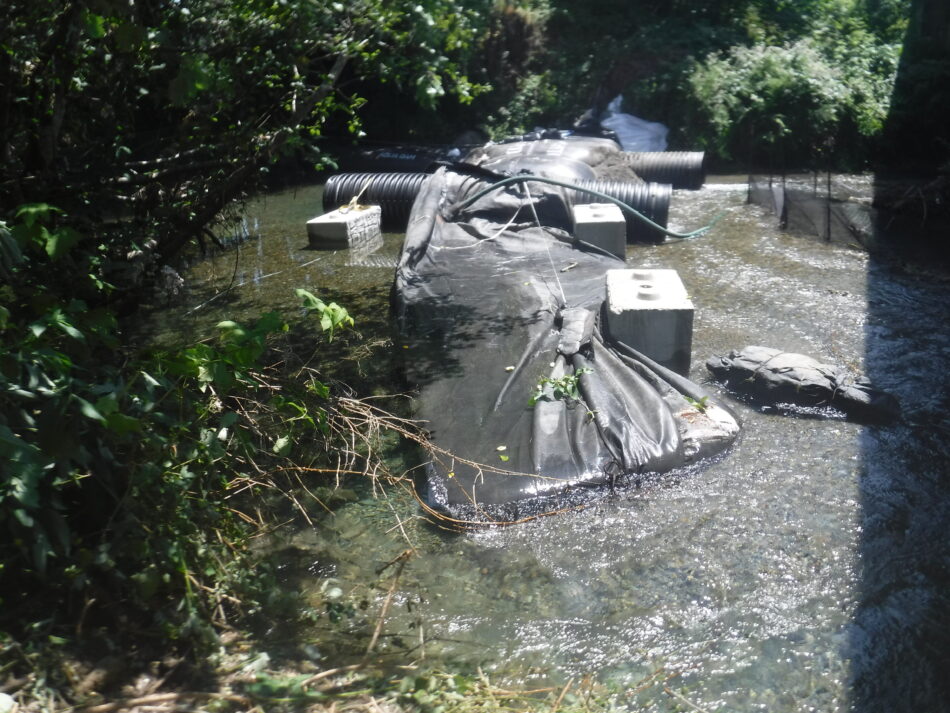
AquaDams® were once again deployed in Smith River, California, near the Rowdy Creek Fish Hatchery. For this project, 4ft tall AquaDams® were installed in Rowdy Creek just upstream of the Highway 101 bridge. The contractor implemented a flume pipe diversion system, directing water through 4ft tall culverts. However, the culverts selected for the diversion were not HDPE weldable pipe, which is the material Aqua Dam Inc. recommends for flume pipe diversion applications.
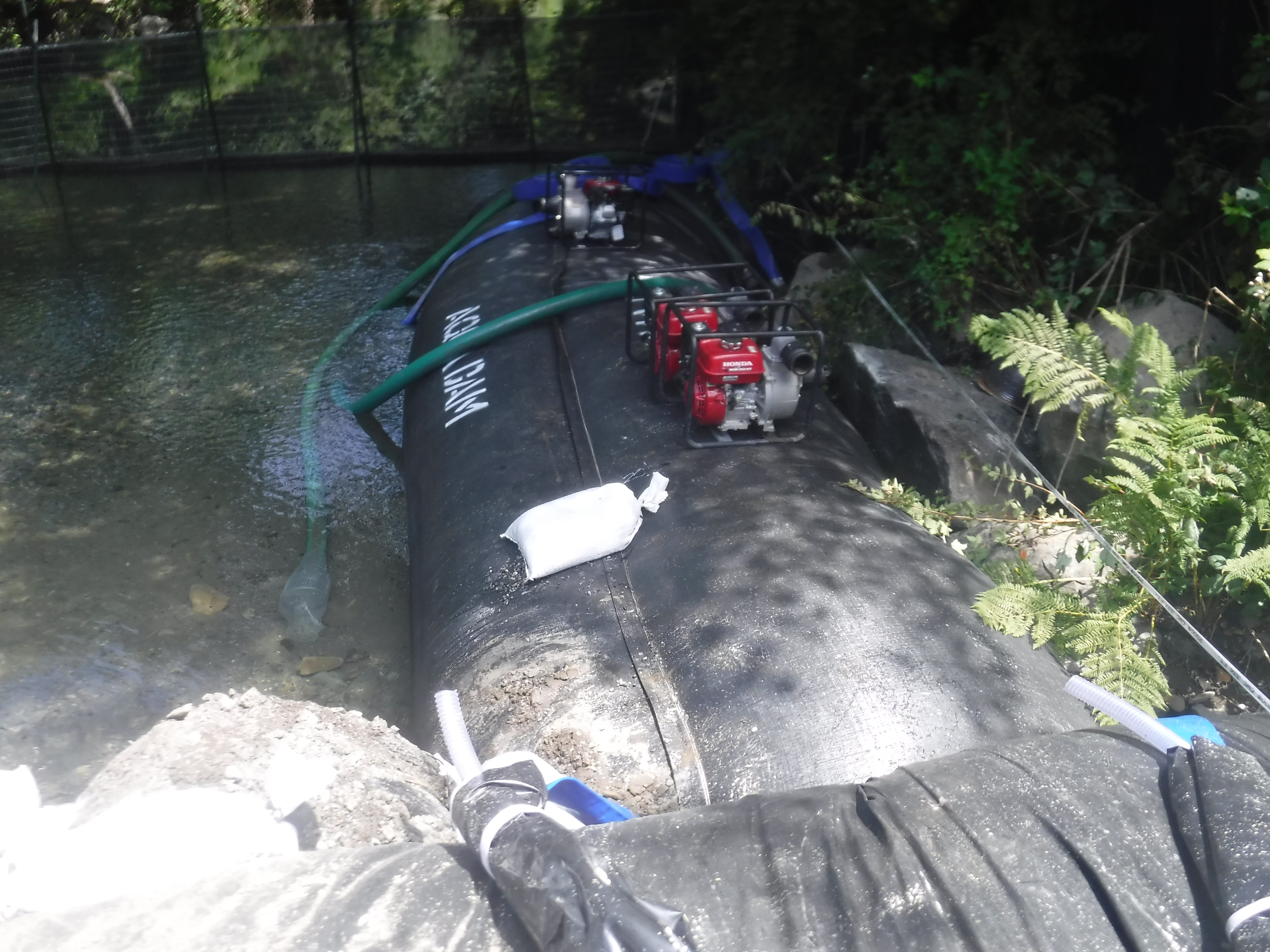
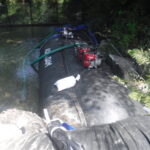
Workers used a 3ft tall AquaDam® as a stable platform for staging the water pumps required to fill the 4ft tall units. When fully filled, an AquaDam® provides a reliable and elevated work surface, making it well-suited for pump placement and other site operations.
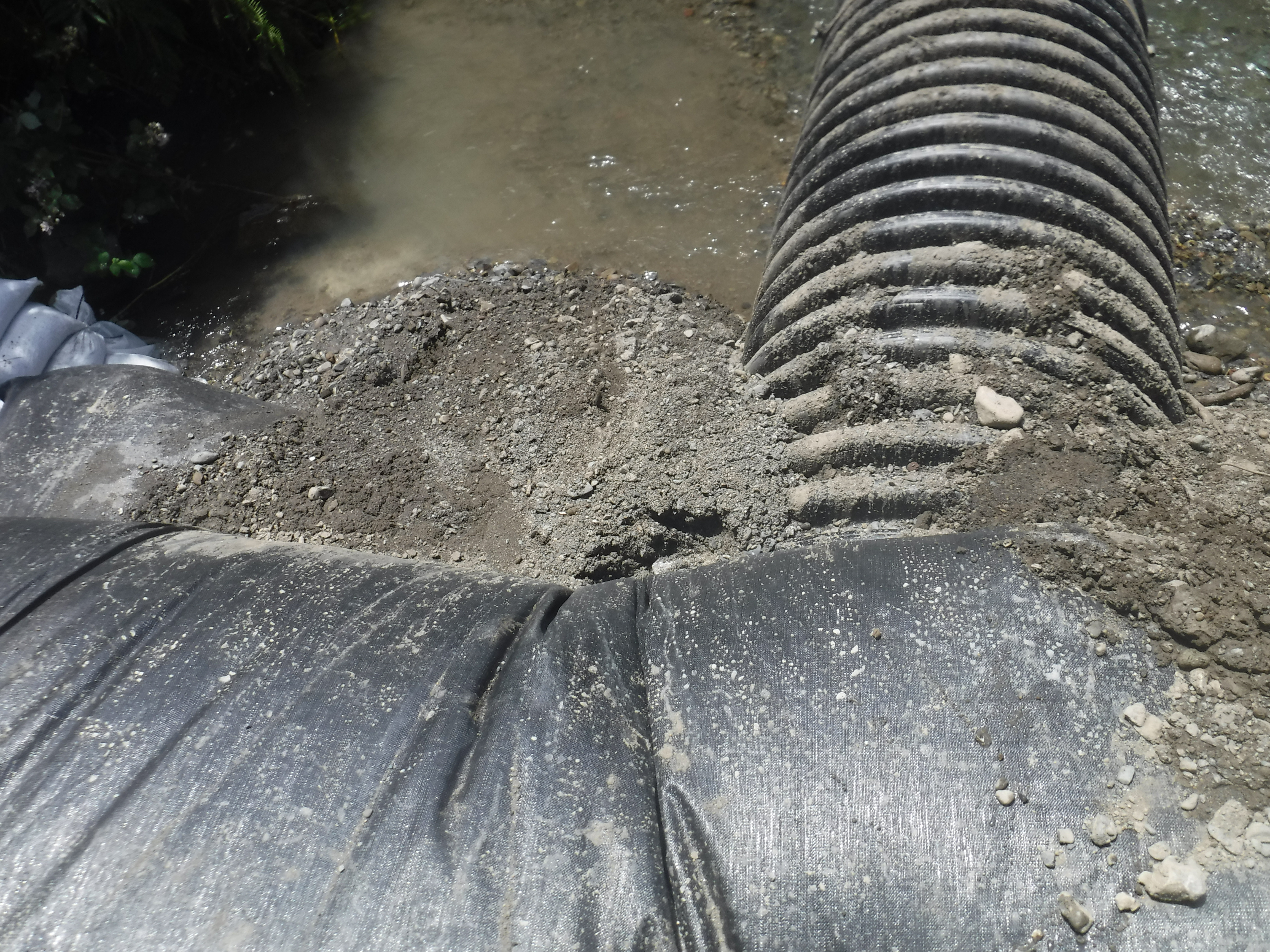
To address the inherent challenges of installation on a rocky substrate, site technicians deployed a combination of sandbags and native fill material at both the upstream and downstream interfaces of the AquaDam® units. This strategic placement served as a supplemental seal, designed to minimize under-seepage and enhance the hydraulic integrity of the barrier system within the porous creekbed environment.
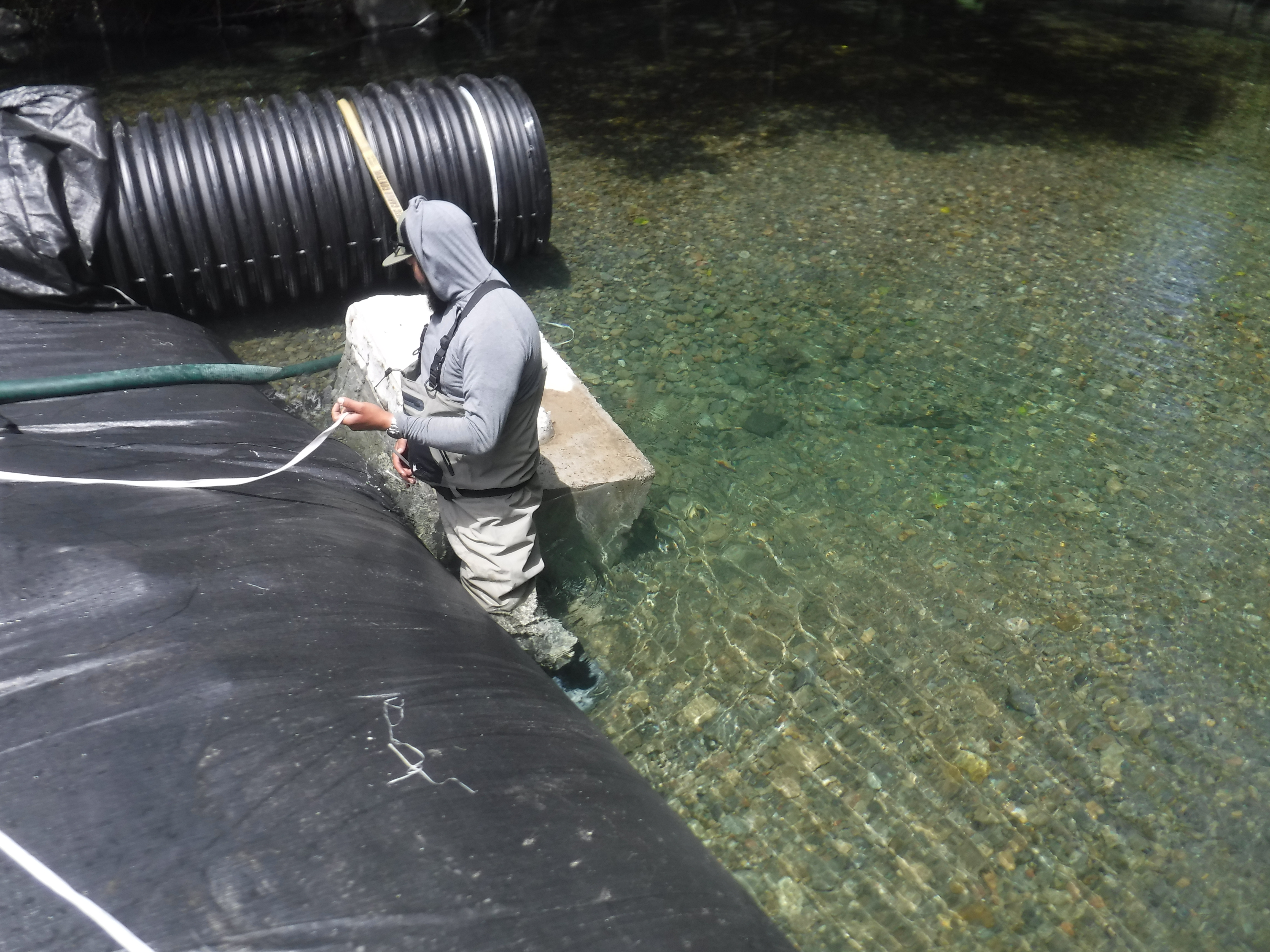
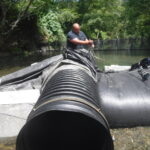
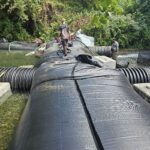
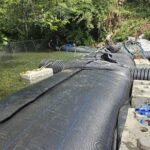
To ensure the stability of the diversion system, concrete ballast blocks were positioned within the riverbed and secured to the culverts via high-tensile strapping. In addition to securing the flume assembly, these blocks served as auxiliary structural supports for the AquaDam® units, providing lateral reinforcement and maintaining proper alignment against the hydraulic pressures of the current.
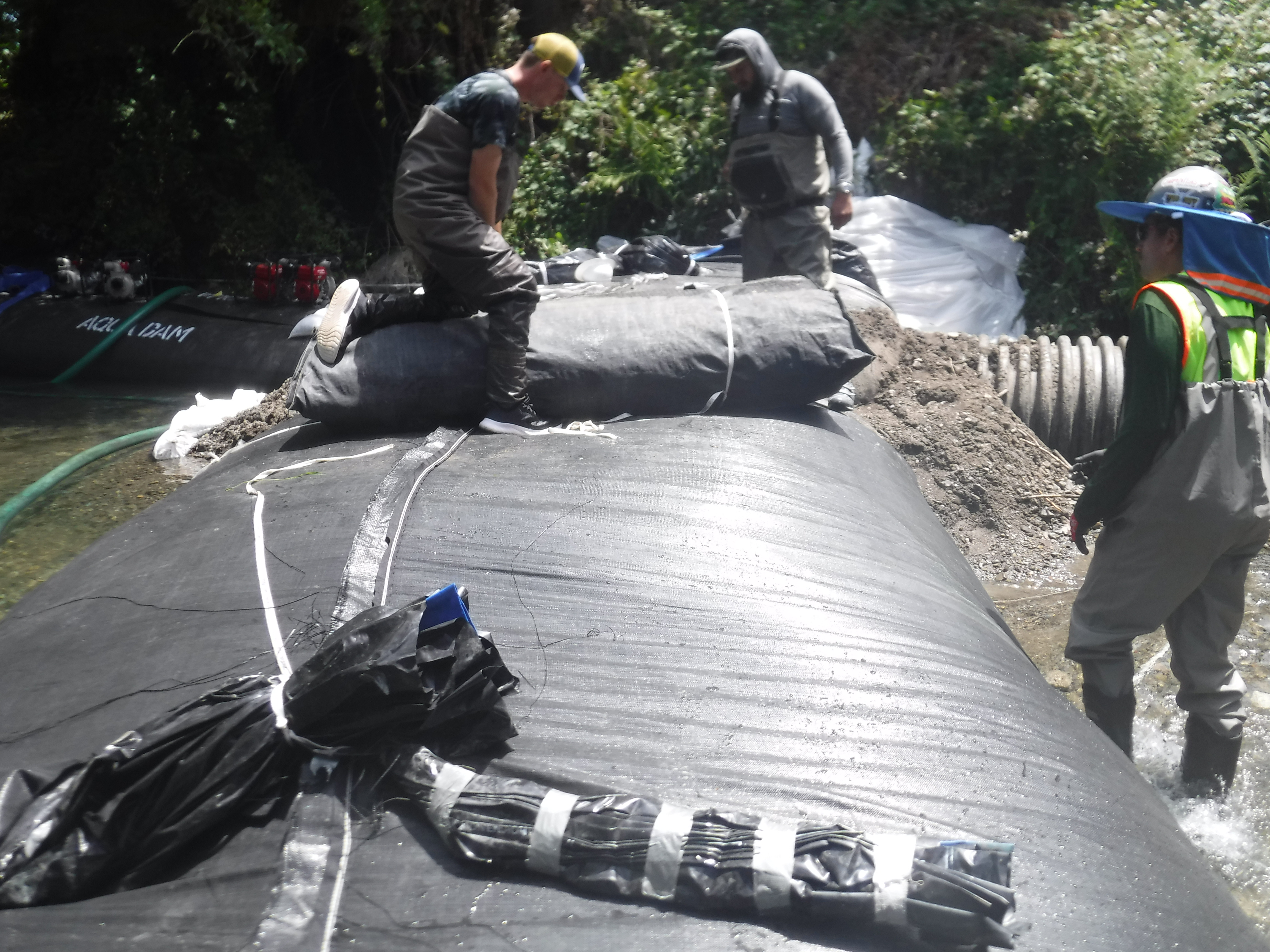
The crew is preparing to install a 4ft tall, 9ft wide (when fully filled), 70ft long single closed end (SCE) AquaDam®. AquaDams® are delivered rolled up similar to a carpet roll. Each unit is wrapped in protective covering and equipped with lifting ropes to facilitate safe and efficient handling on site.
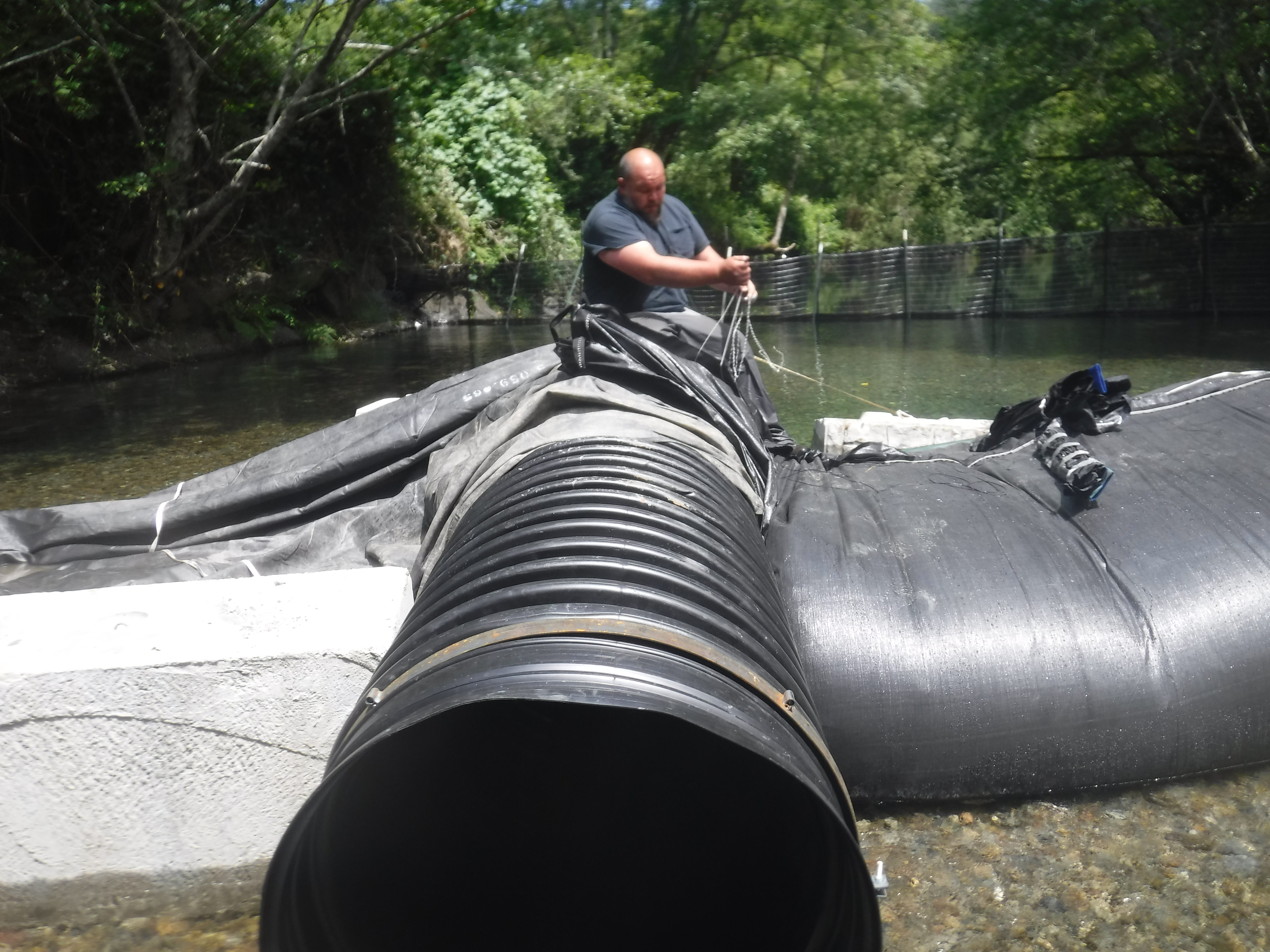
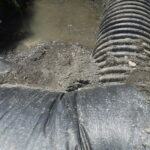
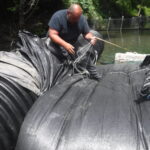
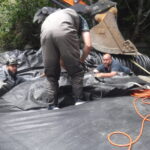
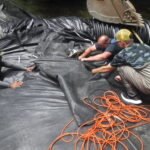
Workers needed to remove the mostly deflated 4ft tall AquaDam® (shown on the left), which had been installed into a connection collar. To access the interior, the crew chose to open the connection collar by removing the threads that secured its center seam. Once these threads were taken out, the team gained direct access to the open end and fill-tubes of the deflated AquaDam®, allowing for safe removal and handling.
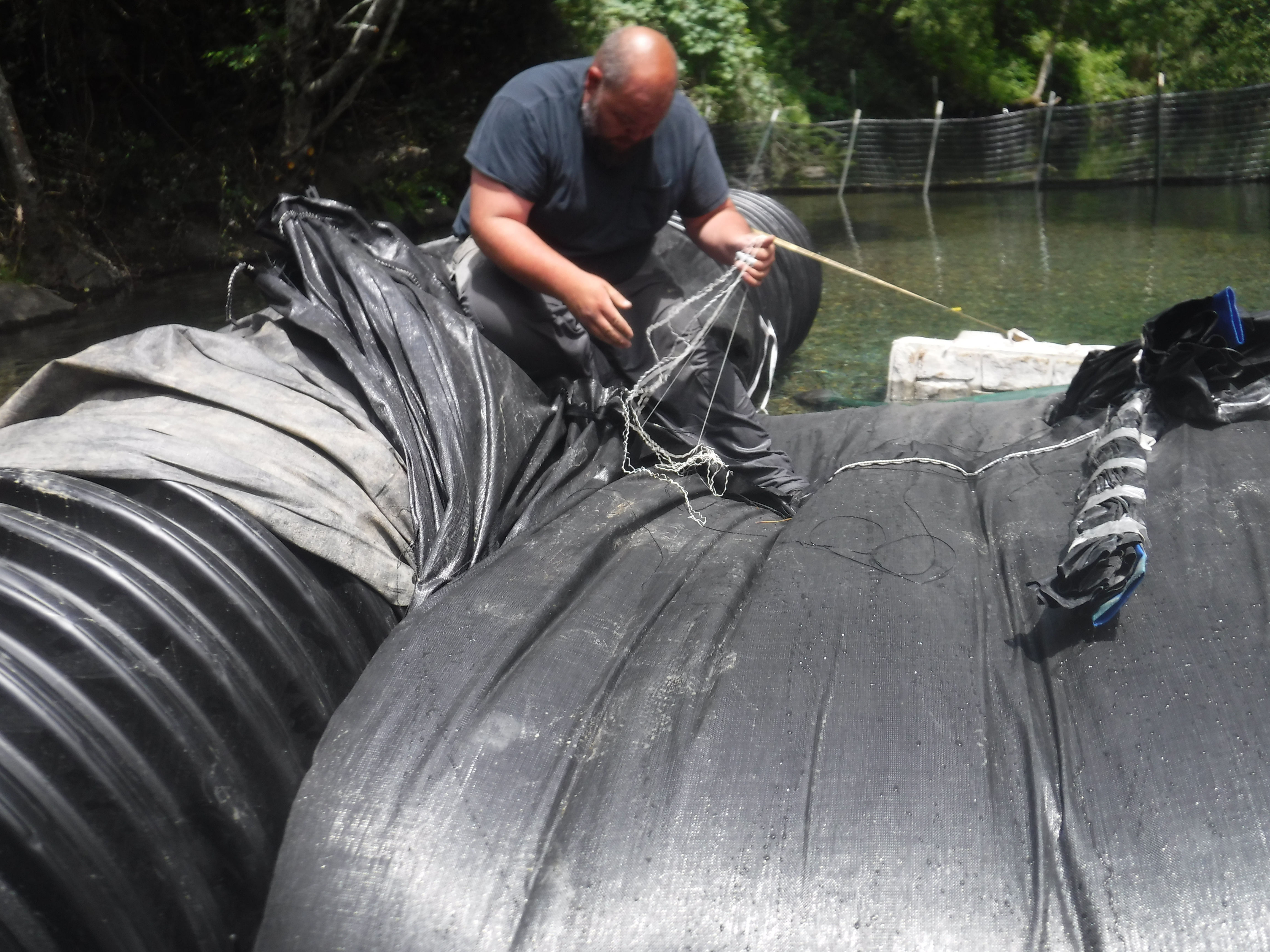
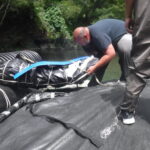
The threads are sewn using a chain-stitch pattern, allowing them to be pulled out easily, similar to opening a stitched dog food bag. Once removed, the fill-tubes of the deflated AquaDam® become accessible. In the photo, they can be seen on the right, wrapped in duct tape with a 3in lay-flat blue discharge hose extending from the end.
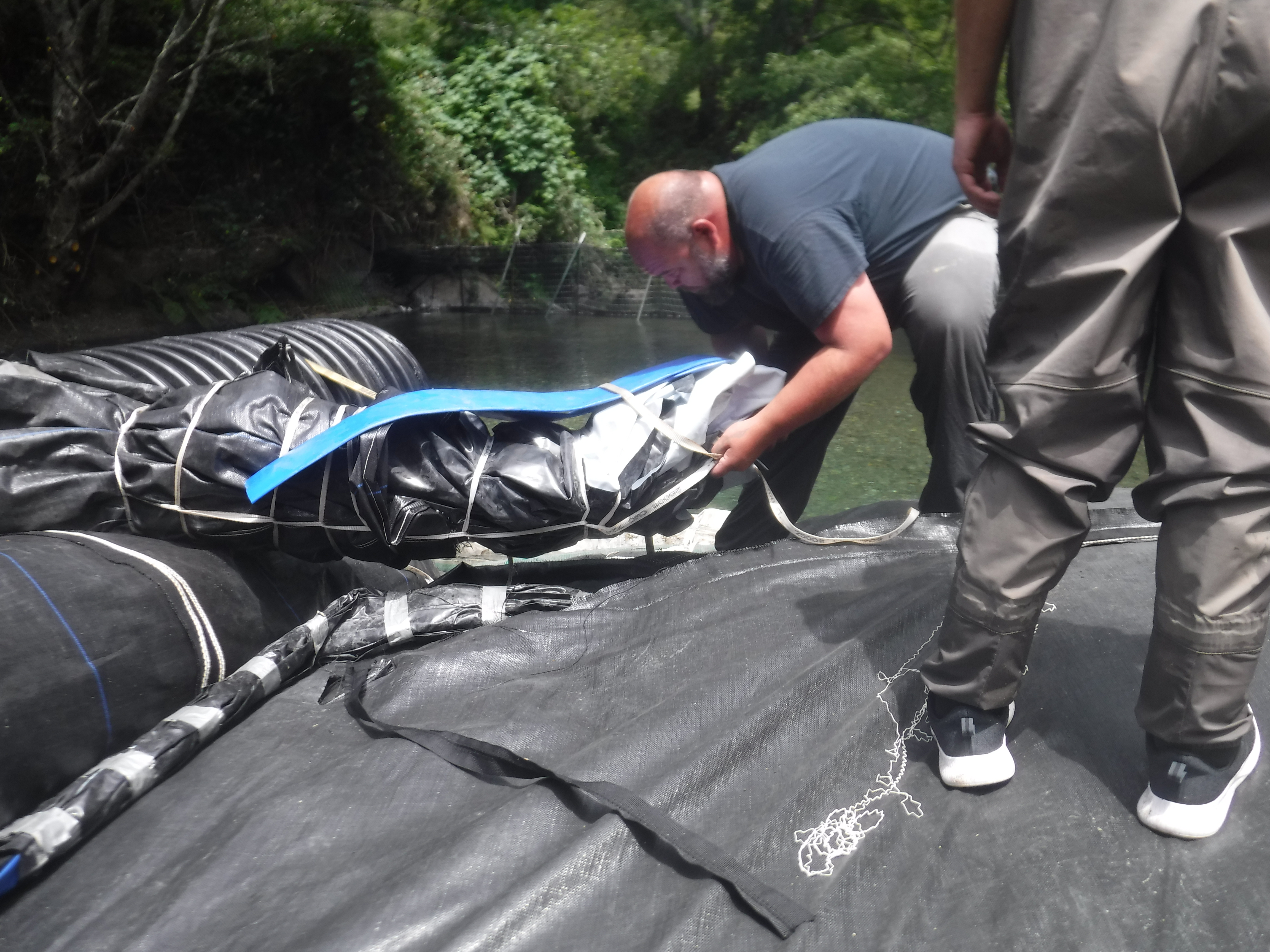
To facilitate the seamless integration of the 4ft SCE unit into the connection collar, site technicians secured the cinched open end and fill-tubes using high-strength bull line (flat synthetic webbing). The line was configured in a series of interlocking loops, similar to a daisy chain, to compress the terminal profile of the dam. This reduction in bulk ensures a smooth transition and proper seating when threading the unit into the collar assembly.
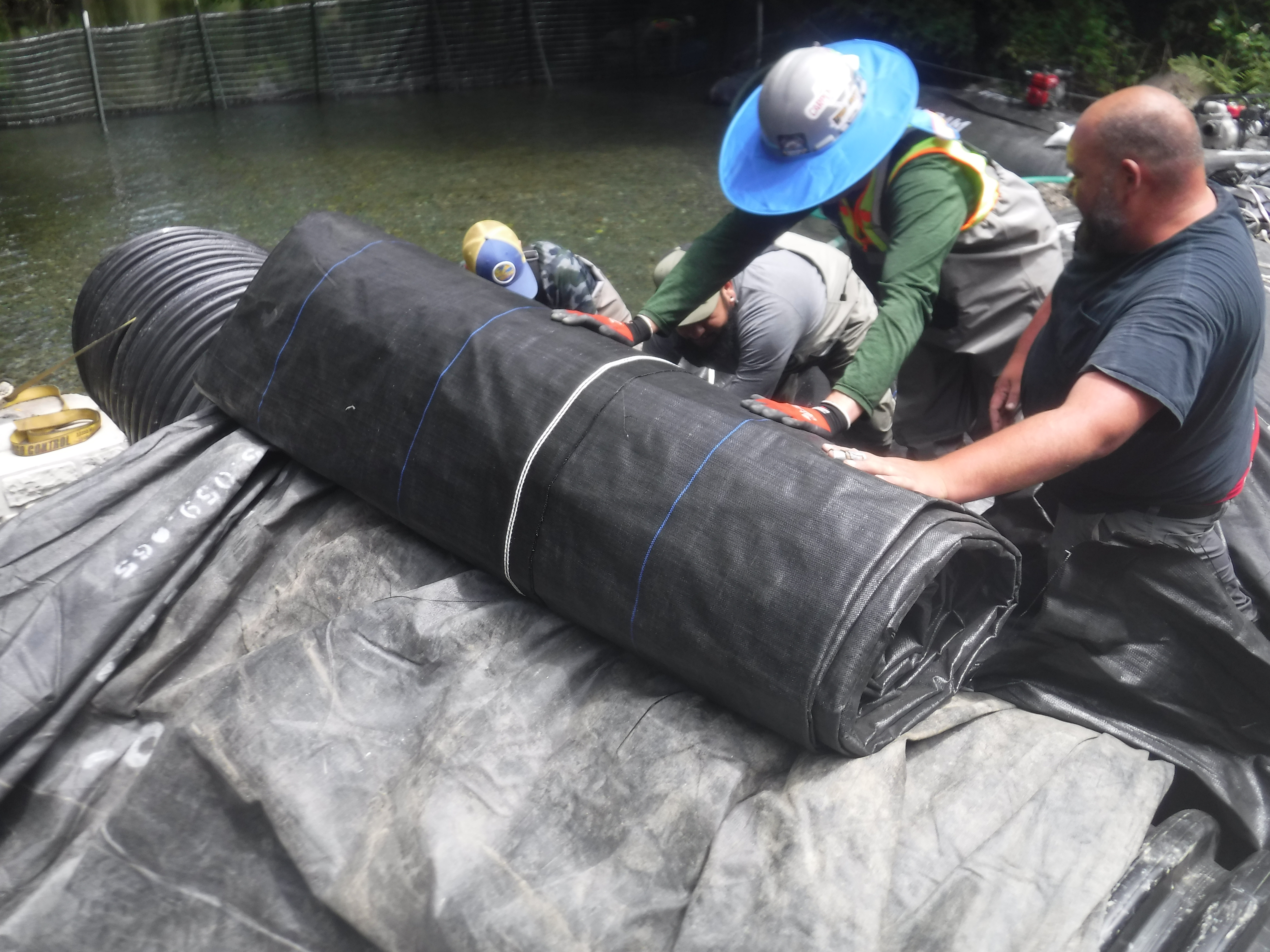
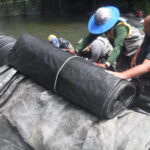
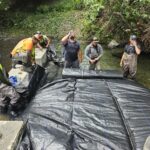
Workers have begun unrolling the 4ft tall by 70ft long SCE AquaDam®. Before filling can begin, the roll must be maneuvered up and over the 4ft diameter culvert. The bottom seam of the SCE AquaDam® is visible in the photo, identifiable by the line of white stitching.
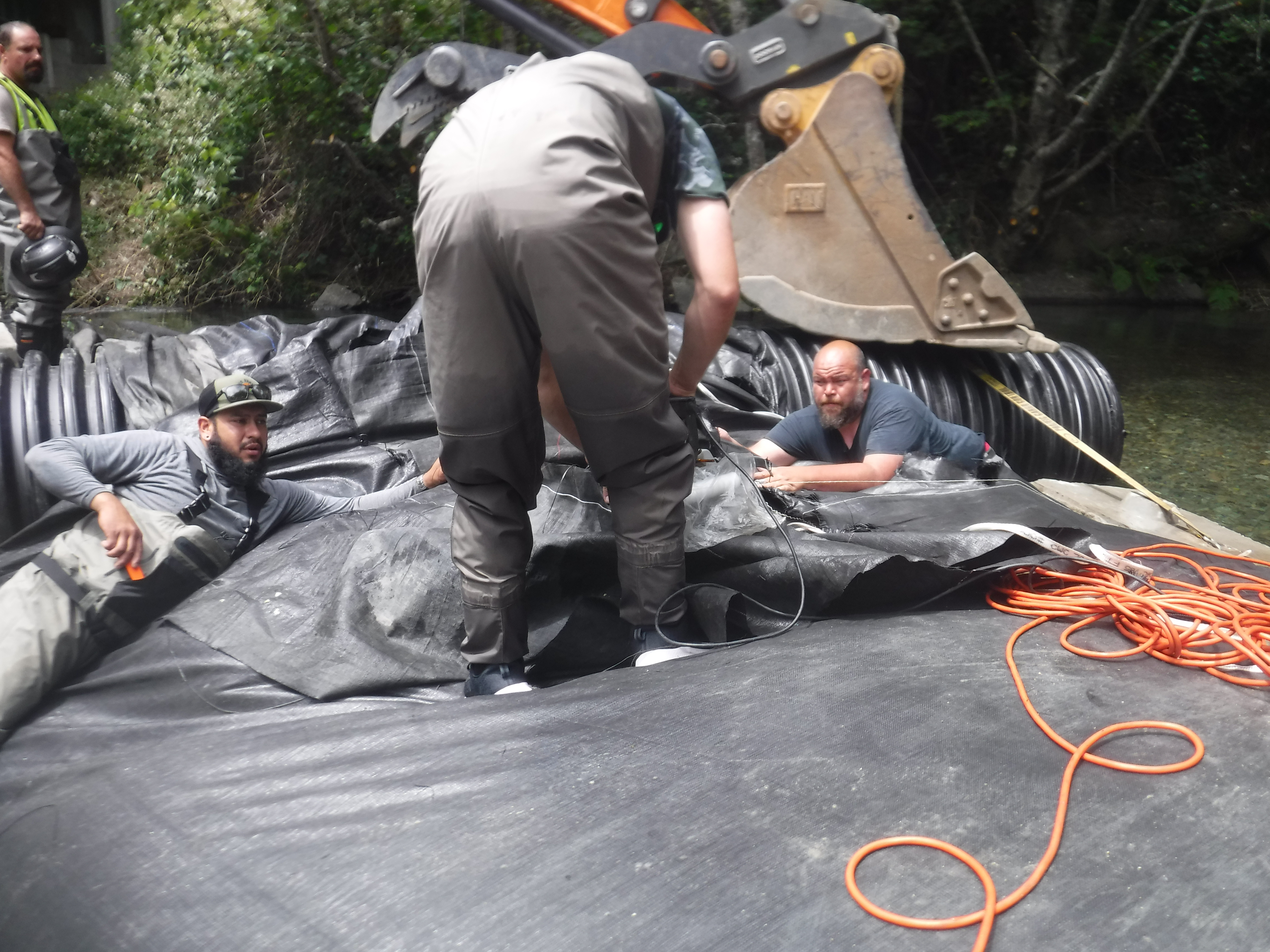
A handheld sewing machine was brought on site to allow the crew to re-stitch the material of the connection collar as needed. This type of equipment is not commonly present during AquaDam® installations, making it a relatively uncommon but practical field solution for addressing seam integrity and ensuring a secure connection in real time.
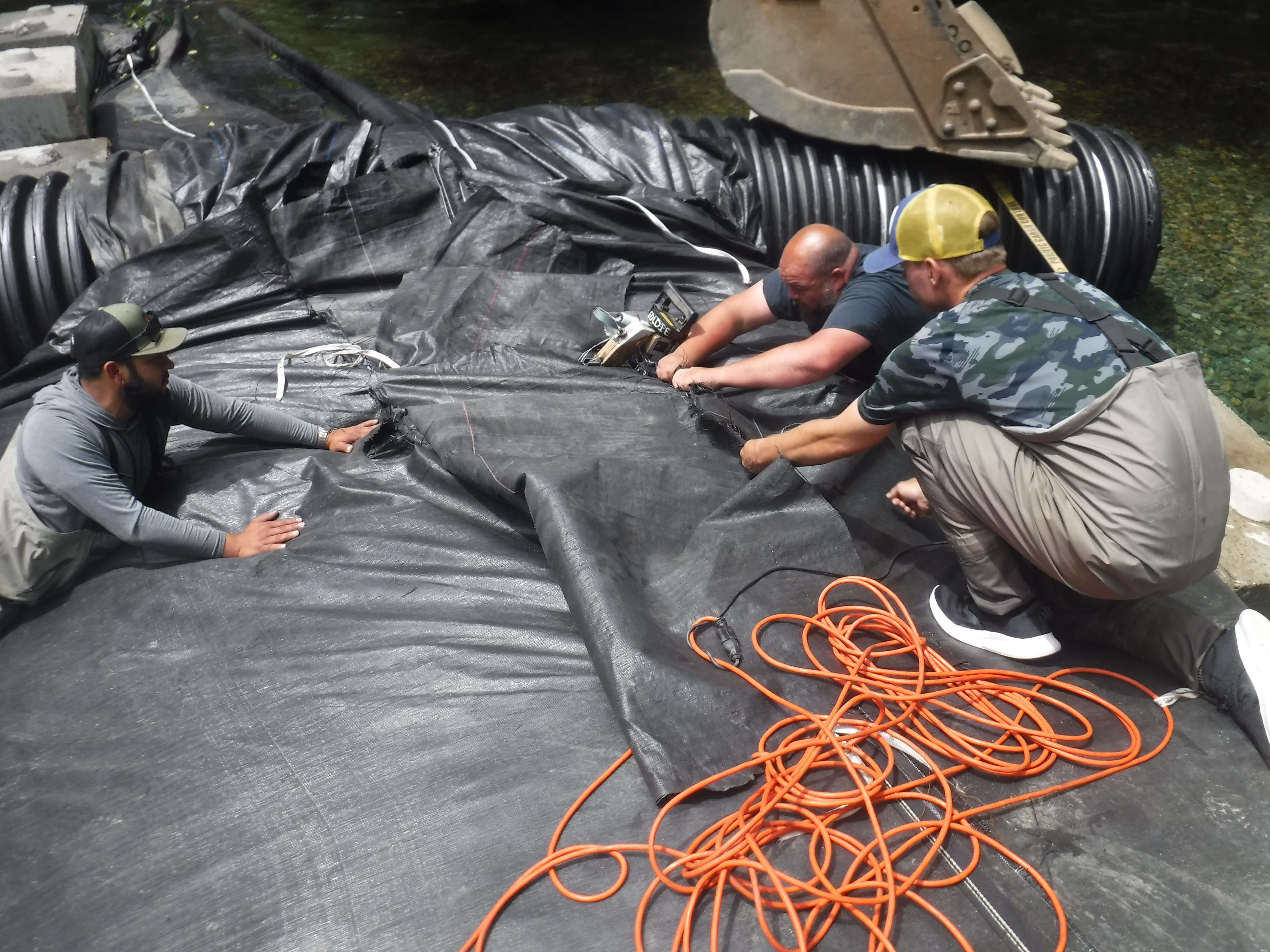
A section of the protective wrapper used to ship the 4ft tall SCE AquaDam® was repurposed as additional material to re-close the opened connection collar. The collar functions similarly to a Chinese finger trap, tightening around the adjoining AquaDam® as it is filled in place.
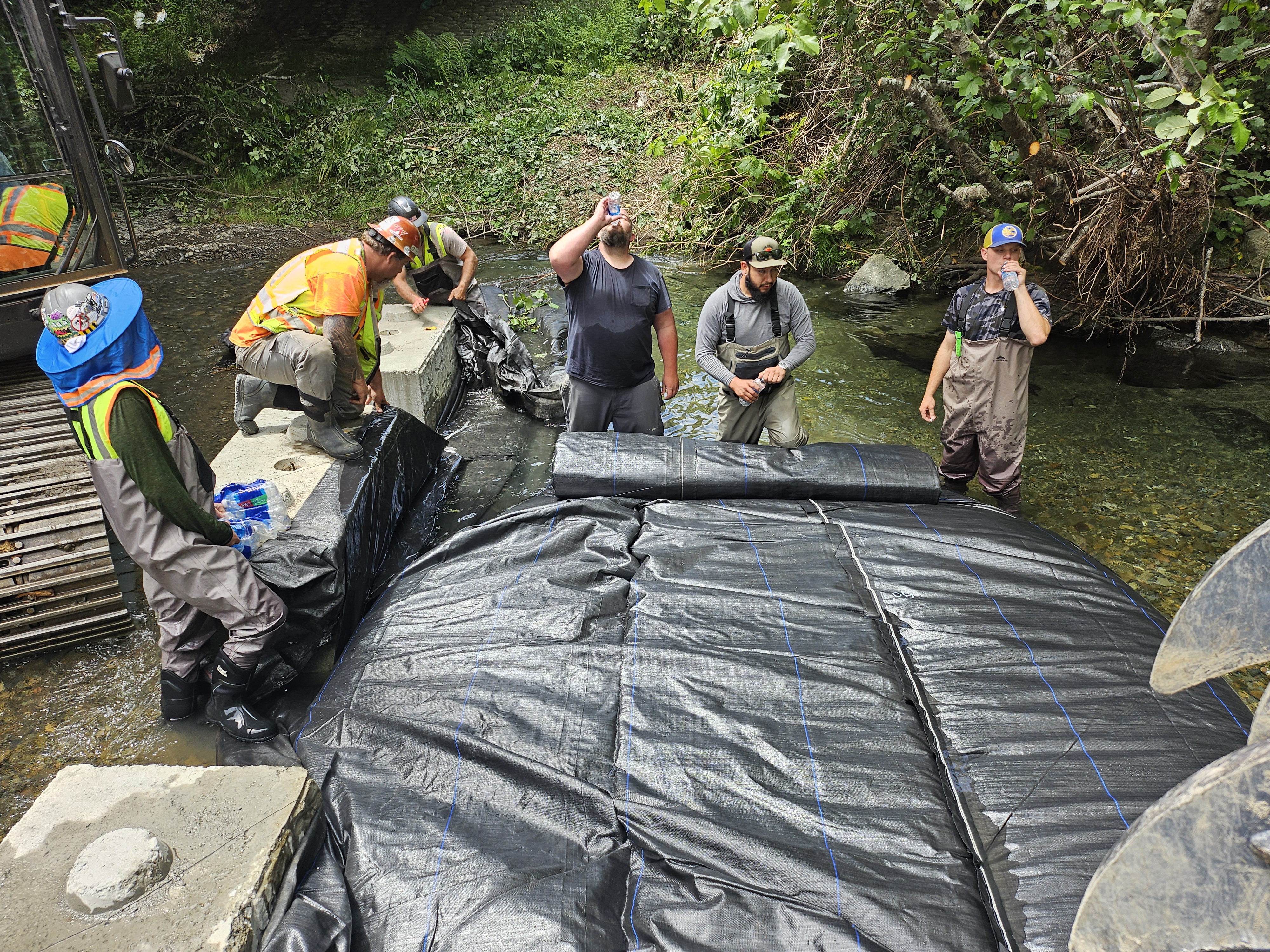
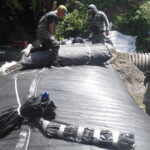
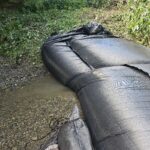
As the AquaDam® fills with water, internal pressure within the fill-tubes pushes against the rolled end, causing the unit to gradually unroll. Workers remain positioned behind the roll to prevent it from unwinding too quickly. Once the body of the 4ft tall AquaDam® reaches an appropriate height above the upstream water level, the crew allows the roll to advance a few additional feet before repeating the process.
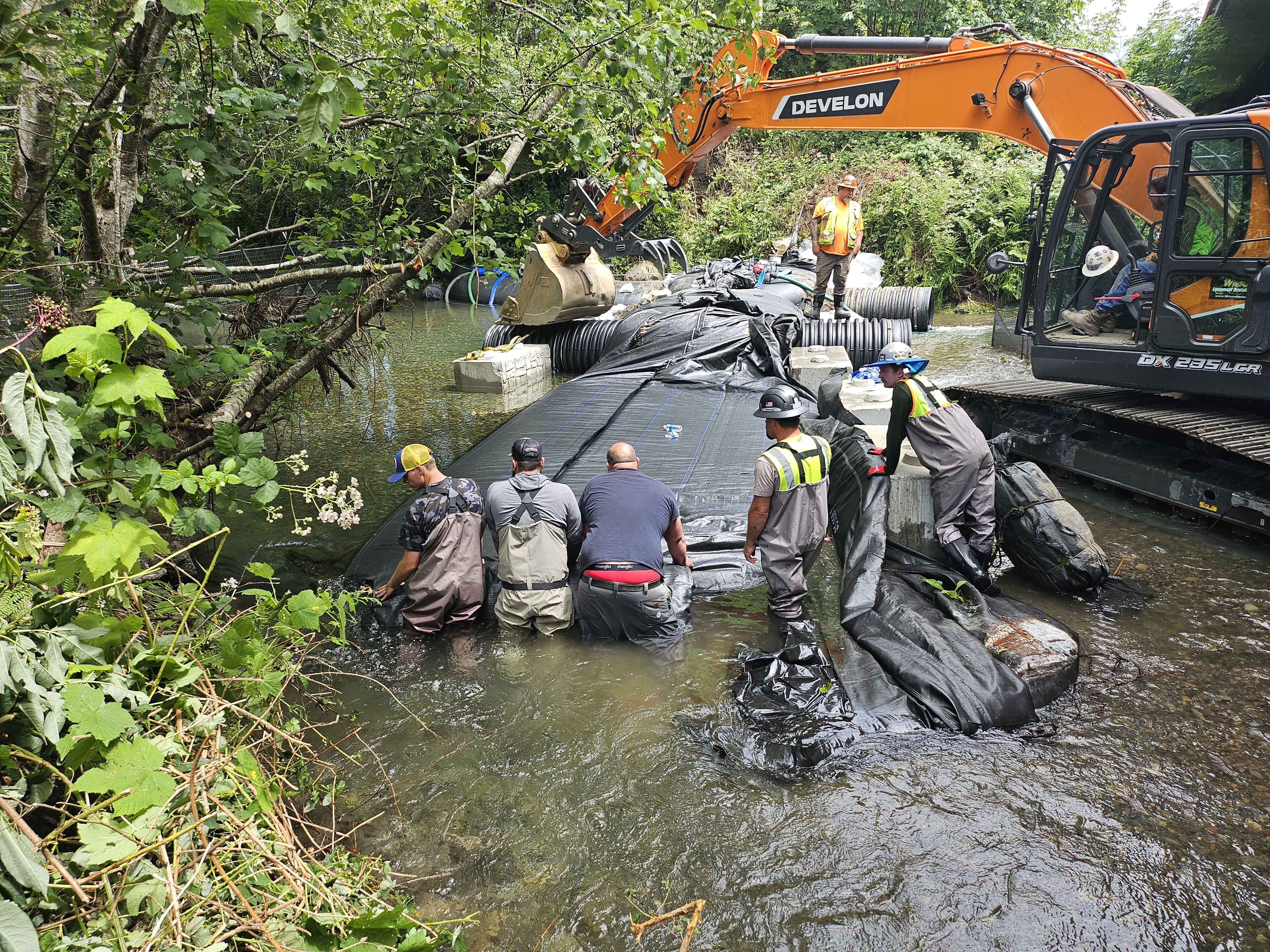
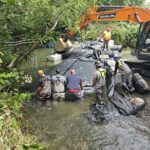
Even with the diversion pipes in place, the rising upstream water depth increased flow through the gap between the AquaDam® roll and the ending bank. As the water level builds up, the velocity becomes more aggressive, making it increasingly difficult to control. Ideally, an AquaDam® should meet both the starting and ending banks at a perpendicular angle. For this project, neither bank was adequately cleared or shaped to achieve that alignment.
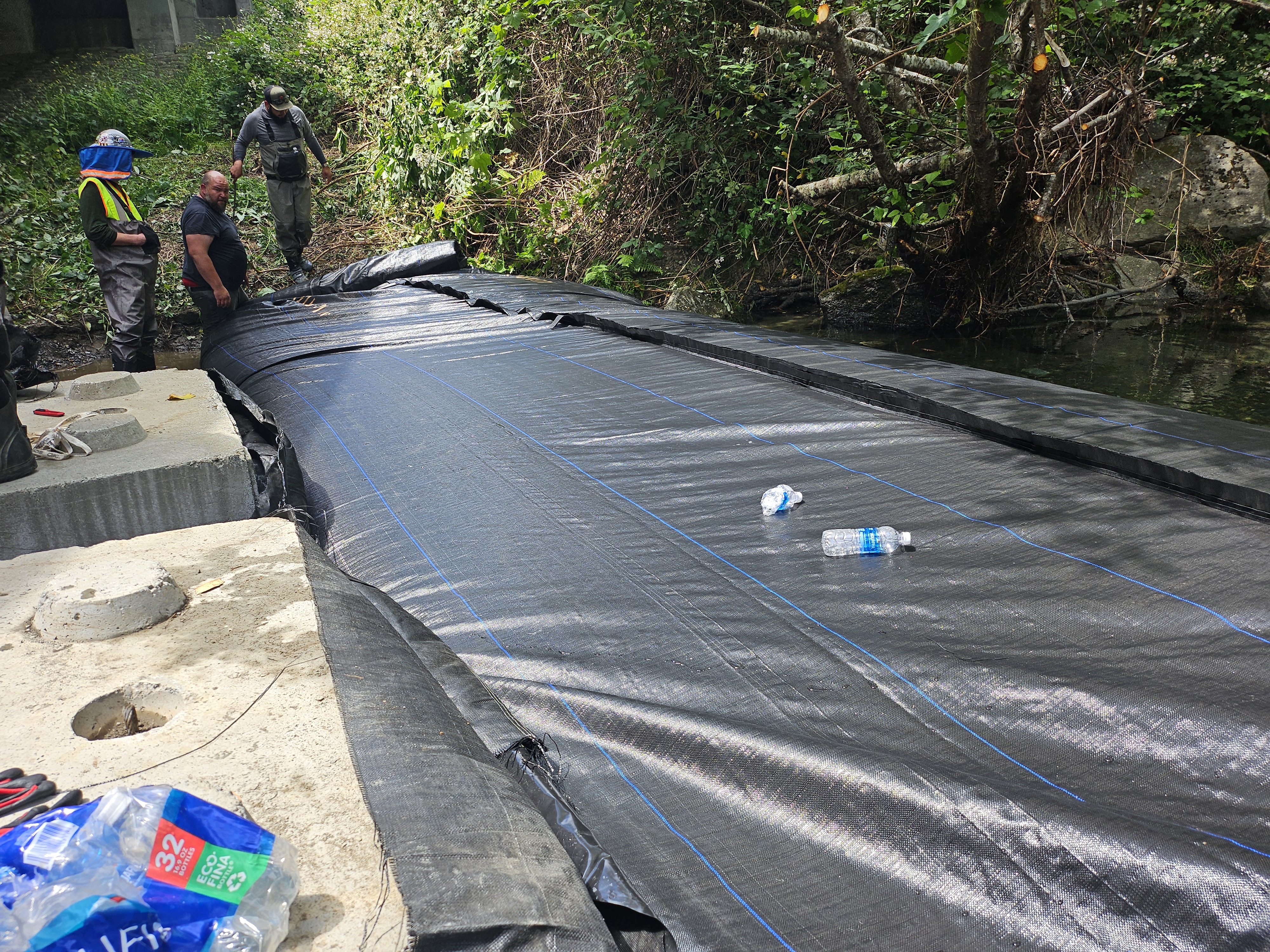
The 70ft long SCE AquaDam® has reached the ending bank; however, it is not aligned to engage the bank at a square, perpendicular orientation. This misalignment reduces uniform contact along the interface, resulting in the end of the AquaDam® only partially seating against the bank. As a consequence, hydraulic loading at the downstream end became uneven, increasing localized stress concentrations on that side. It is important for both tubes to be filled equally.
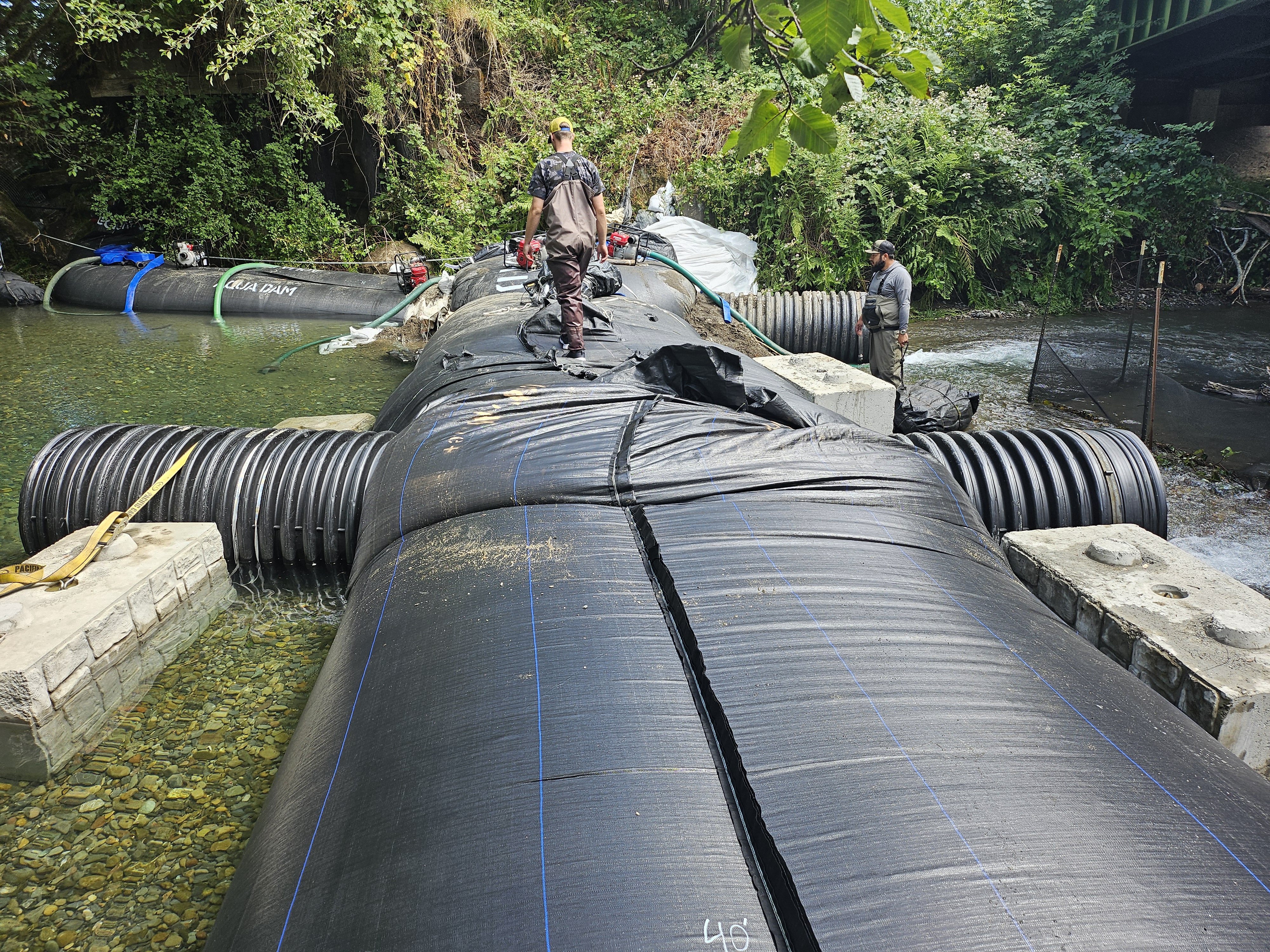
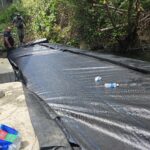
The 4ft tall AquaDam® cofferdam system is now fully installed and operational. A clear differential in water surface elevation is visible between the upstream and downstream sides, demonstrating effective flow control and isolation of the work area.
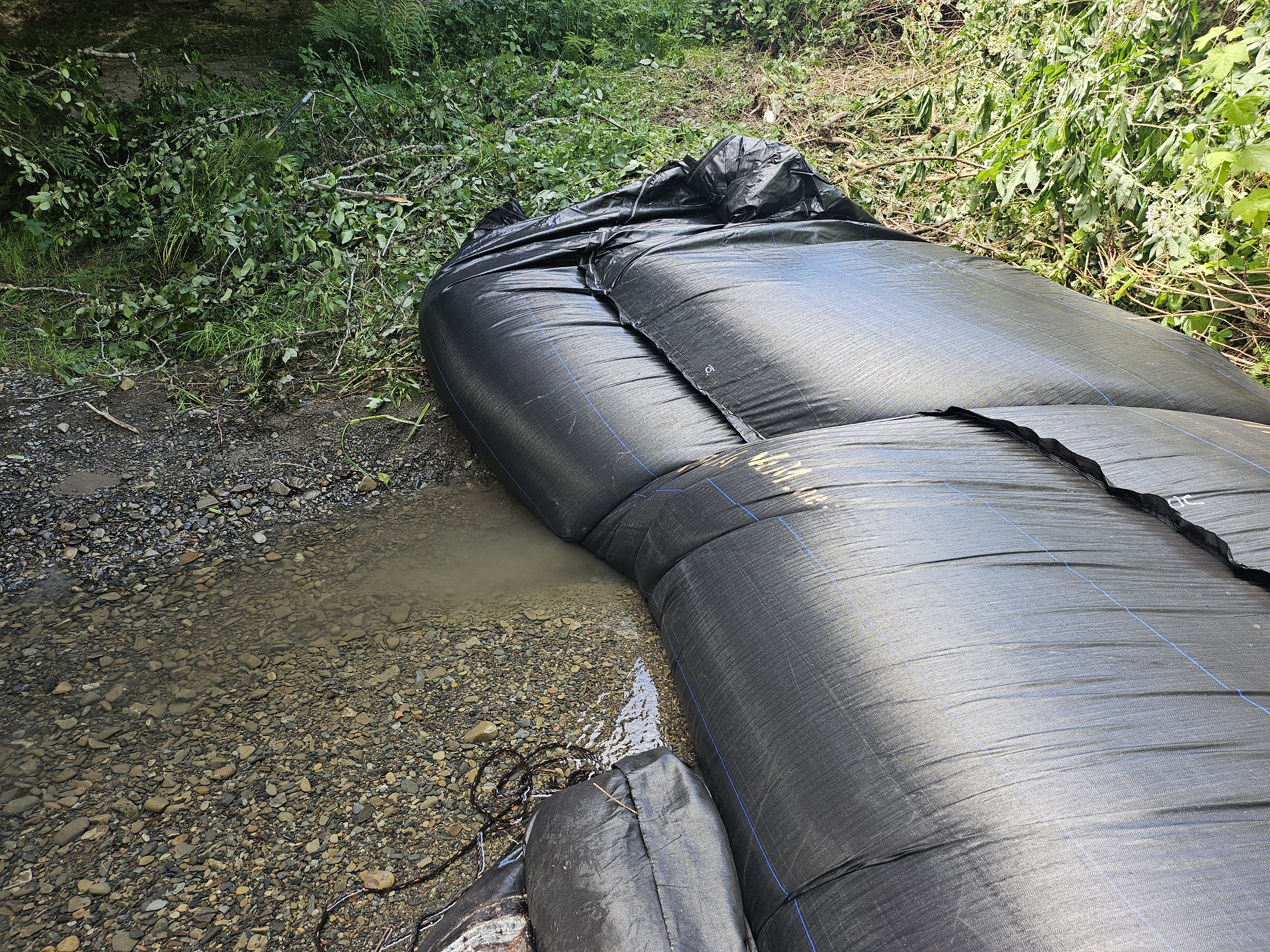
During the filling sequence, the internal water volume naturally gravitates toward the lowest topographical points of the creekbed, allowing the AquaDam® to gradually achieve its design shape and seat itself firmly against the substrate. While the final orientation of the unit at the ending bank deviates from ideal specifications due to site-specific constraints, the system continues to perform its primary function.
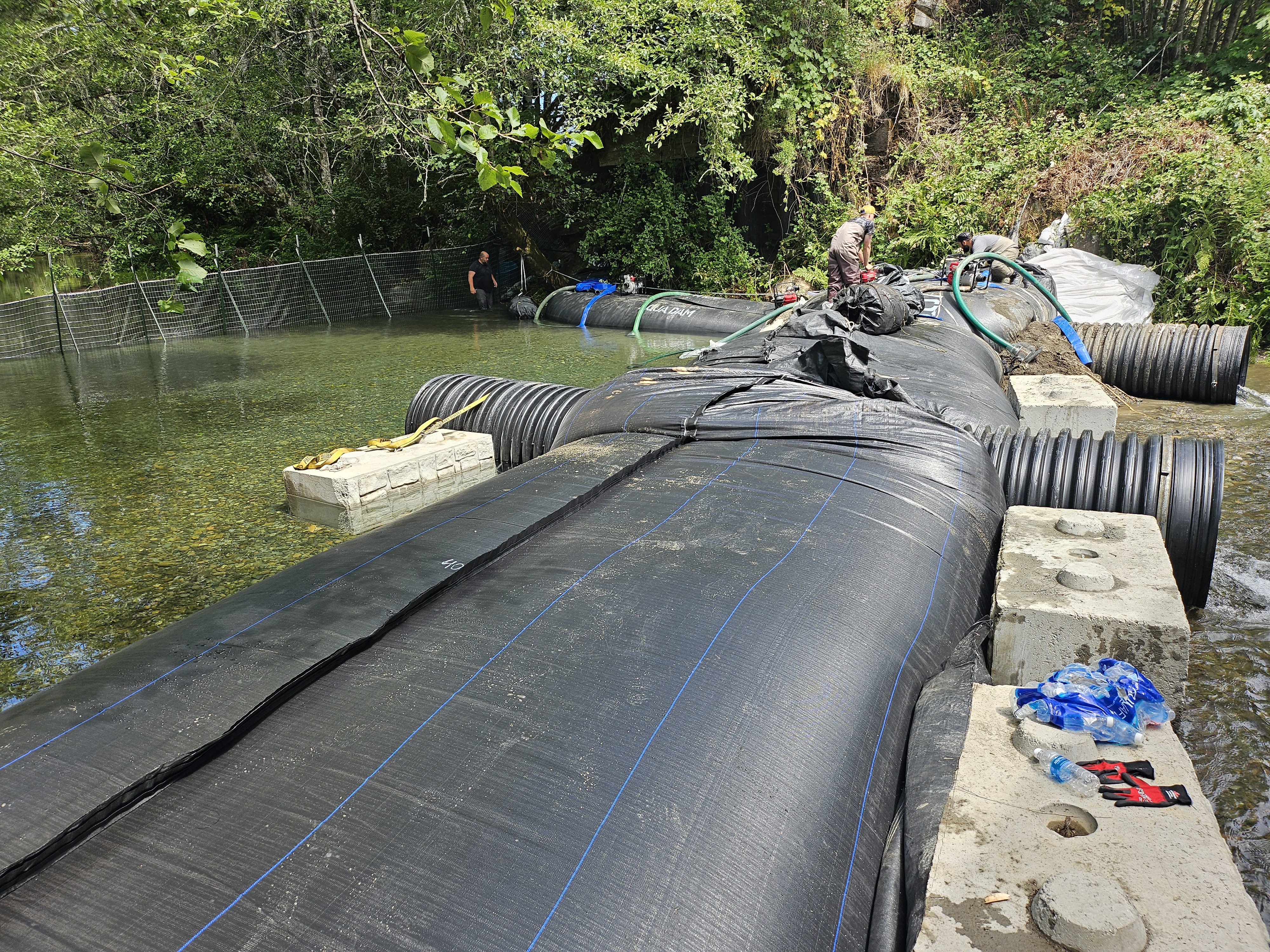
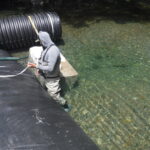
The upstream water depth is nearly 3ft deep, while the downstream side is only a few inches. Concrete blocks were placed in the creek bed on the downstream side to help support the AquaDams®. Despite the challenging site conditions and non-square ending, the AquaDam® system has successfully established a robust hydraulic barrier, maintaining effective site isolation and controlling the current to allow work to proceed safely.
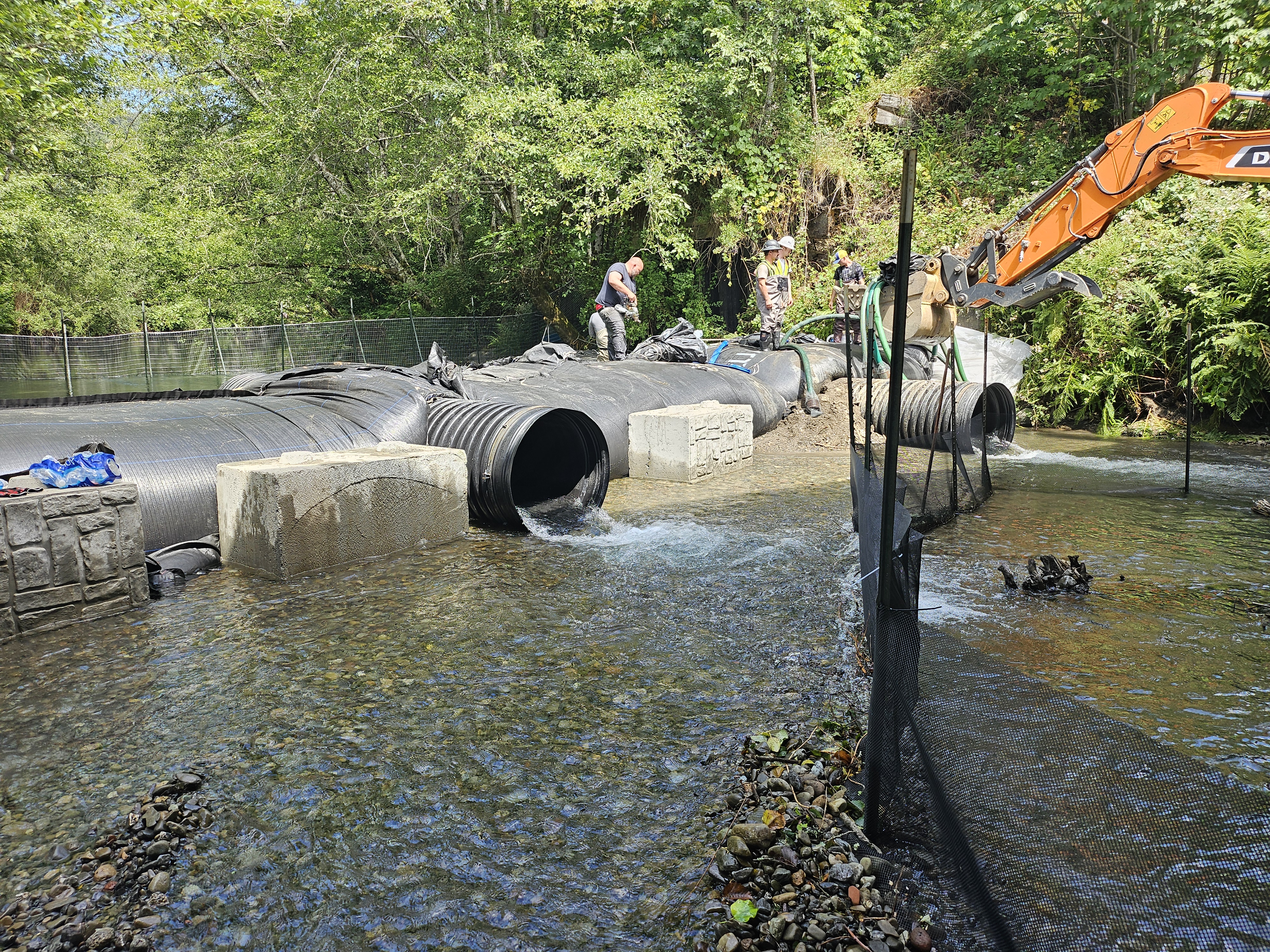
This diversion is technically only impeding flow at the cofferdam system itself, which has significantly reduced the downstream water depth. By restricting water movement at this point, the AquaDam® system effectively lowers hydraulic pressure and velocity downstream, creating a controlled work environment.
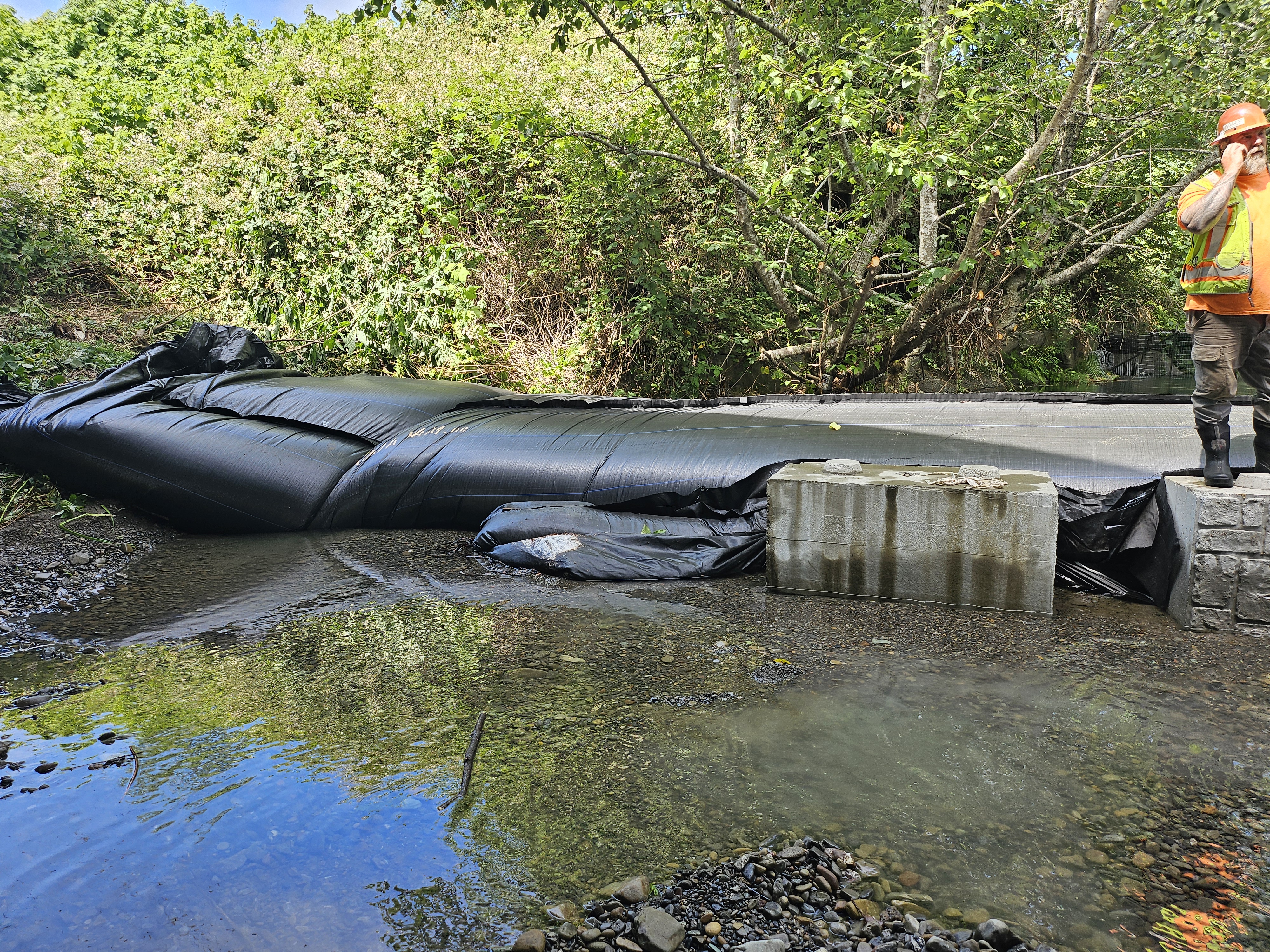
The inch or two of water visible on the downstream side of the AquaDam® cofferdam system is primarily water exiting the two culverts, along with a small amount of expected seepage. Some seepage is normal for any cofferdam installation and should always be anticipated during planning and operation. Overall, the system is performing exactly as intended. Excellent work by the entire crew, well done!
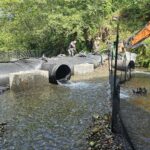

Three 4ft Tall 9ft Wide (fully filled) Single Closed End (SCE) AquaDams® with Connection Collars, Rowdy Creek Fish Hatchery, Rowdy Creek, Flume Pipe Diversion, Line Configuration