
A few weeks after a 16ft tall by 320ft long double closed end (DCE) AquaDam® was installed, the contractor required an alternative solution for managing the unwanted seepage water. At that time, the contractor was operating four pumps, a 10in, two 6in, and a 4in unit, to control the seepage.
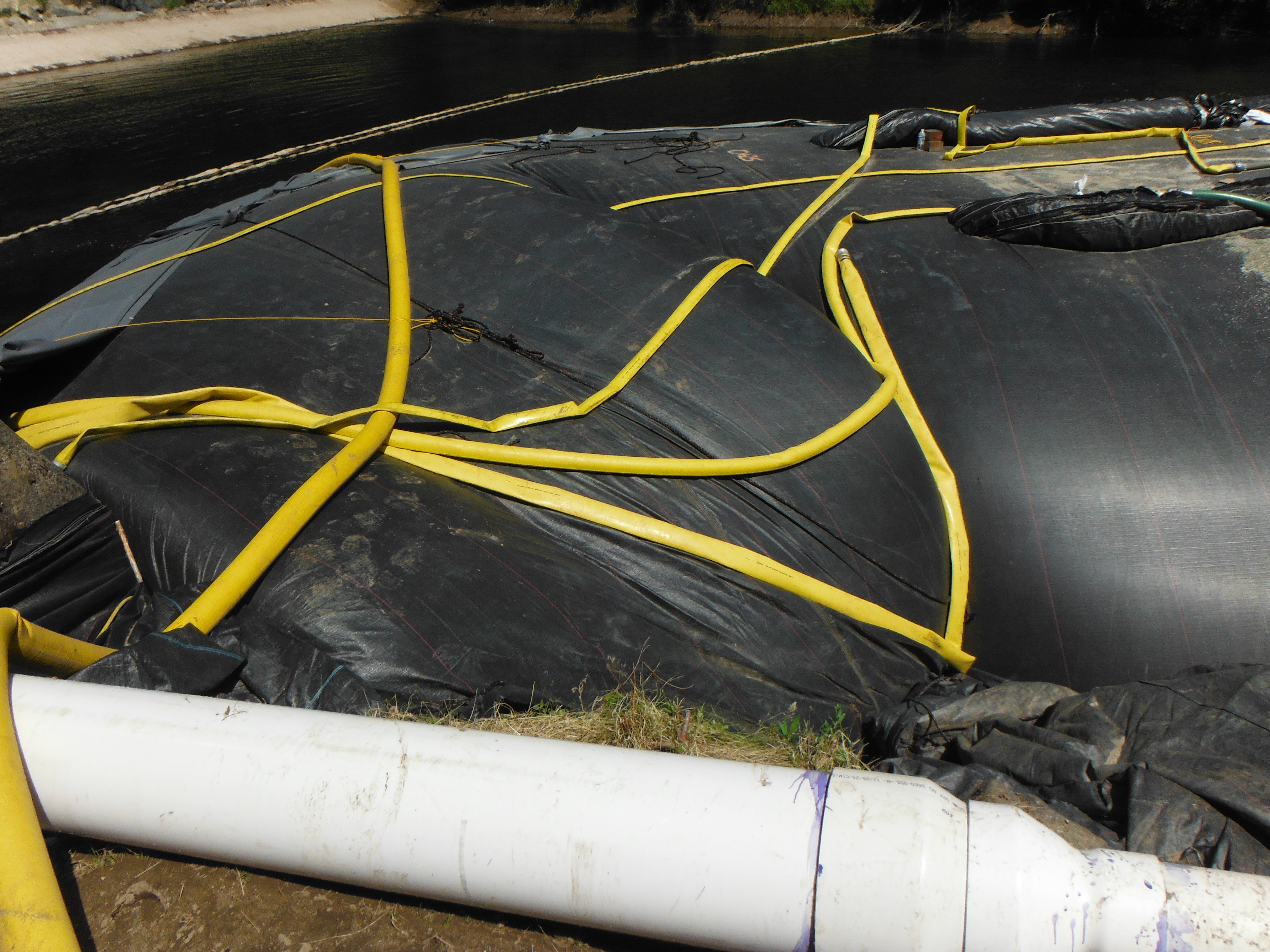
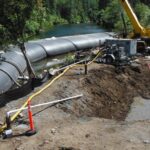
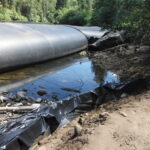
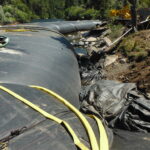
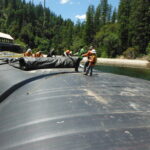
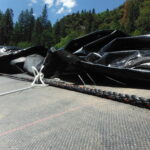
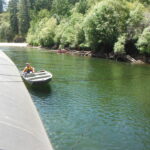
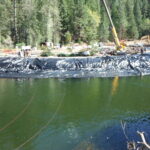
The starting closed end of the 16ft tall DCE AquaDam® is shown here, previously installed as part of the cofferdam system. The fill tubes for the DCE AquaDam® are visible in the upper-right portion of the photo.
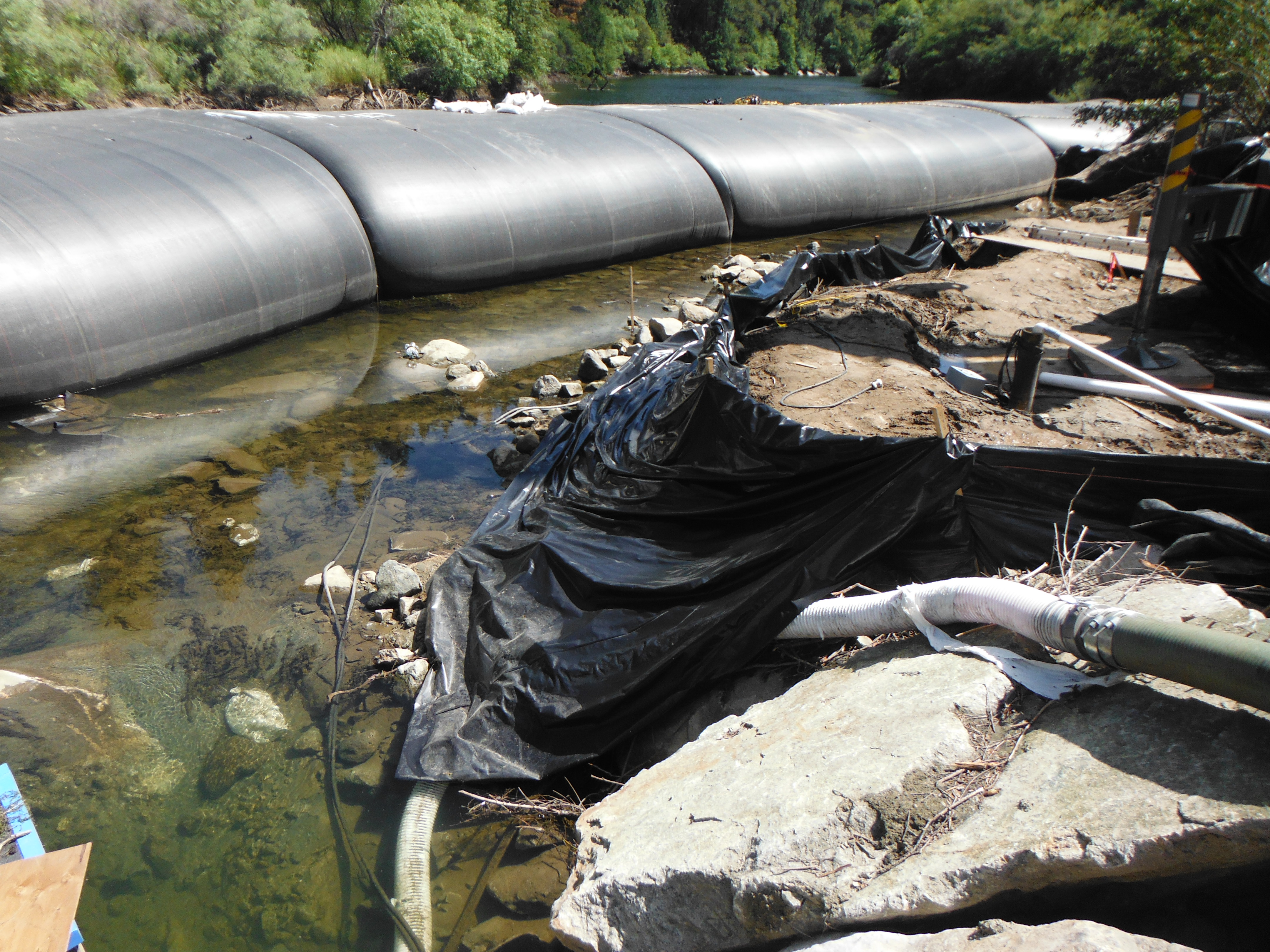
Workers continued to maintain a predominantly dry work area by actively managing inflows. Seepage is an anticipated hydraulic condition in any cofferdam installation. Groundwater migration, underseepage, and localized substrate permeability can all contribute to inflows that require ongoing management, particularly during extended dewatering operations.
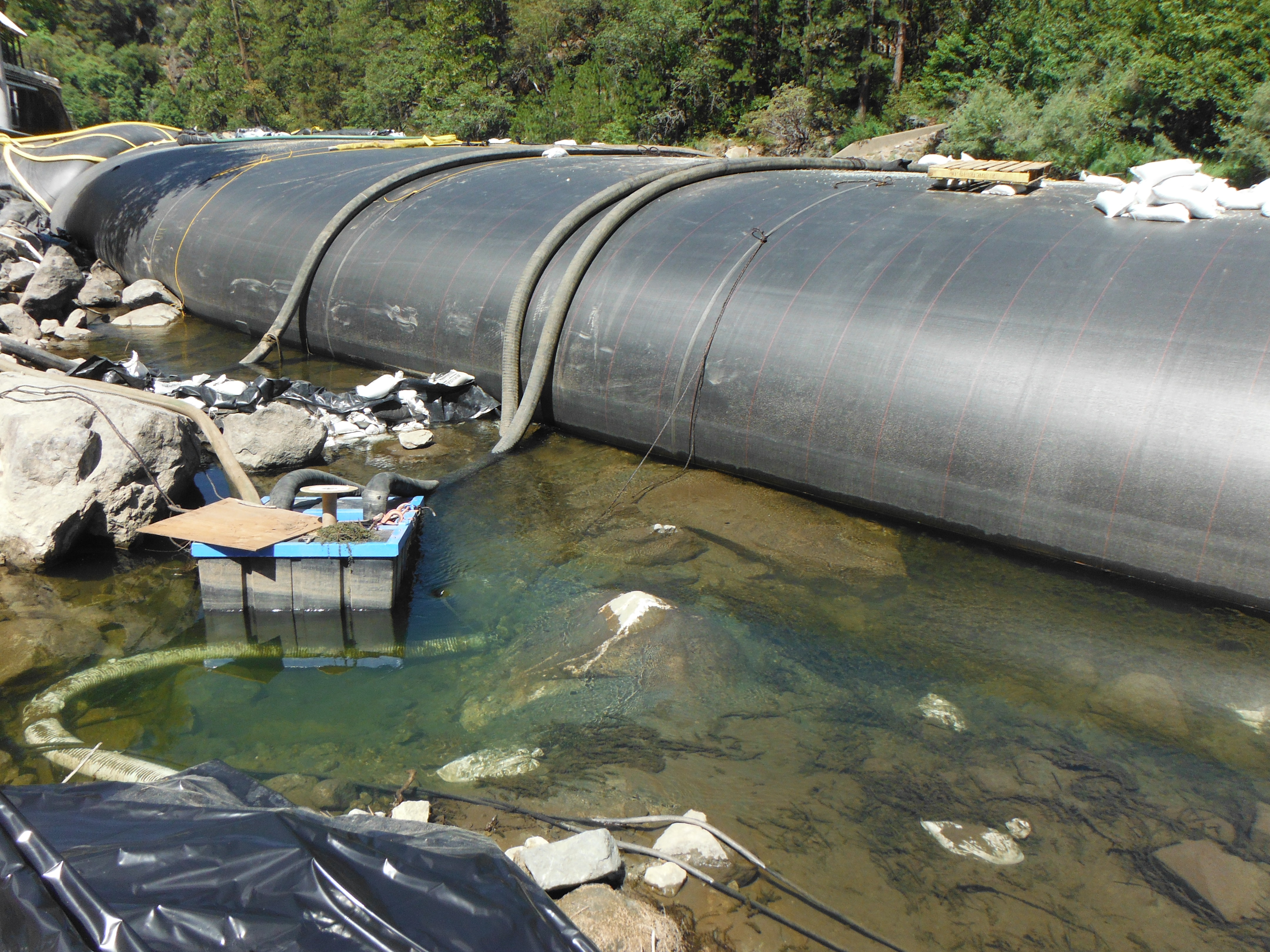
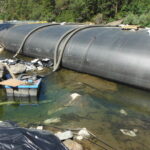
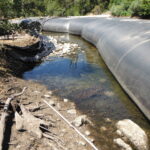
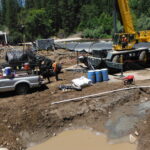
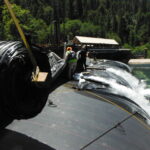
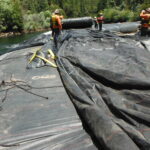
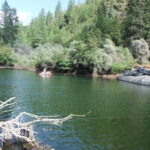
This view highlights the AquaDam's ability to conform to highly irregular surfaces, such as the rocks and boulders shown here. Do to the natural gaps in the riverbed, a pit was dug for the floating pump cage. Workers utilized a high-capacity array of pumps, ranging from 4 to 10 inches, to ensure the work area remained at appropriate depths for the duration of the project.
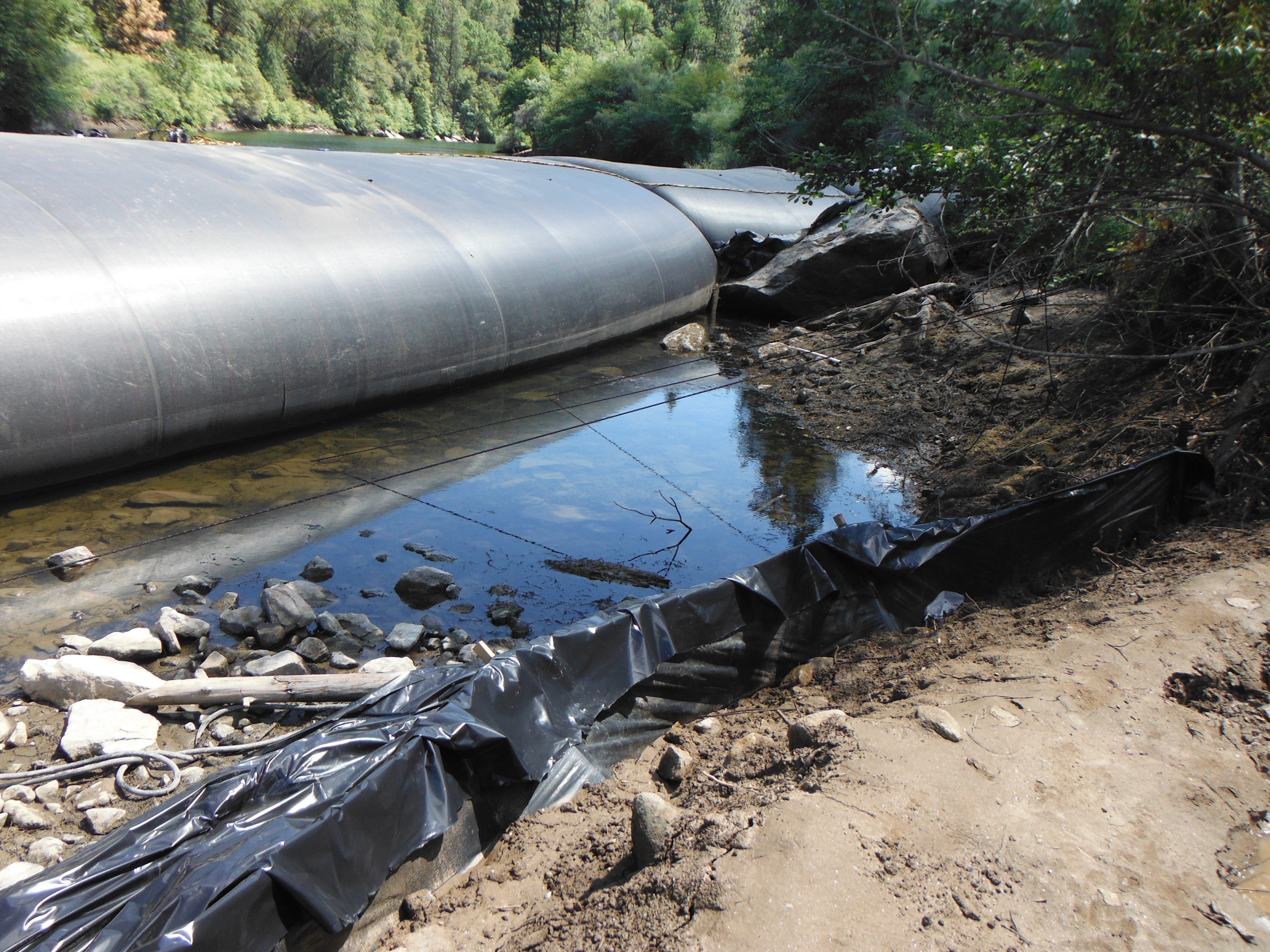
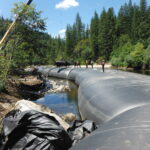
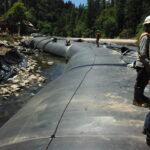
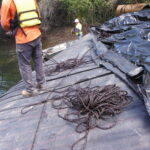
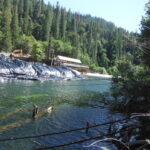
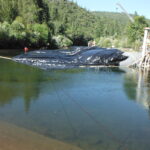
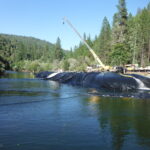
This perspective highlights the positioning ropes used to guide the 16ft tall AquaDam® during its initial deployment. Also visible is the large boulder at the terminal bank, illustrating the substantial natural obstructions the barrier must accommodate to ensure a secure seal at the shoreline.
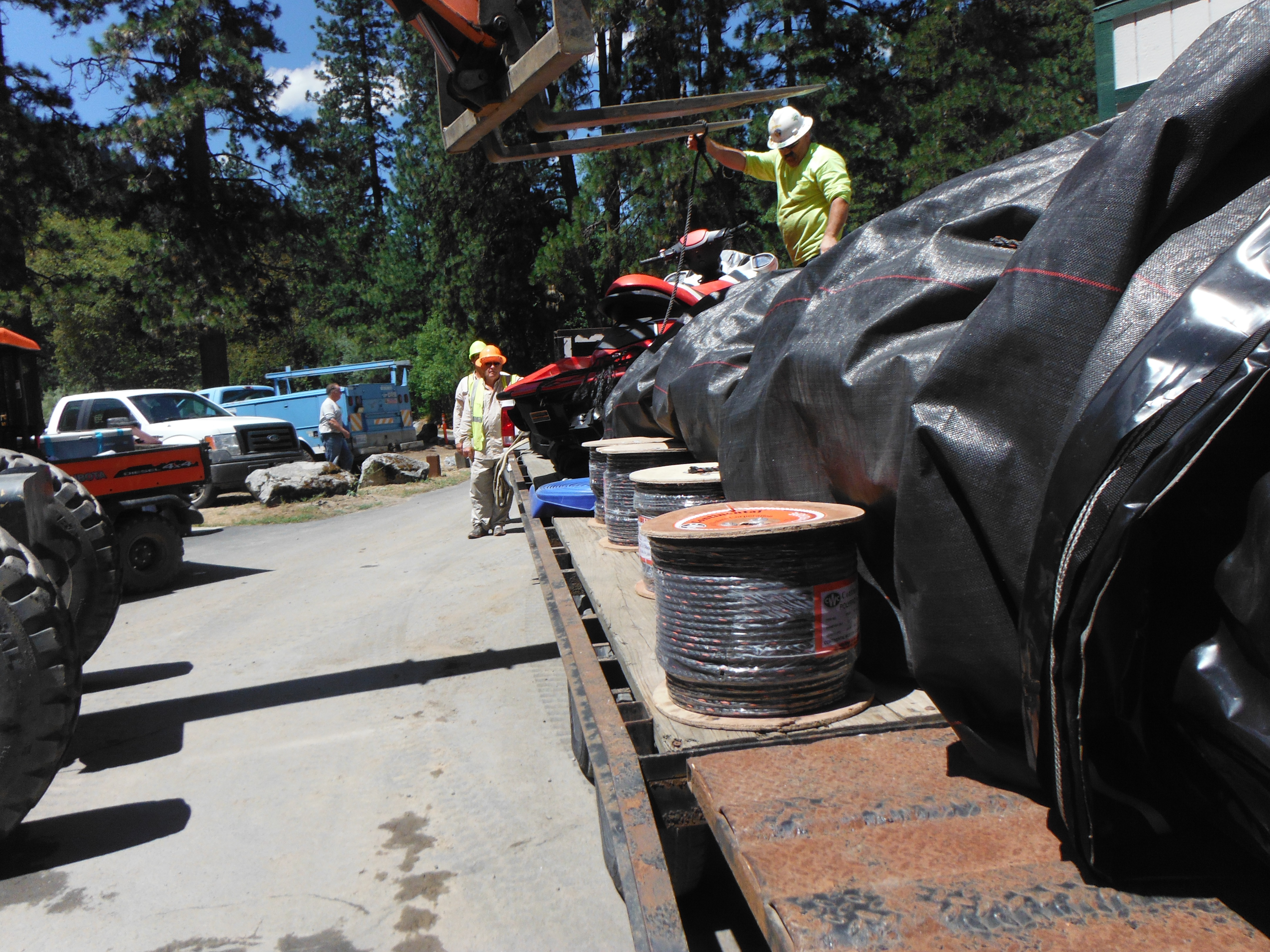
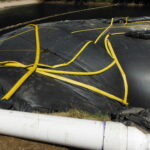
To mitigate unwanted seepage, a 60ft by 406ft barrier was secured to the crest of the AquaDam® and extended into the river channel to be submerged. The custom-made tarp featured a four-layers comprising two layers of woven polypropylene for and two layers of watertight polyethylene. Extensive rigging and rope systems were utilized to ensure precise positioning during the sub-surface deployment.
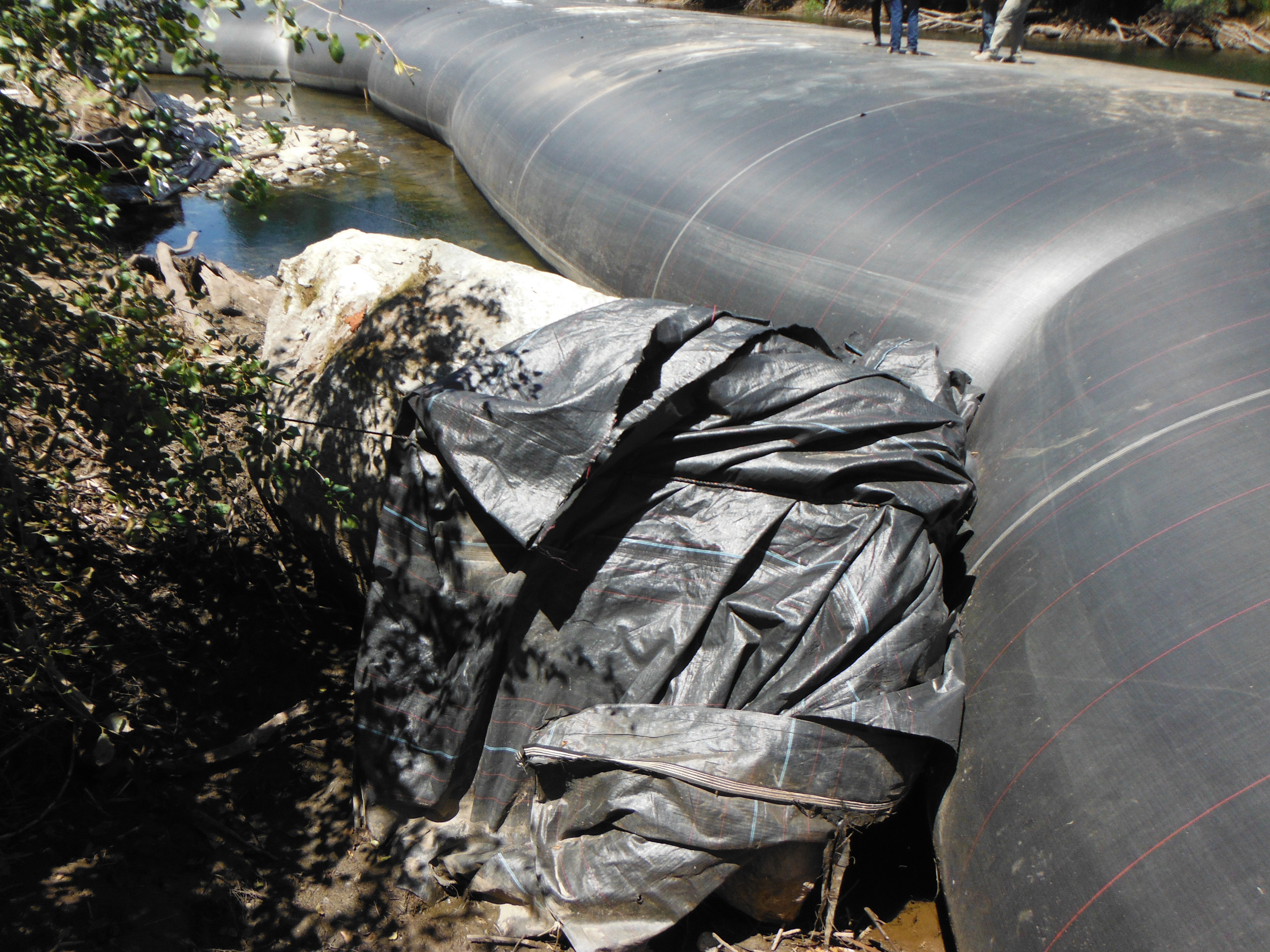
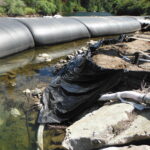
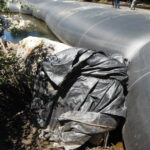
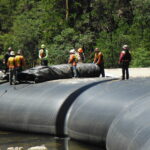
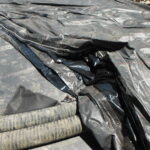
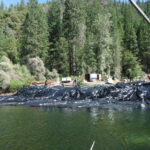
At the point where the 16ft tall DCE AquaDam® transitions back to the shoreline, it encountered a large boulder. To mitigate the risk of abrasion, the boulder was wrapped in a protective layer of woven polypropylene. This interstitial material acted as a buffer, preventing direct friction between the rock surface and the AquaDam’s outer casing to ensure long-term durability.
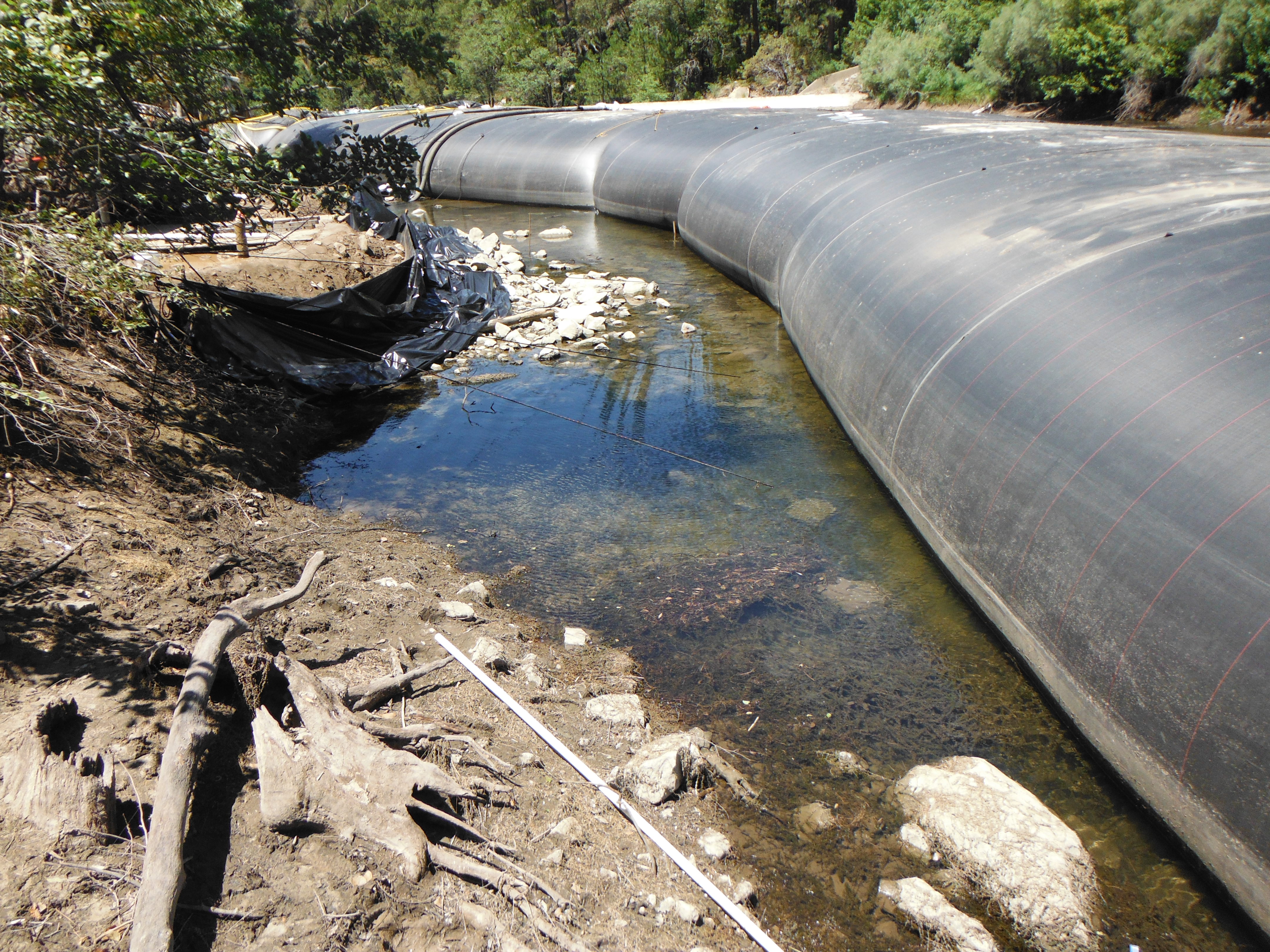
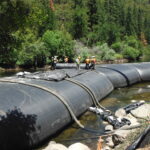
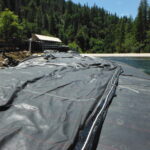
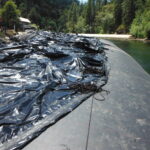
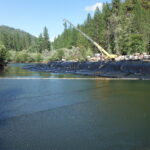
Upstream view looking downstream, showcasing the mostly dewatered project site. The 16ft tall AquaDam® continues to provide a robust hydraulic barrier, allowing the work area to remain accessible despite the challenging riverbed conditions and natural seepage managed by the onsite pumping array.
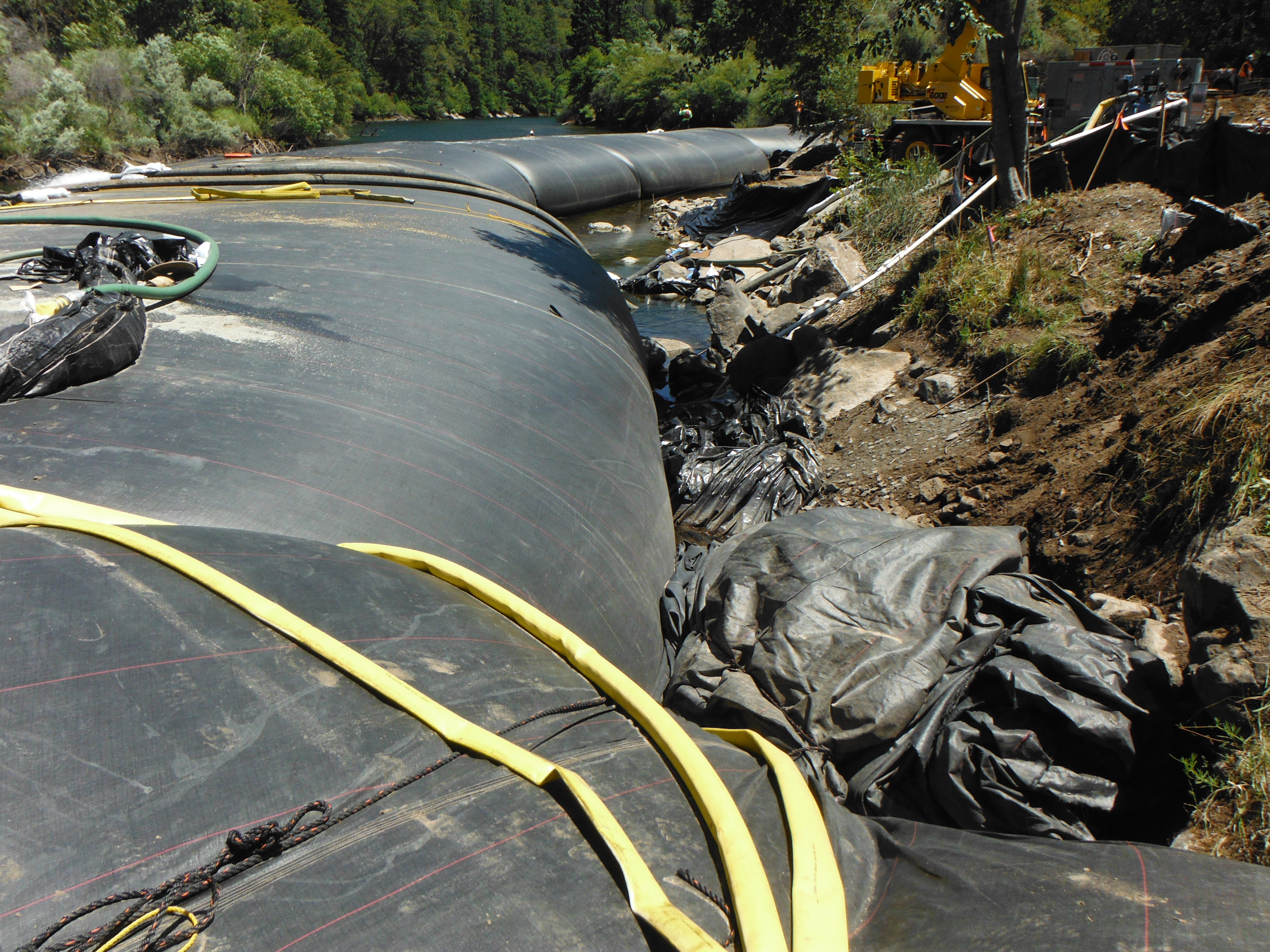
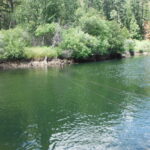
Downstream vantage point looking upstream, showcasing the dewatering phase. Despite the challenging substrate and seepage mentioned previously, the AquaDam® remains stable, maintaining the integrity of the work zone and allowing for unimpeded project activities.
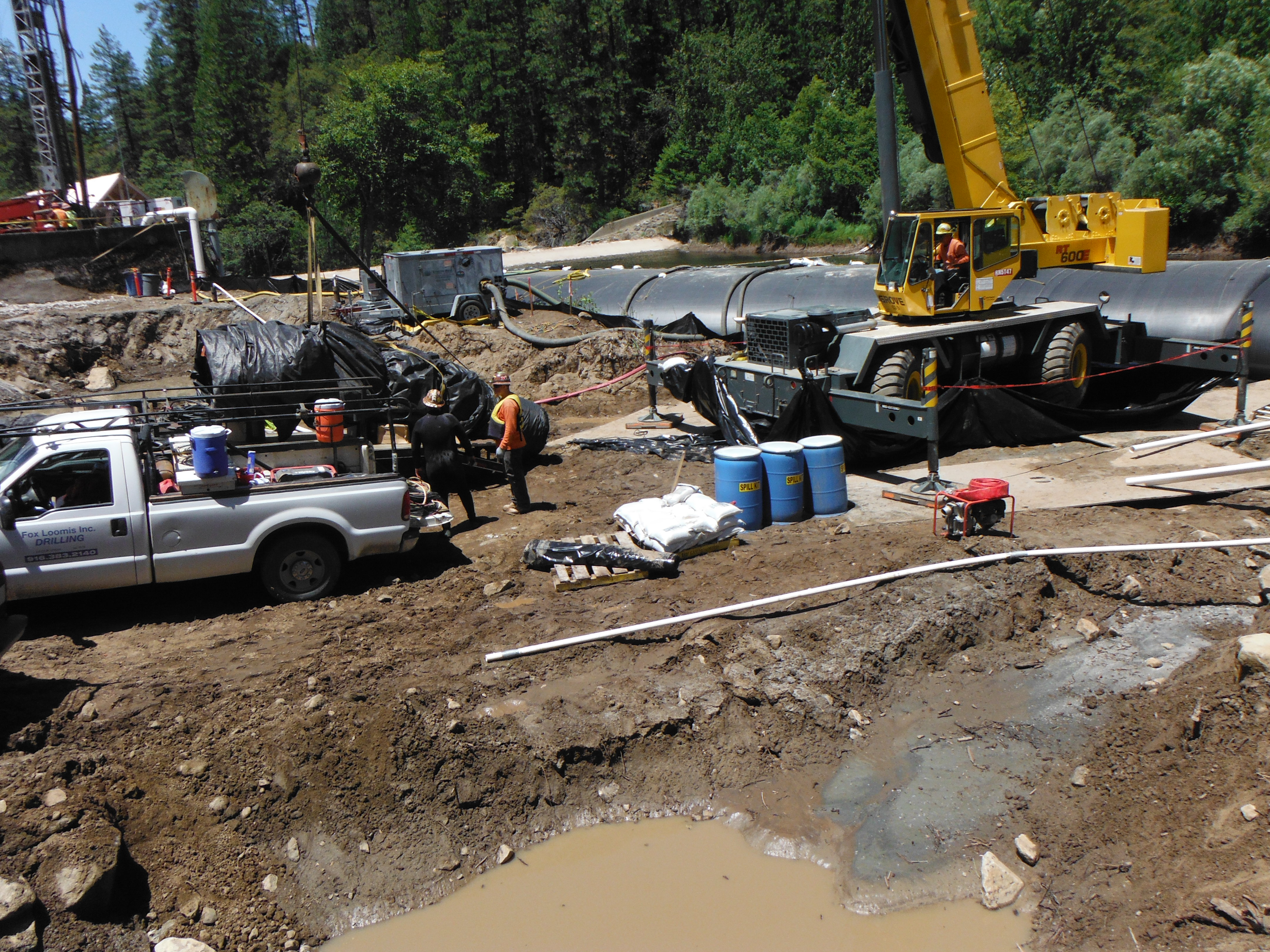
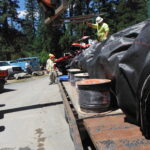
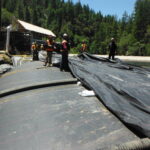
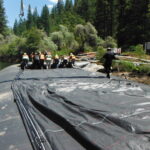
The tarp is being lifted from the trailer by crane in preparation for placement atop the AquaDam®, ensuring proper alignment and coverage over the containment structure.
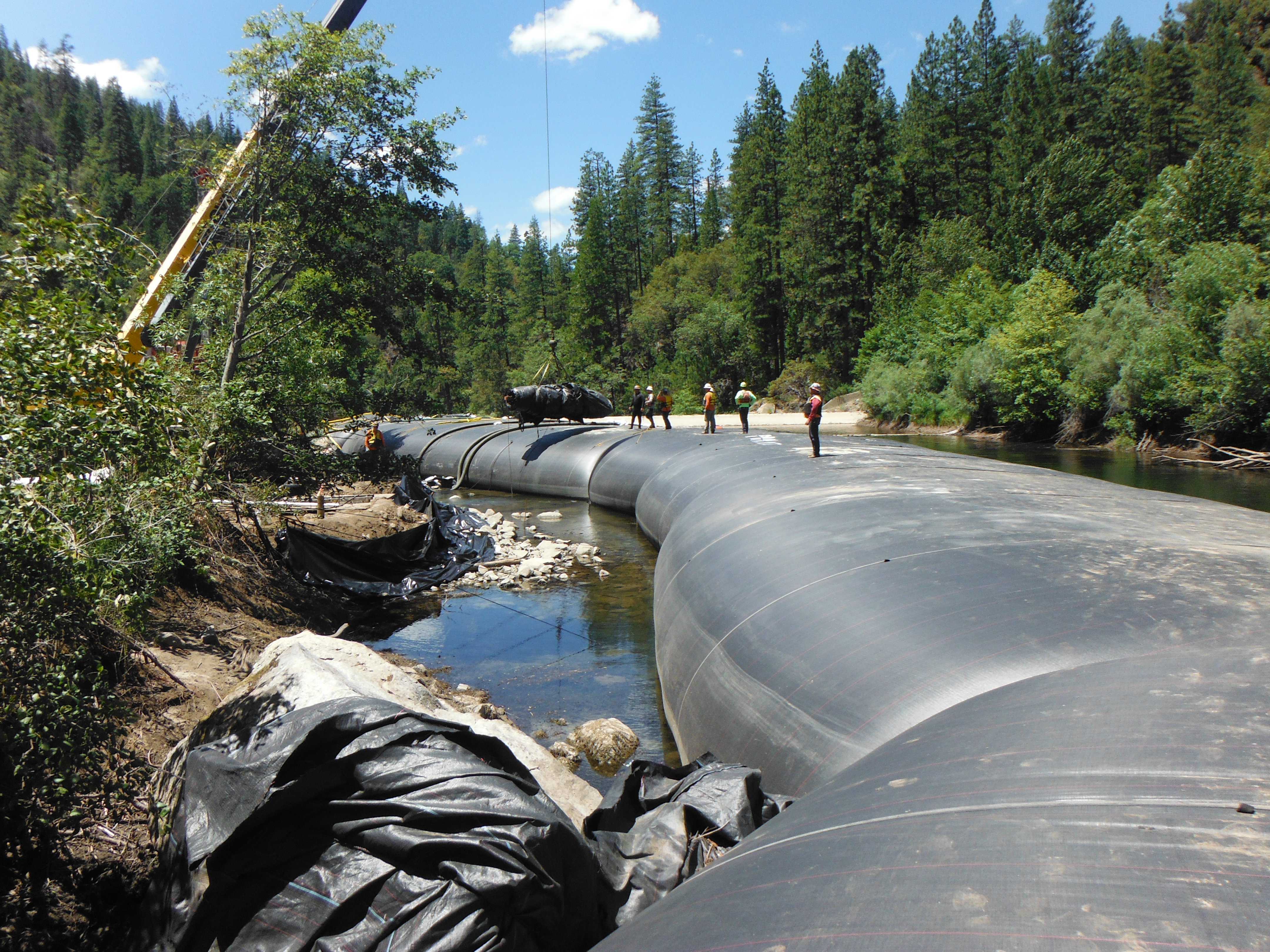
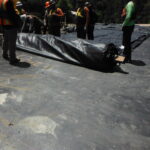
To accommodate the specific direction in which the 406ft tarp was rolled, the crew positioned the material at the downstream end of the AquaDam®. Aligning the roll with the project’s layout allowed for a more efficient and controlled installation process.
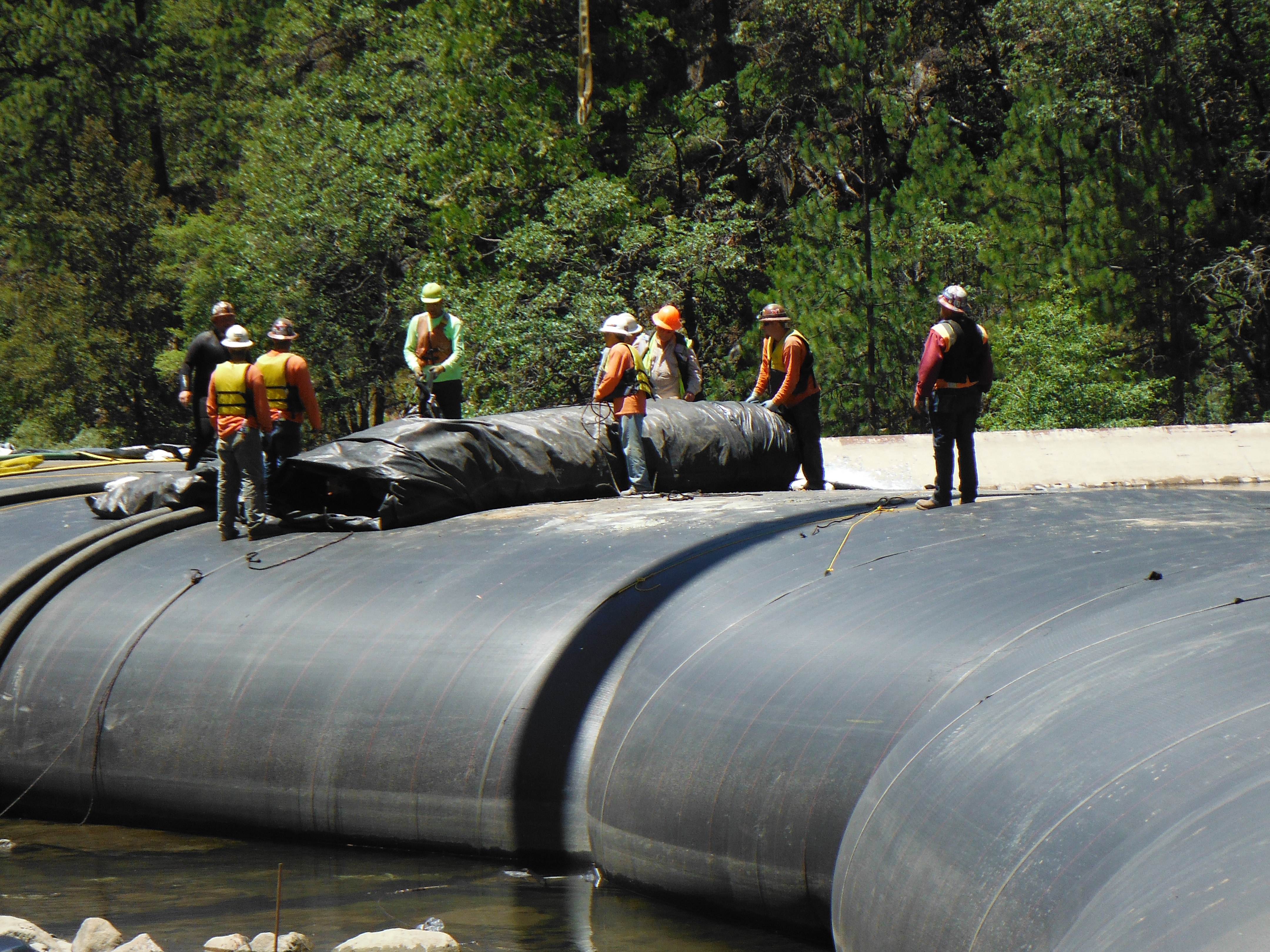
With the tarp now positioned atop the AquaDam®, workers must unroll several feet of material and accurately place it at the far downstream end to ensure full coverage and effective seepage control.
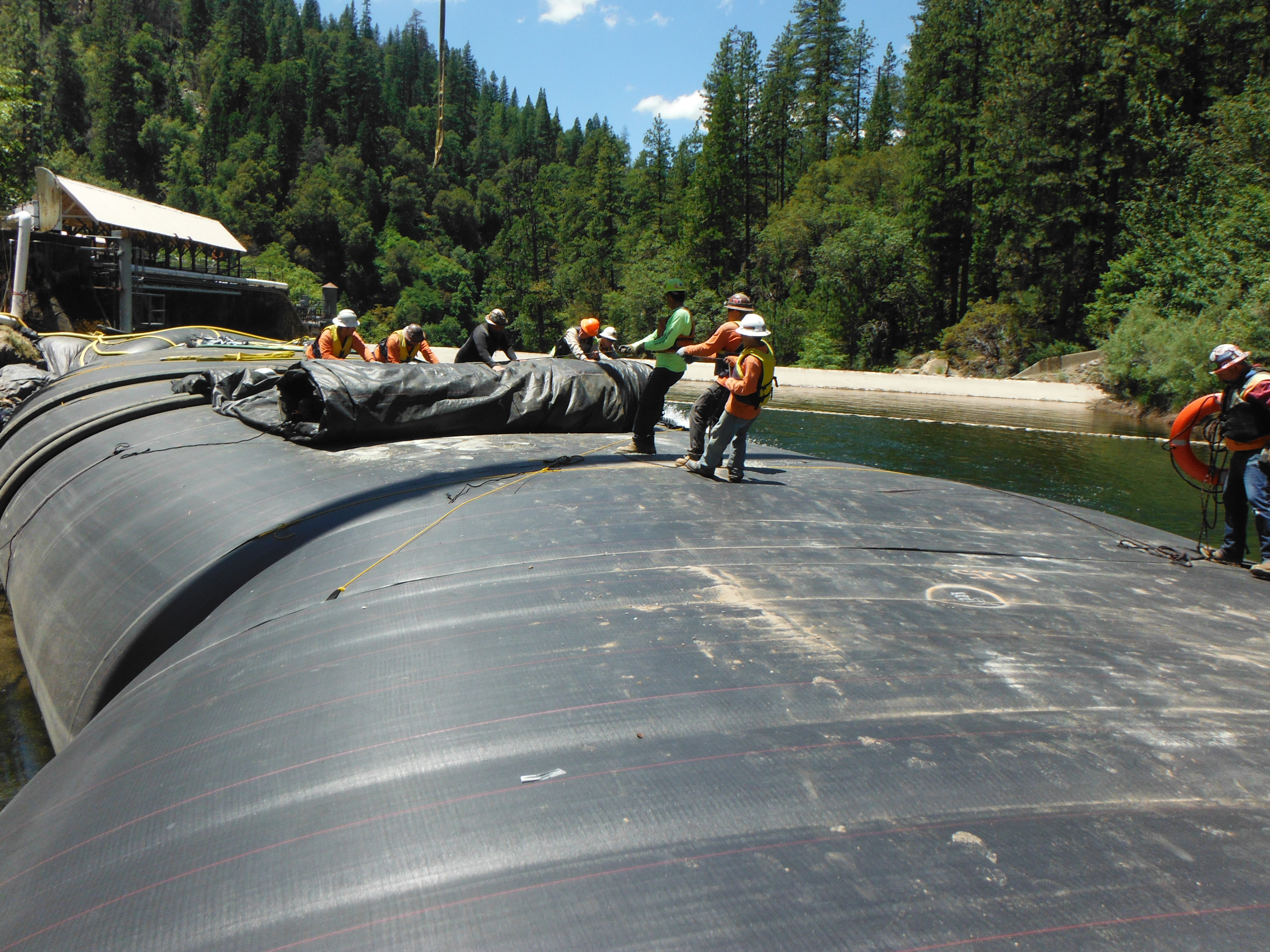
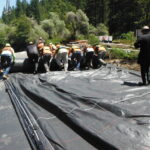
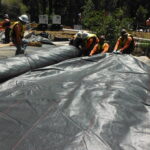
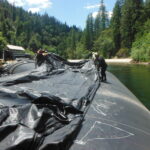
Given the substantial mass of the 406ft, four-layer composite tarp, deployment requires a coordinated team of laborers. This manual assistance is critical to managing the material's weight and ensuring it is positioned accurately along the length of the AquaDam®.
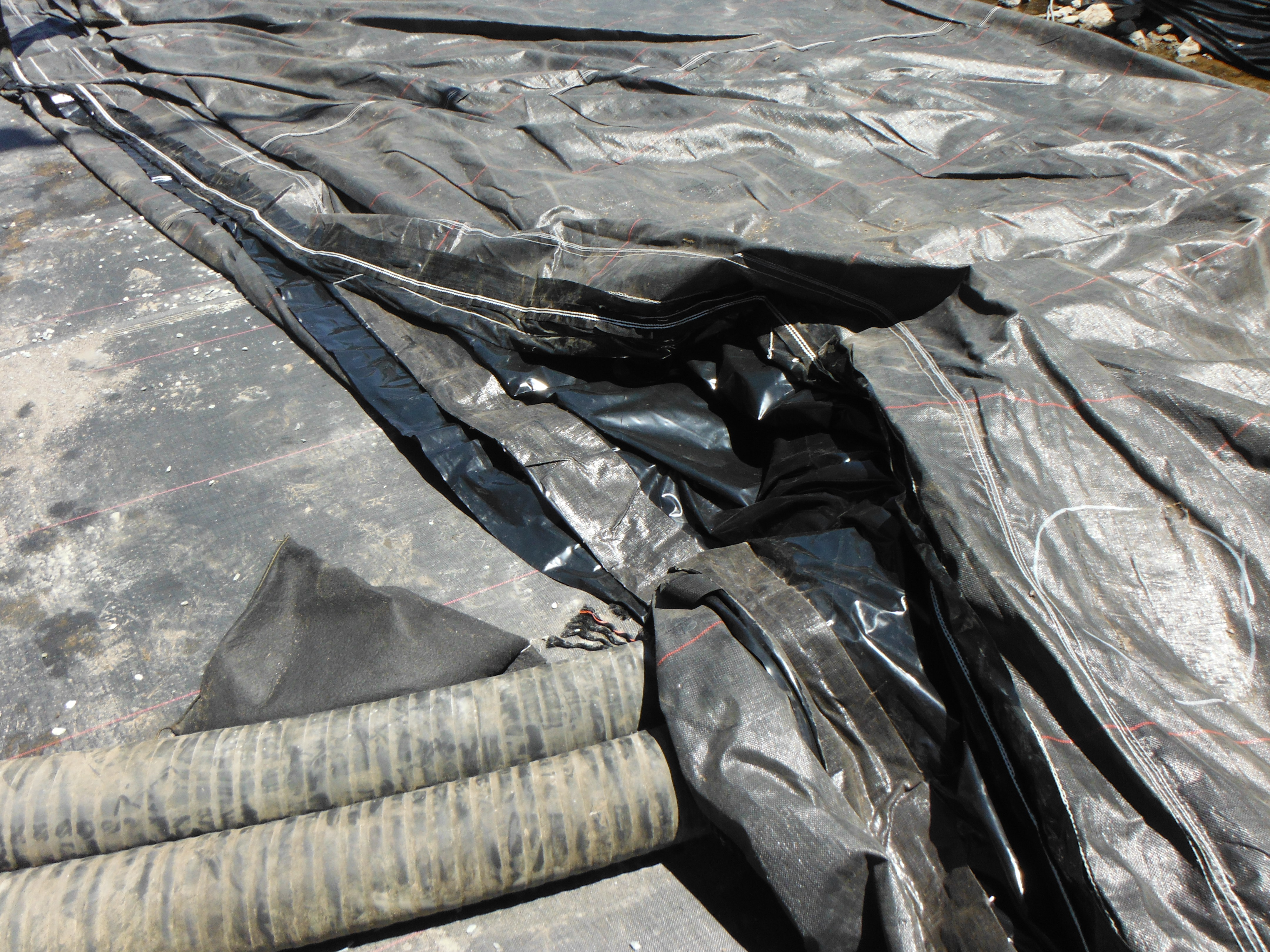
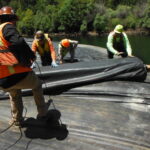
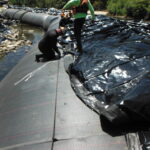
This detail shows the two distinct layers of the 60ft wide tarp. The high-gloss material is the watertight polyethylene, which serves as the primary moisture barrier, while the matte material with the red stripe is the woven polypropylene, providing structural reinforcement. During deployment, the top layer is extended into the river channel while the base layer is anchored securely to the AquaDam®.
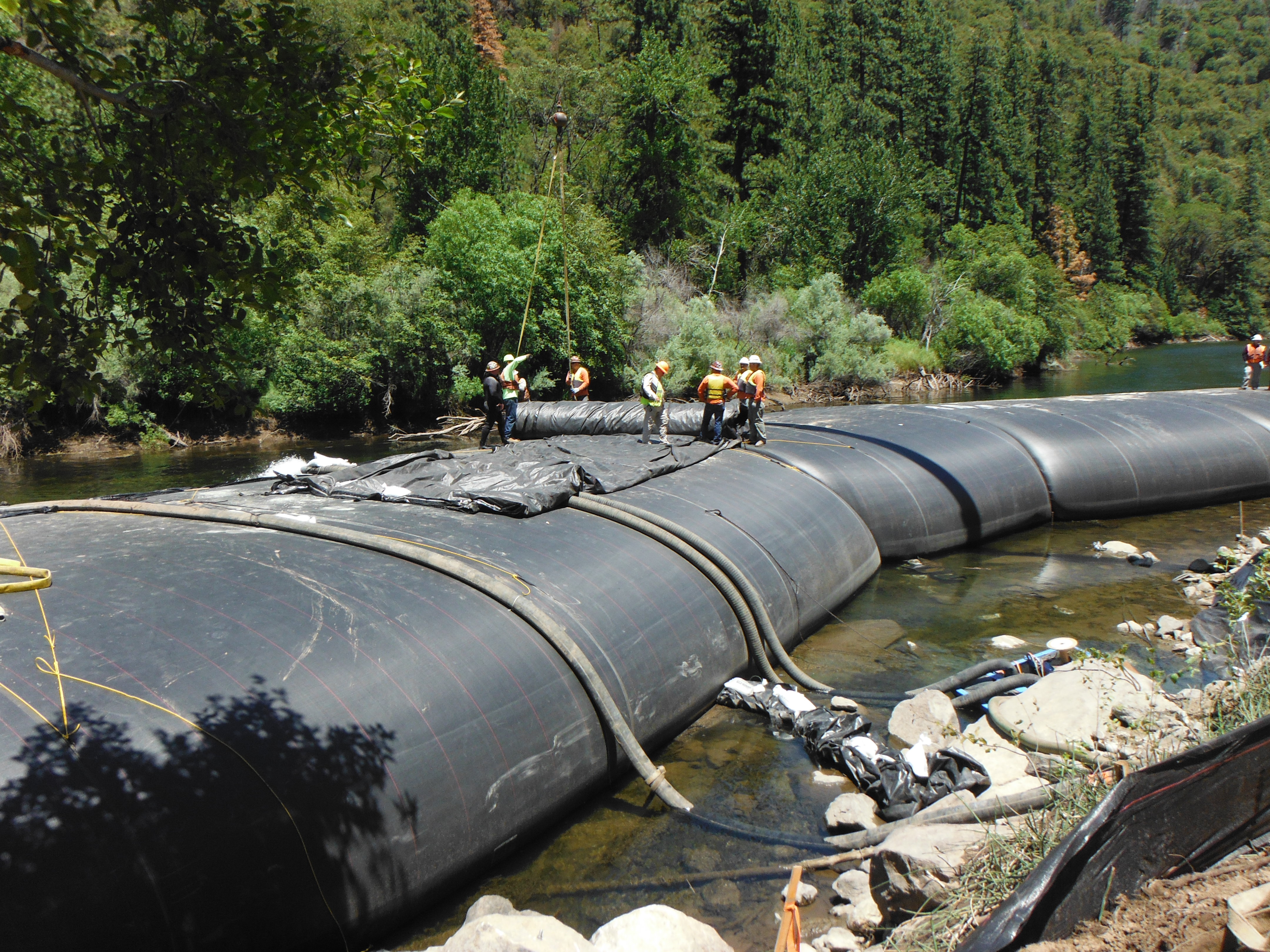
Due to the significant mass of the partially unfurled roll, a crane was utilized to facilitate placement. This coordinated lift allowed the crew to maneuver the tarp into the exact position required for the next phase of the installation.
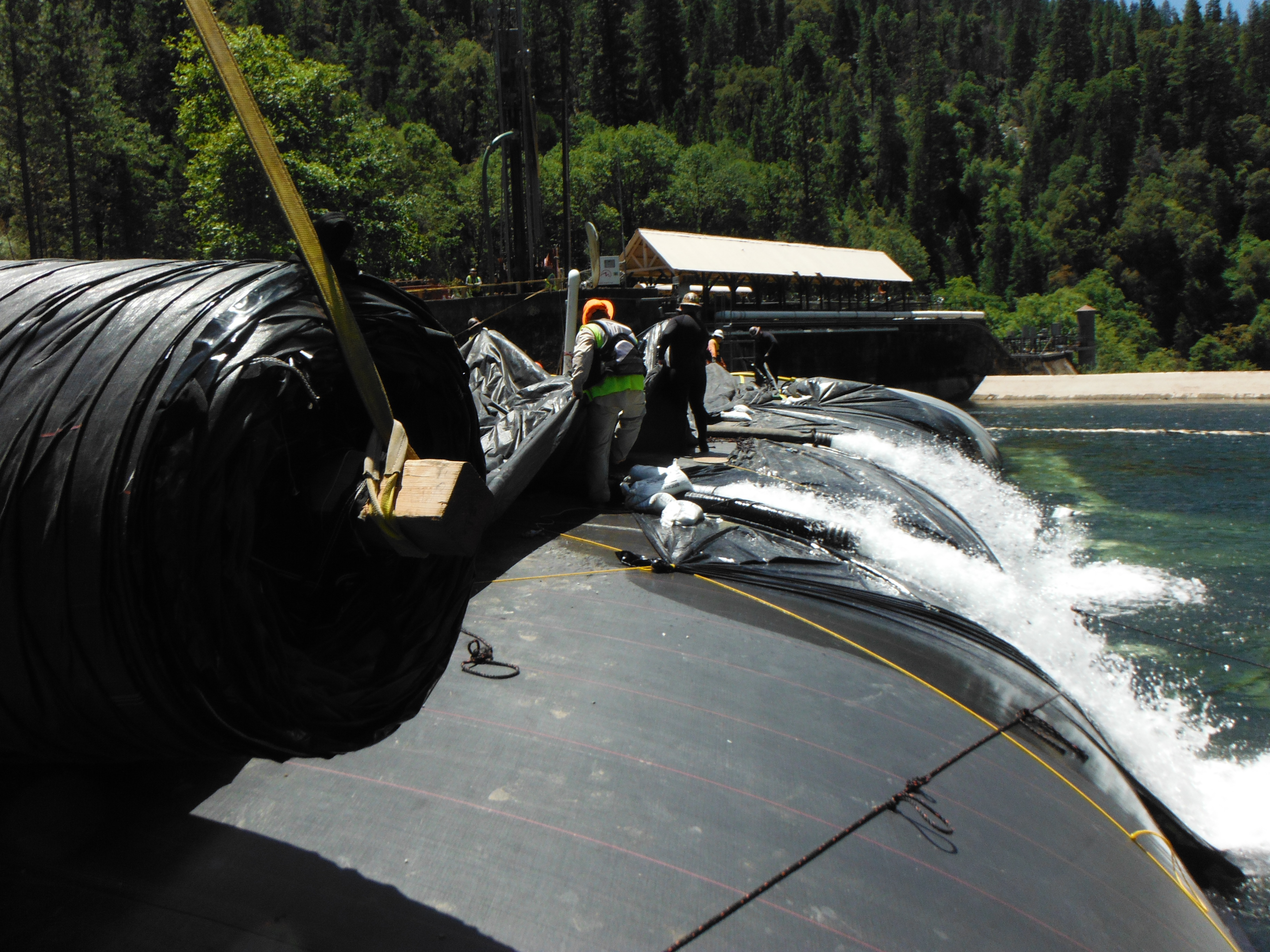
Positioning the tarp atop the AquaDam® was a complex operation requiring a coordinated, highly skilled crew executing each step in a precise sequence.
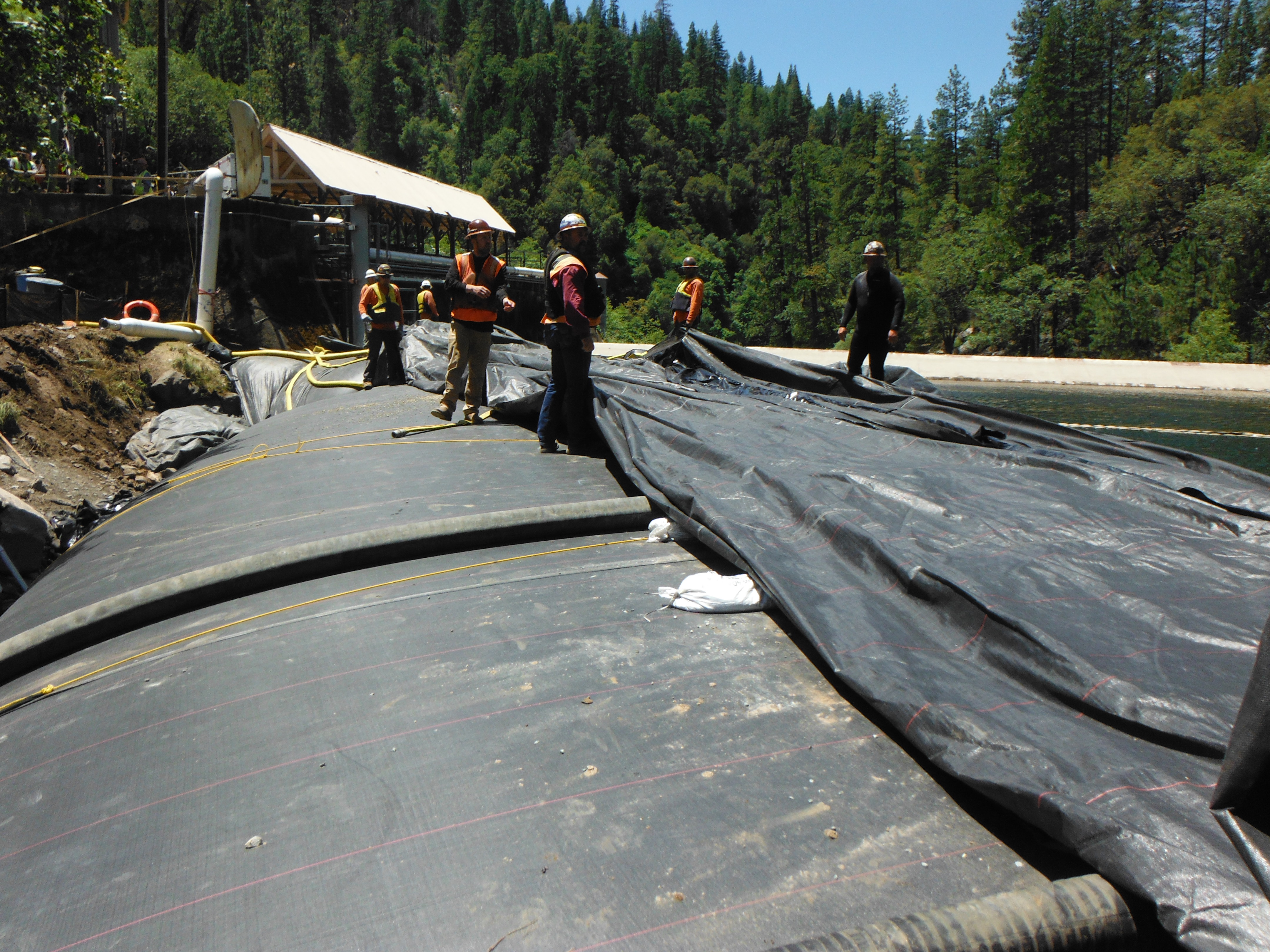
It was essential for the crew to first unroll and position a sufficient length of material downstream to facilitate efficient rigging, anchoring, and controlled deployment of the tarp. One half of the tarp’s width is designed to function as a riverbed sealing skirt, while the remaining half is secured along the crest of the AquaDam®.
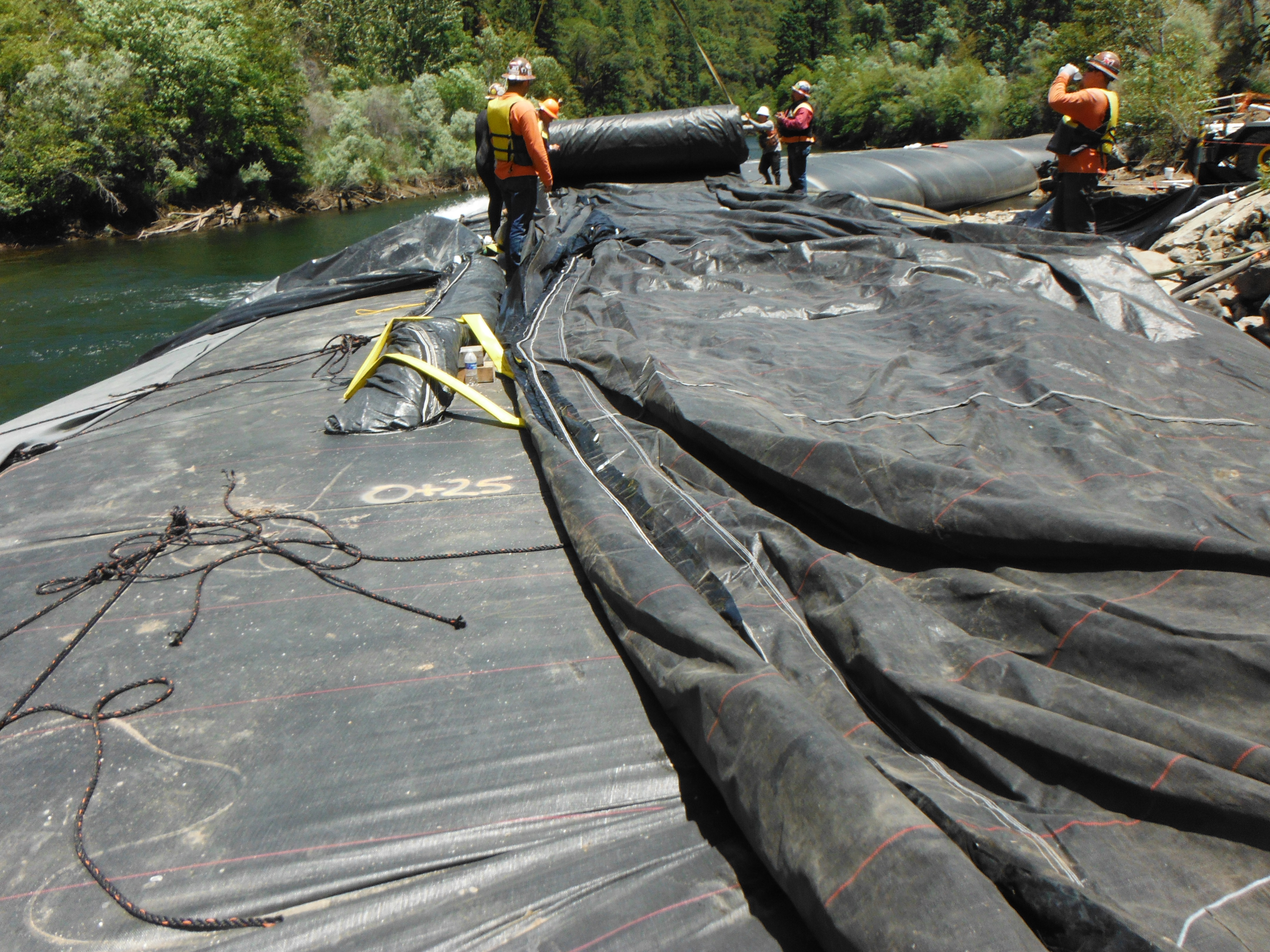
After manually extending several feet of the tarp using pull ropes, the crew utilized the crane to assist in lifting the roll, facilitating controlled directional adjustments and turns.
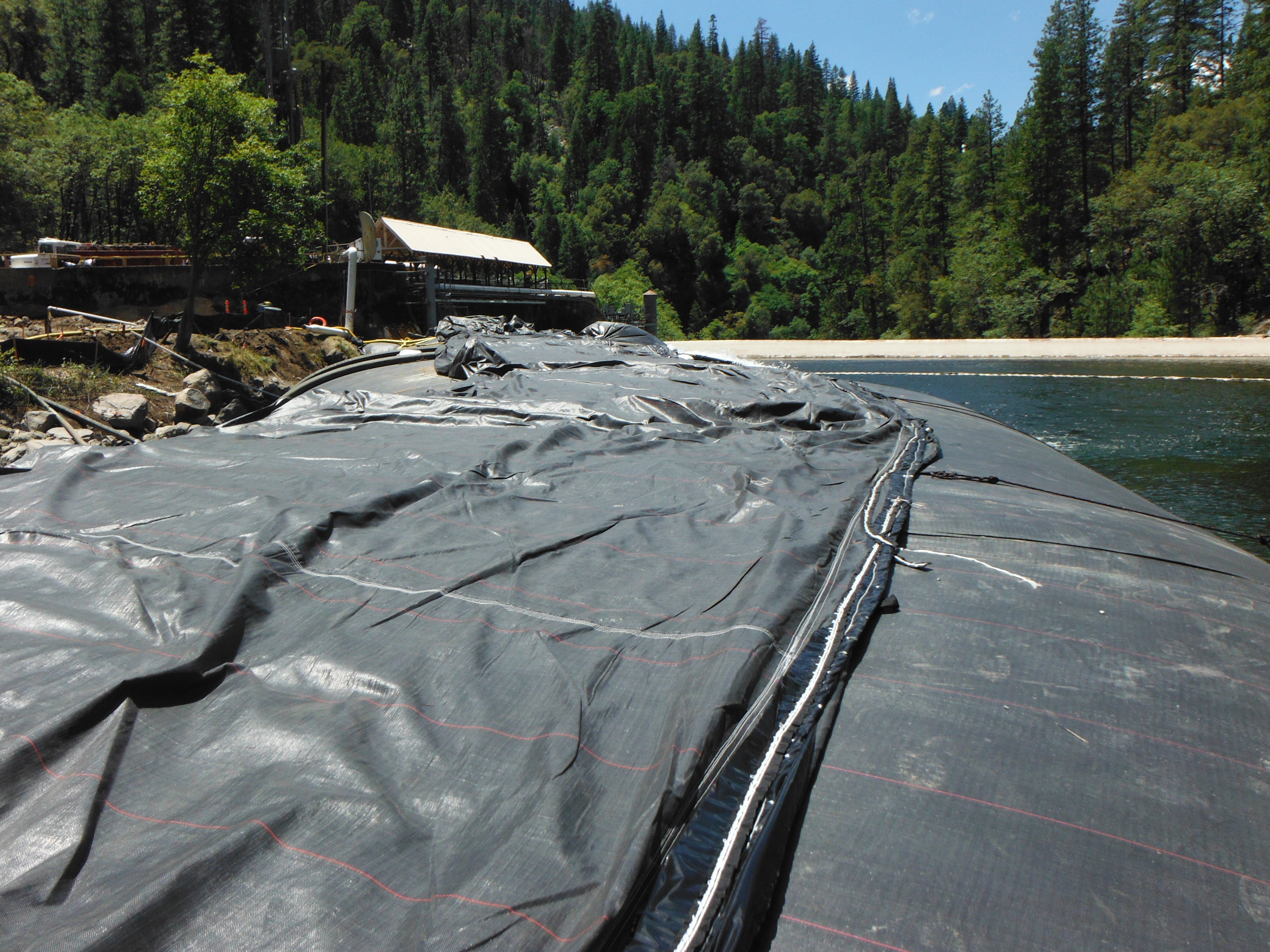
To enhance sealing, the tarp was configured to conform to the general profile of the AquaDam®, with approximately half of its width deployed into the water to function as a sealing skirt. A 16t tall AquaDam® is approximately 33ft wide fully filled. Prior to installation, the tarp was folded and rolled to a width of 15ft to ease handling, staging, and controlled deployment.
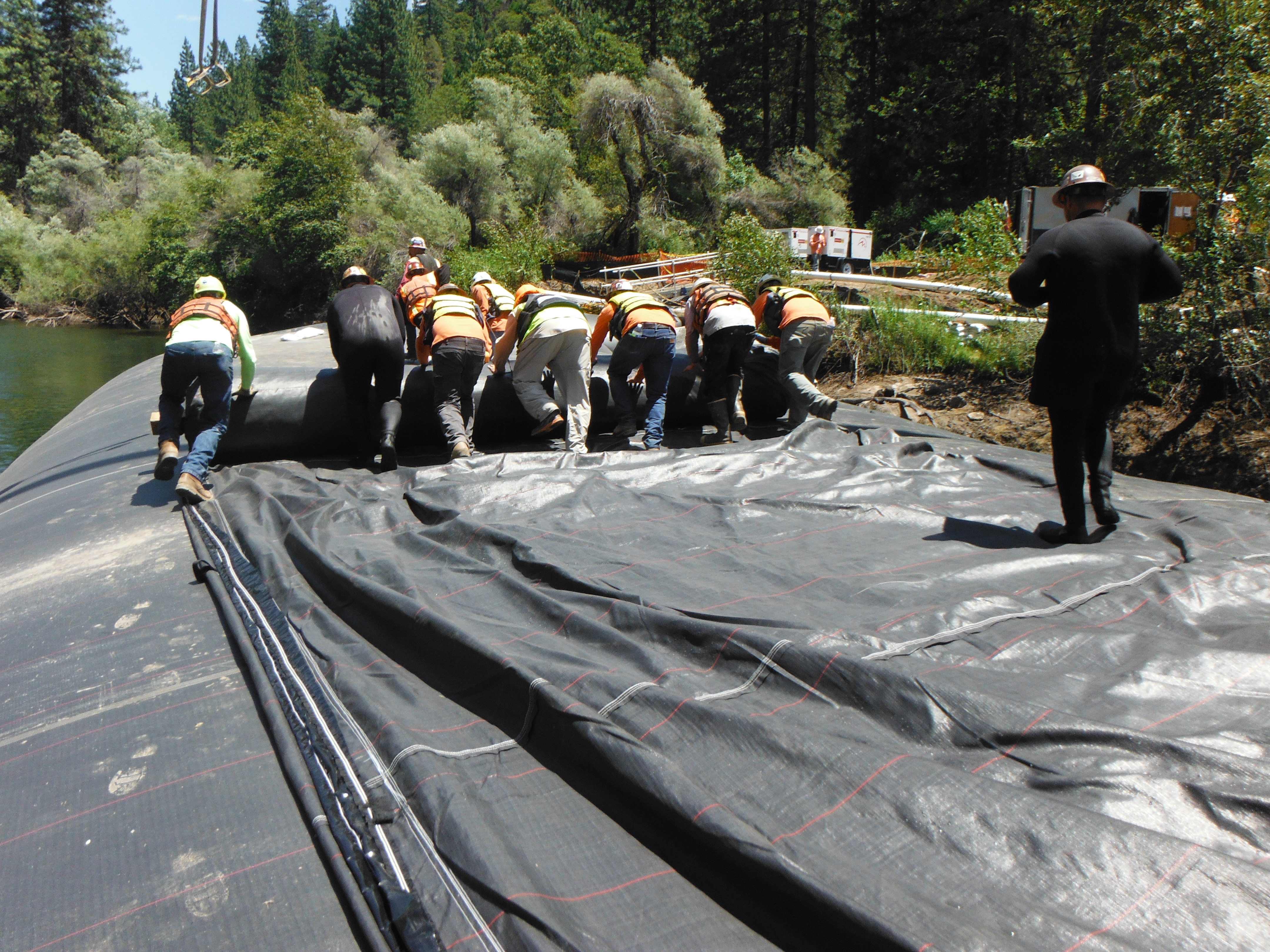
Workers had unrolled enough of the tarp to reach the final turn in the AquaDam®, allowing them to maneuver the remaining material more easily. With much less material left on the core, the roll had become significantly lighter and easier to handle. The tarp itself was constructed from the same material used in AquaDam® fabrication, ensuring compatible performance and durability.
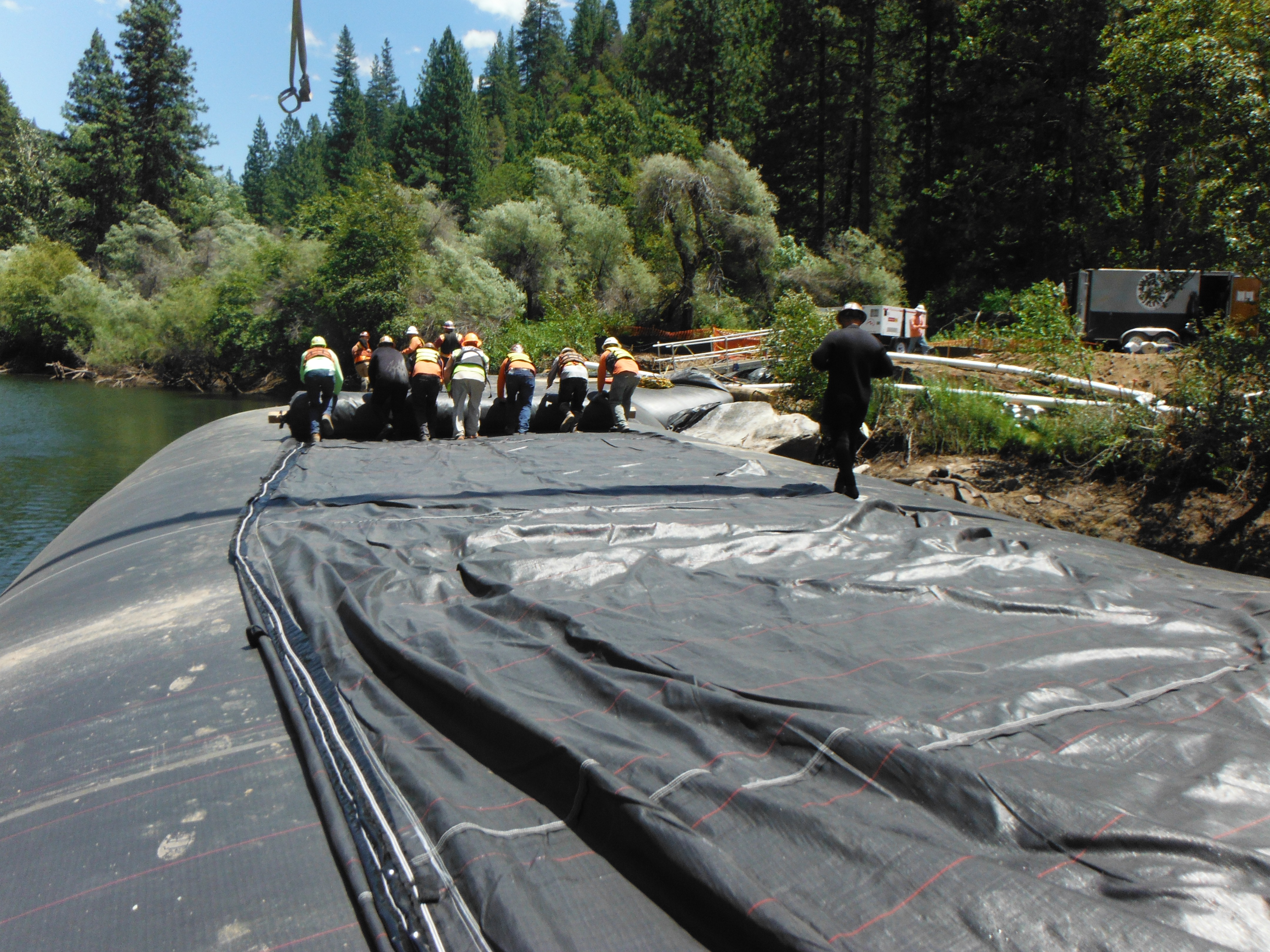
The tarp was unrolled parallel to the AquaDam® alignment and required a corresponding directional adjustment at each bend in the dam to maintain proper conformity and contact.
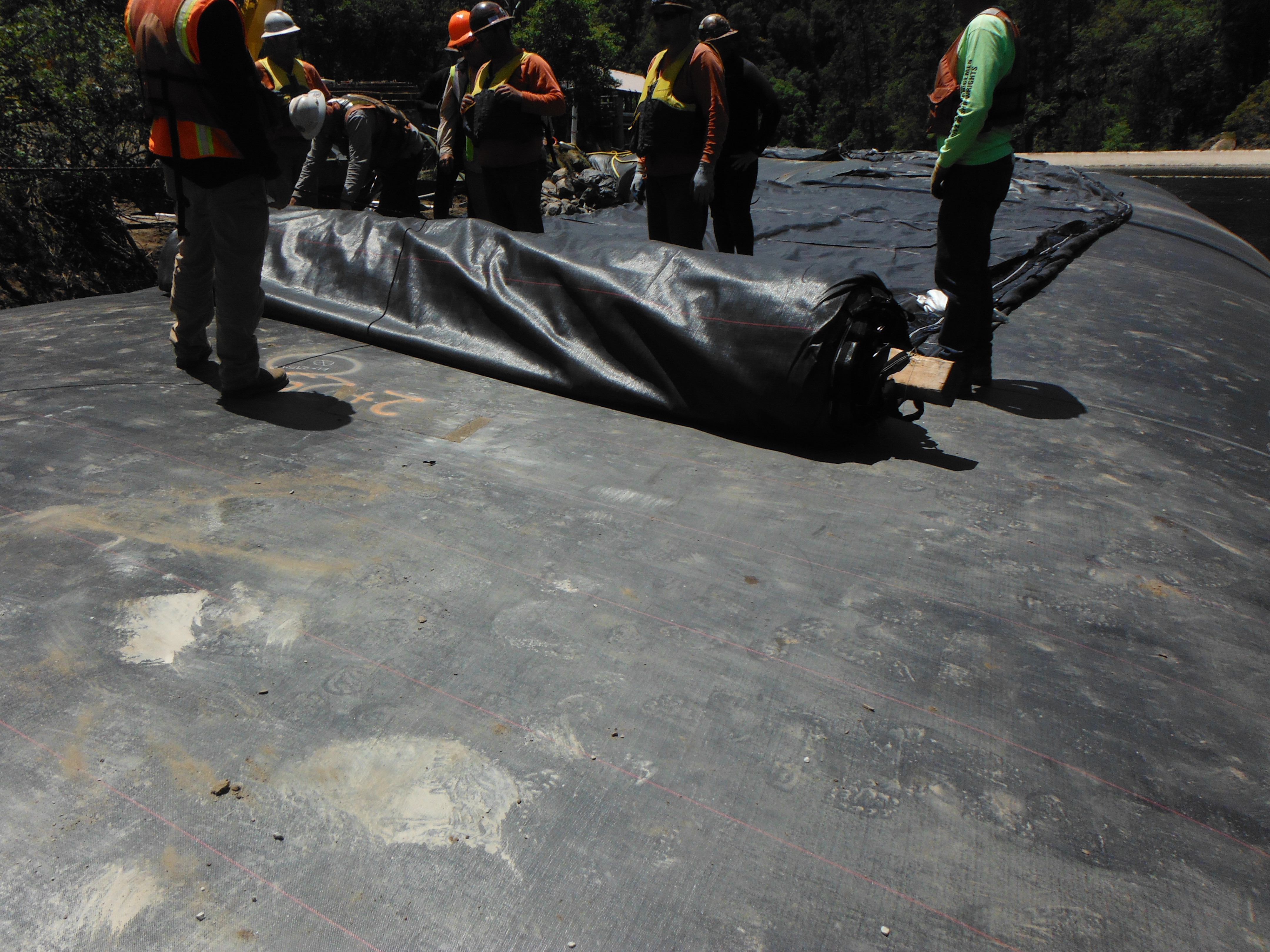
With the majority of the tarp length now deployed over the AquaDam®, the remaining roll is significantly reduced in diameter and weight, allowing the crew to maneuver and position it with greater control and efficiency.

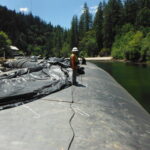
At this stage, crane assistance was no longer required, and the crew was able to manually maneuver and position the remaining material with controlled precision.

The 406ft tarp has been nearly fully unrolled along its entire length. The unit remains in its folded configuration, staged and secured in preparation for the next phase of deployment.

To anchor the tarp, the crew utilized ropes passed through pre-sewn loops on the AquaDam's exterior. This 16ft model is manufactured with five internal layers and seven external layers of specialized plastics to ensure maximum containment and durability.

Following the successful layout of the tarp, workers initiated the securement phase, utilizing the pre-sewn edge loops to tether the material to the 16ft DCE AquaDam®. This step ensures the tarp remains properly aligned during subsequent operations.

The crew also threaded a secondary rope through the loops on the river-facing side of the AquaDam®, providing additional anchoring and stability for the tarp along the upstream perimeter.

The securement strings are tethered to the primary rope running through the loops on the landward side of the AquaDam®. The tarp was manufactured with dual-layered, water-tight polyethylene material on top and a dual-layered woven polypropylene material beneath. Half of the tarp width remains atop the AquaDam®, while the remaining is positioned outward into the river.

This view shows the method workers used at each loop to secure the tarp to the top of the AquaDam®. Each loop served as an attachment point where the strings from the tarp were tied off, ensuring consistent tension and proper alignment along the dam’s crest.

Workers fastened long bundles of rope to the river‐facing side of the tarp to make it easier to pull that edge into the water during deployment. These ropes had to be pulled from shore at several offset points and simultaneously, allowing the tarp to spread evenly and settle correctly as it was drawn into position.

Each lead line was extended and temporarily secured at its designated pulling station to ensure immediate availability and proper alignment during the final deployment.

Multiple ropes were attached along the waterside edge of the tarp, each requiring a crew member on shore to pull and guide it during deployment.

Positioning this complex network of ropes across the river demanded both strategic planning and seamless teamwork to achieve a successful installation.

Several crew members needed to be transported across the river to manage rope positioning and tarp deployment. The presence of watercraft on site can be essential for efficient personnel movement and operational support.

The crew initiated the final deployment, pulling the tarp from the AquaDam® and into the channel in a synchronized motion. Maintaining uniform tension is critical during this stage, as it ensures the material reaches its designated position on the riverbed before hydraulic pressure can roll or displace the leading edge.

As soon as water begins to flow over the tarp, the material becomes significantly heavier, forcing the crew to pull with much more effort to keep it moving and properly aligned.

The crew pulled the tarp several feet ahead of the AquaDam’s leading edge to create a protective skirt. By extending the material into the channel, the team ensured that the river’s own weight would press the tarp into the contours of the bed, significantly enhancing the integrity of the seal.

The tarp was deployed to cover the AquaDam® surface before transitioning down to the riverbed, where it extends an additional 30ft out into the channel. By maintaining this 30ft offset, the crew ensured a deep seal that prevents water from scouring the area beneath the dam's base.

To pull off this critical task, many lead ropes were fastened to the riverside of the tarp, each manned by a laborer. The team pulled in careful sequence to transition the material into the water, maintaining a uniform leading edge to prevent the current from catching or bunching the tarp.

As water flows over the extended apron, the weight of the river pins the material firmly against the bottom and the base of the dam. This action creates a suction-like seal that blocks potential leak paths, providing the critical secondary layer of protection requested by the contractor.

From the top of the AquaDam®, you can clearly see the tarp beginning to sink as it settles toward the riverbed.

As the tarp continues to sink, the material resting on top of the AquaDam® begins to tighten and lose its wrinkles. The downward pull from the accumulating water creates steady, even tension across the tarp, drawing it taut from the crest of the dam all the way down to the riverbed.

Workers placed sandbags on top of the tarp in select locations to help hold it down as the material settled into the riverbed. The added weight kept the tarp from lifting, shifting, or rolling as water accumulated on its surface. As the tarp tightened under the pull of the water and the ropes, the portion that originally rested on top of the AquaDam® was drawn closer to the river side, ending up much nearer to the outer edge than where it began.

The workers still have several hundred sandbags left to place on top of the tarp, but seepage has already dropped significantly now that the material is seated, tightened, and weighted in key areas. It’s a clear sign that the tarp has settled correctly across the AquaDam® and the riverbed, and that the coordinated pulling, positioning, and anchoring paid off. Great work, everyone—this is exactly how a proper sealing skirt should behave once the system begins to lock into place.