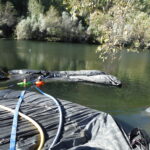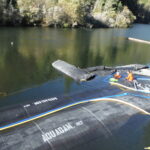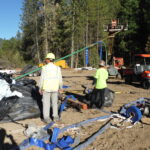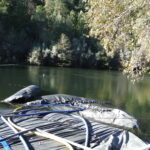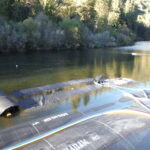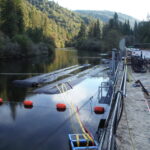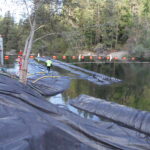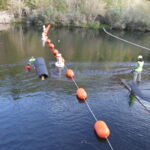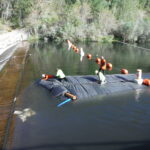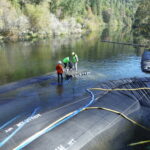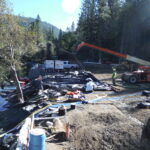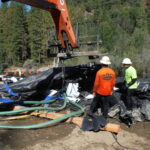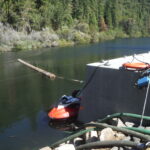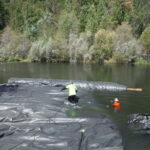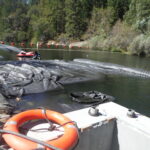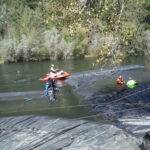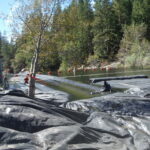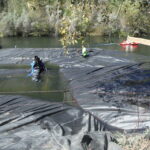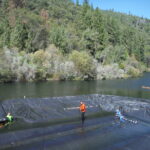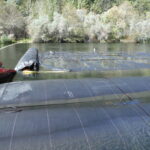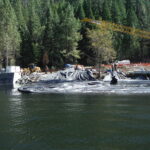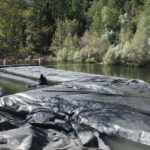

Phase one of the project has been completed, and the new concrete intake structure is now in place. Aqua Dam® Inc. has returned to the site with the cofferdams required to divert the Middle Fork Stanislaus River, allowing the crew to begin repairs on the original intake structure built more than a century ago. This historic structure is located at the weir, just downstream of the newly installed intake, where the team is currently working.
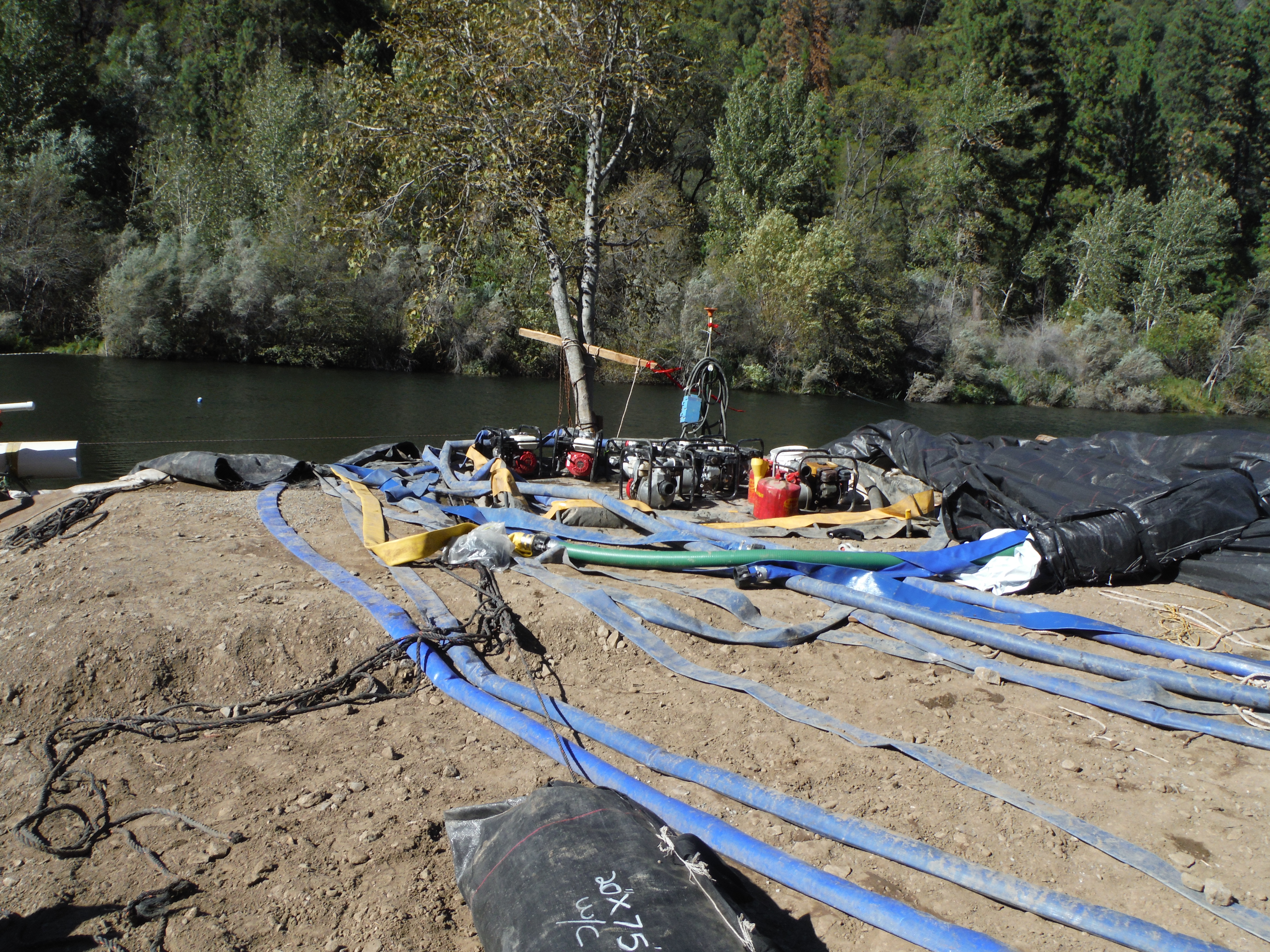
Filling a 16ft tall by 300ft long double closed end (DCE) AquaDam®, which reaches a width of 33ft at full capacity, requires a high-volume pumping configuration for rapid deployment. With a rated volume of 3,000 gal/ft, this specific unit holds approximately 900,000 gallons of water when fully inflated.
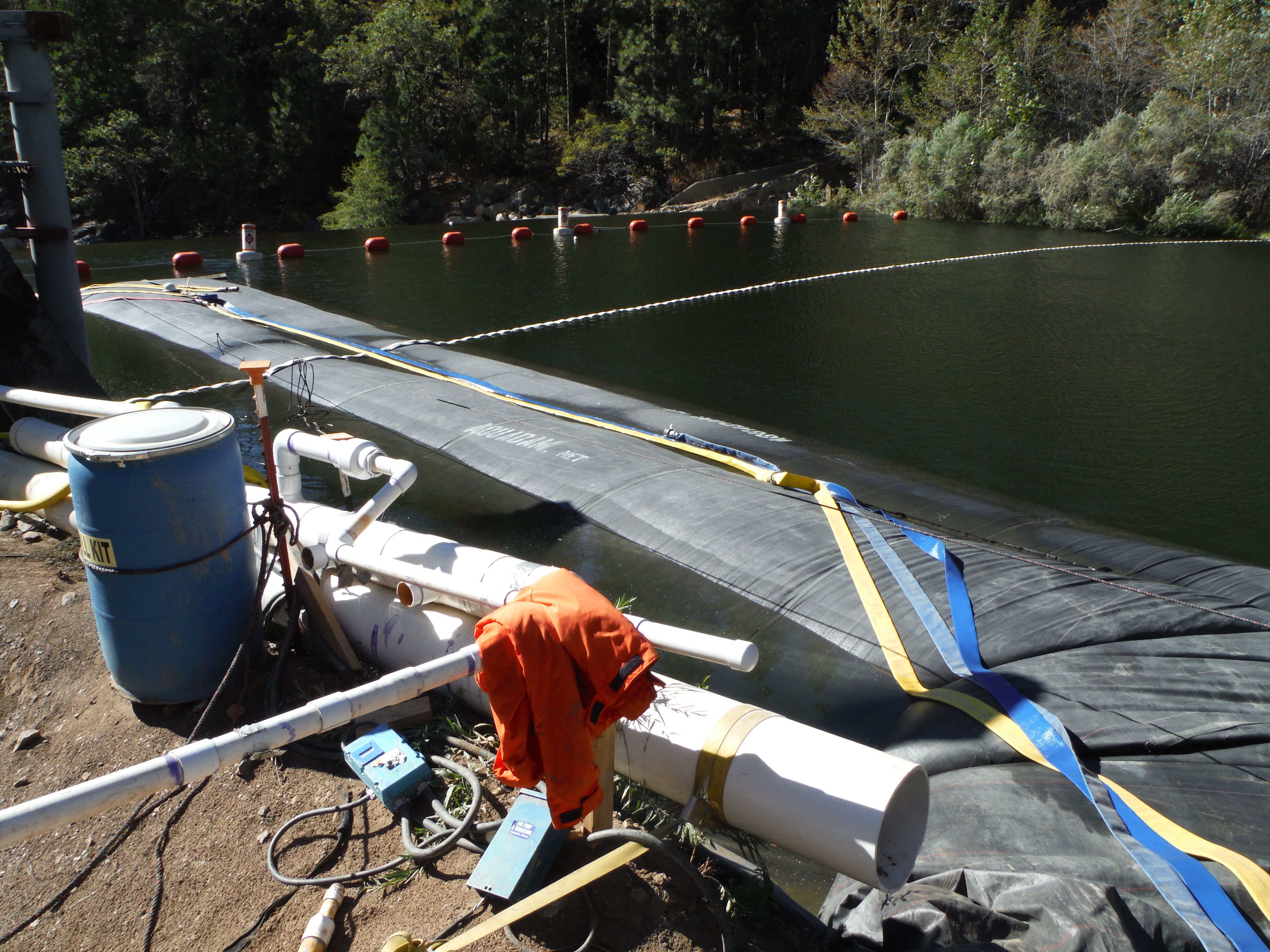
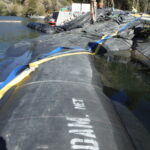
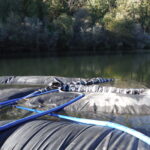
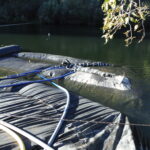
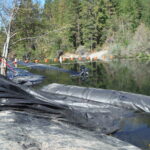
The crew first installed an 8ft tall, 17ft wide (when fully filled), 200ft long single closed end (SCE) AquaDam® within the work area. This AquaDam® was deployed in nearly 8ft of water depth.
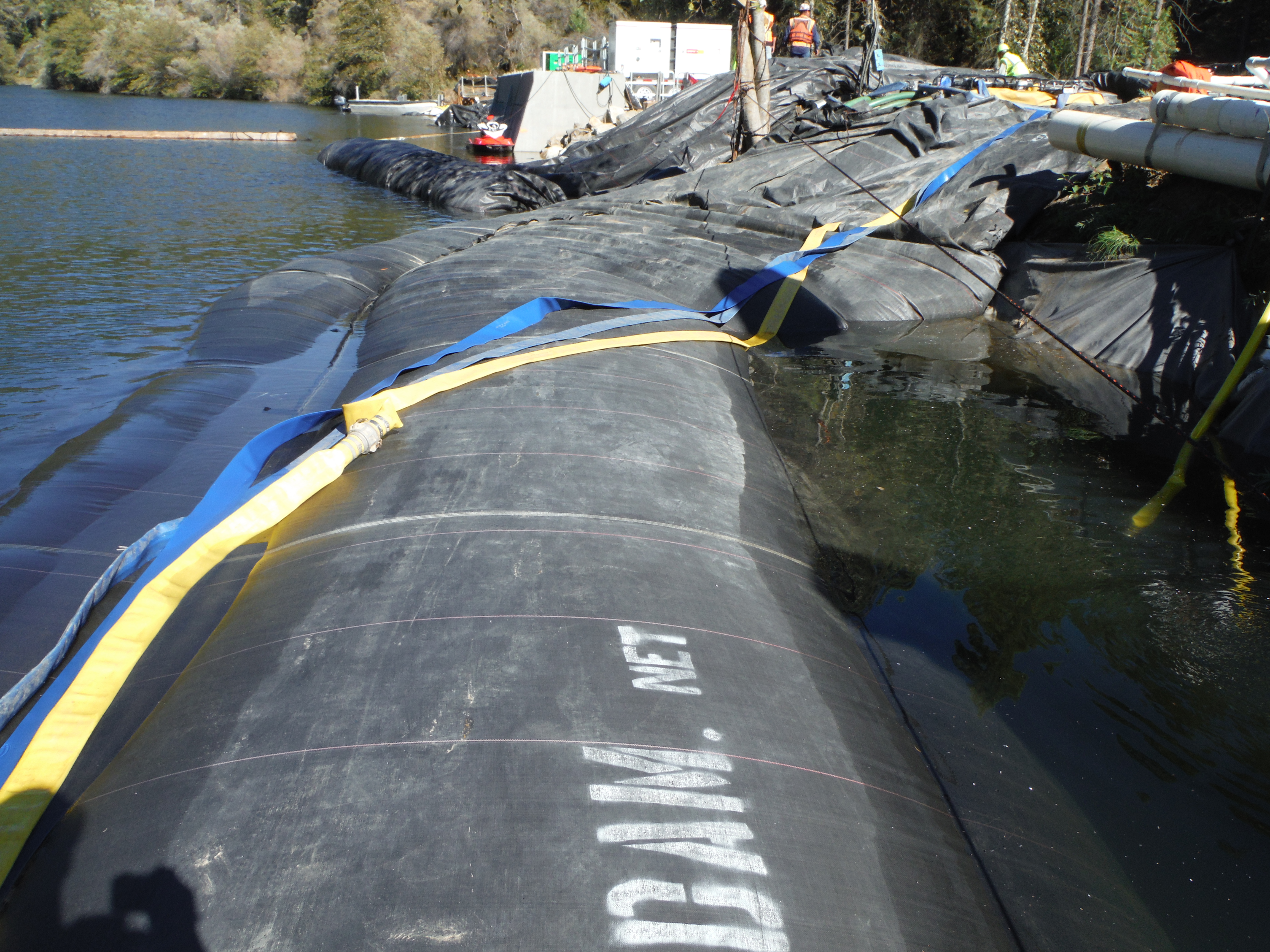
To properly install a SCE AquaDam®, a suitable starting bank is required, one that keeps the open end at an elevation higher than the dam’s full operating height. Throughout installation, the open end and fill-tubes must remain elevated above the AquaDam®’s maximum height along the entire alignment. The dam will only achieve its full height at the lowest point along its path, which in this case is the left side of the photo.
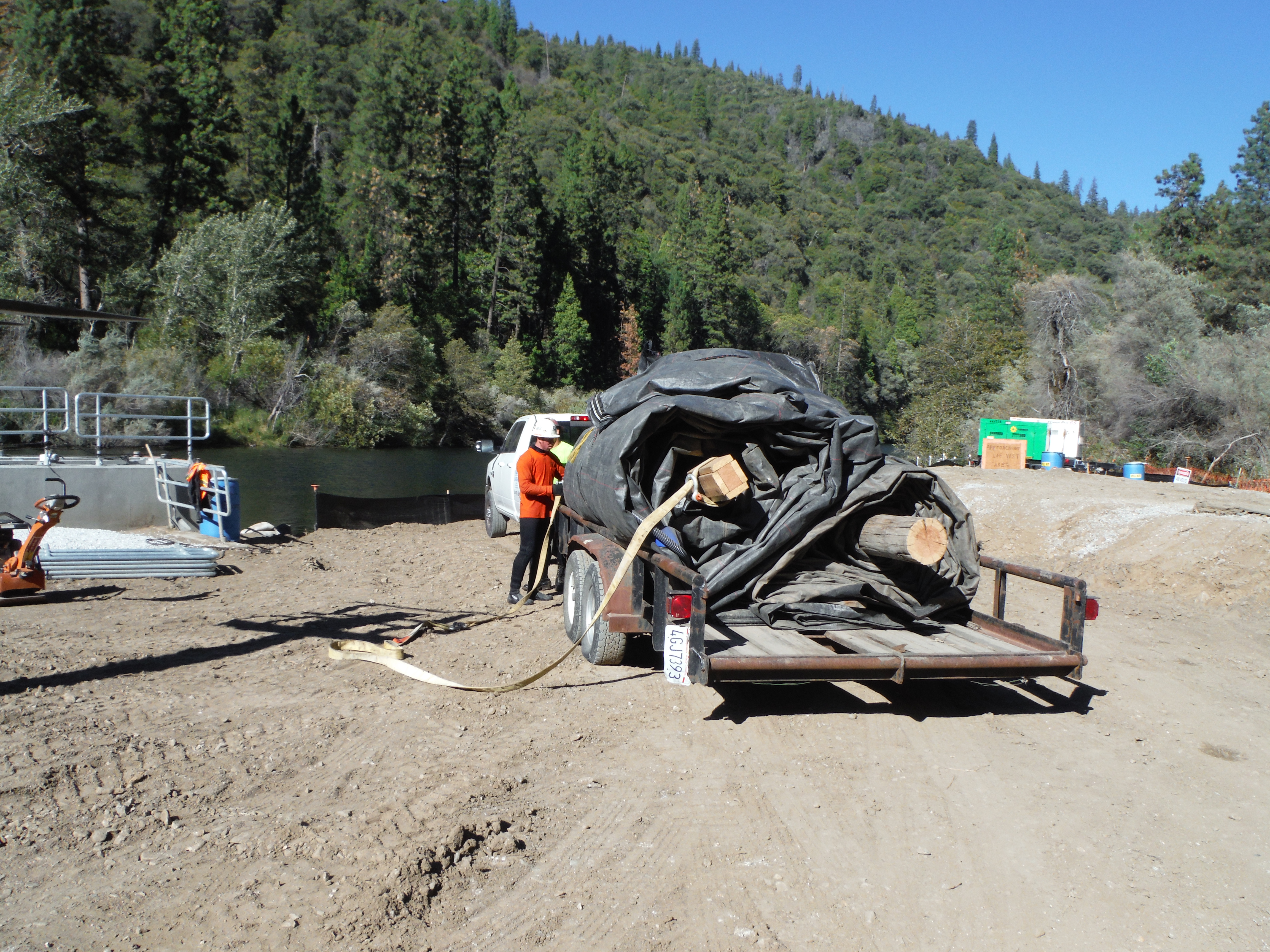
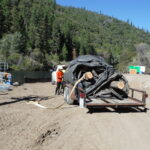
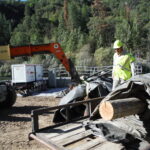
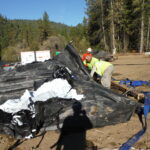
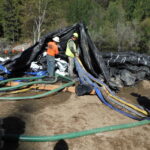
Workers prepared to install another 8ft tall AquaDam®, this time a DCE unit equipped with fill-tubes on both ends. AquaDams® are shipped rolled up like a carpet around a wooden beam, wrapped in protective covering, and fitted with lifting ropes or straps for safe handling.
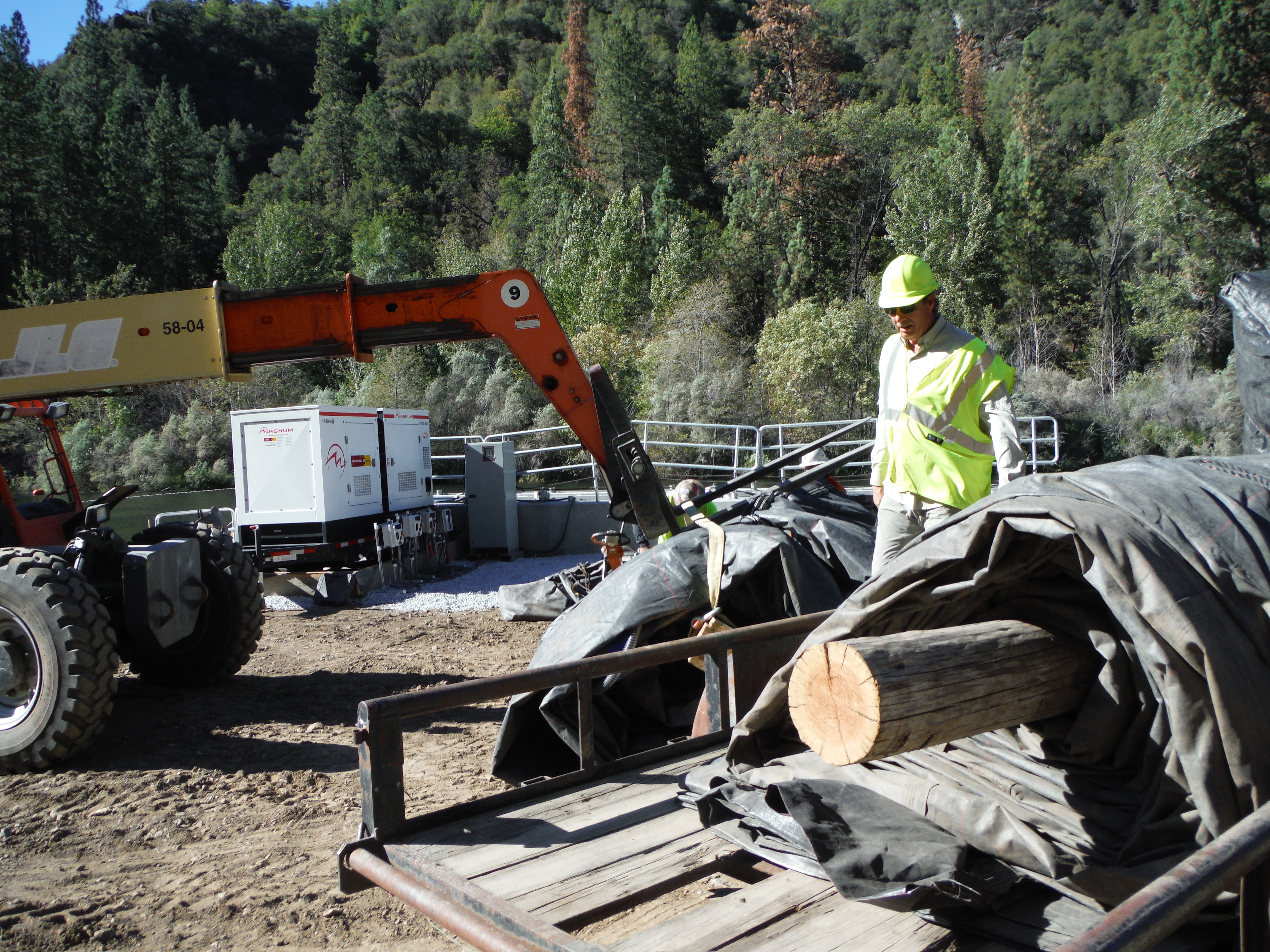
A four-wheel-drive, rubber-tire, extendable telehandler forklift is an invaluable piece of equipment on site during AquaDam® installation, providing the reach, maneuverability, and lifting capacity needed to safely handle and position large, heavy units.
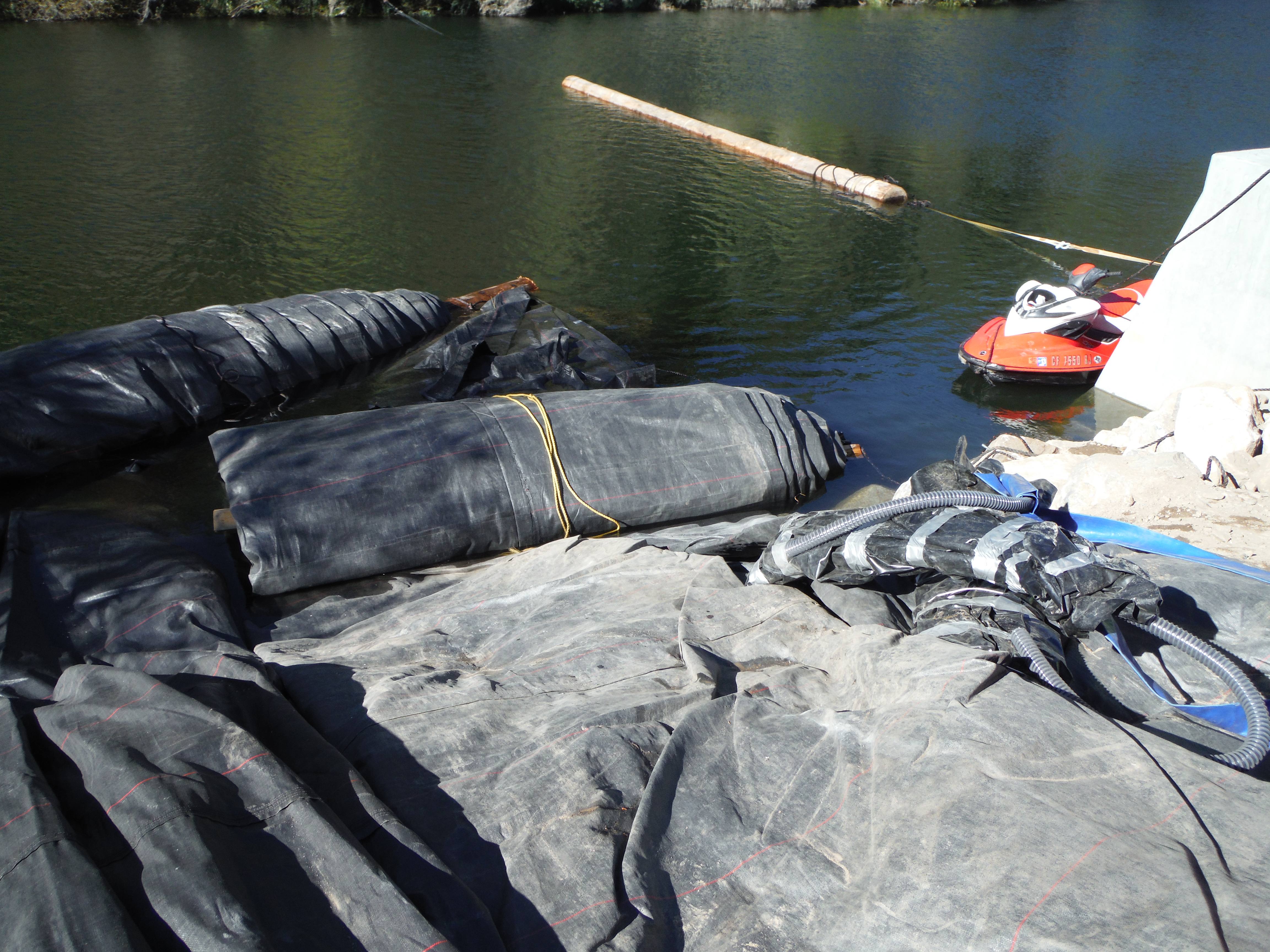
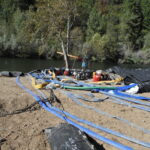
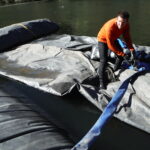
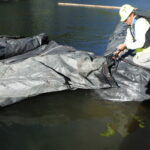
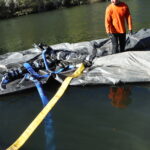
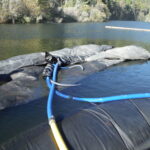
A sufficient length of the AquaDam® roll must be unrolled to access the fill-tubes. In this unit, the fill tubes (secured with duct tape) are visible on the right, with the blue layflat discharge hose and vacuum hose extending from them for connection during the filling process.
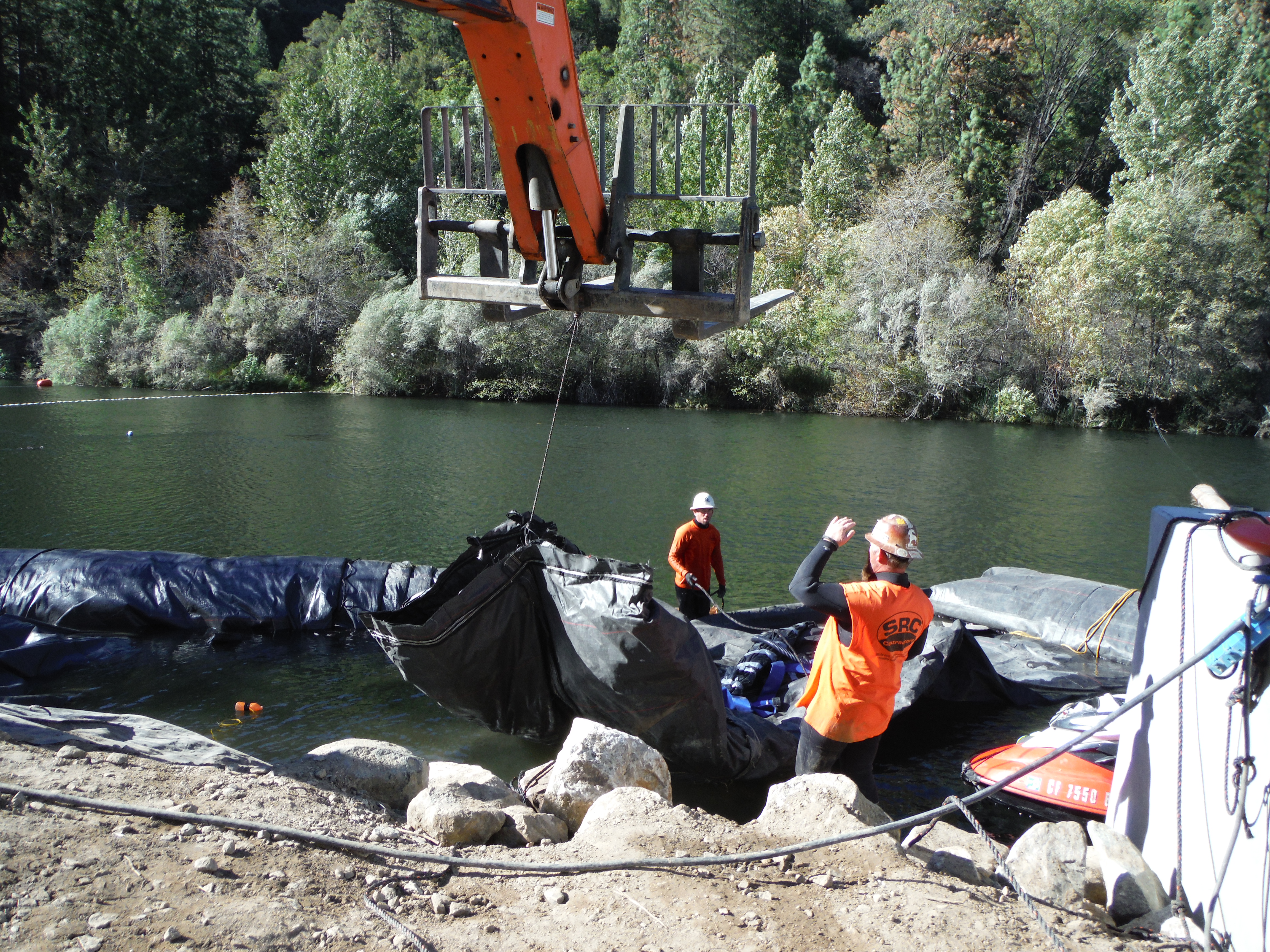
Ropes and heavy equipment are employed to accurately position the 8ft tall DCE AquaDam®, ensuring proper alignment and stability before filling.
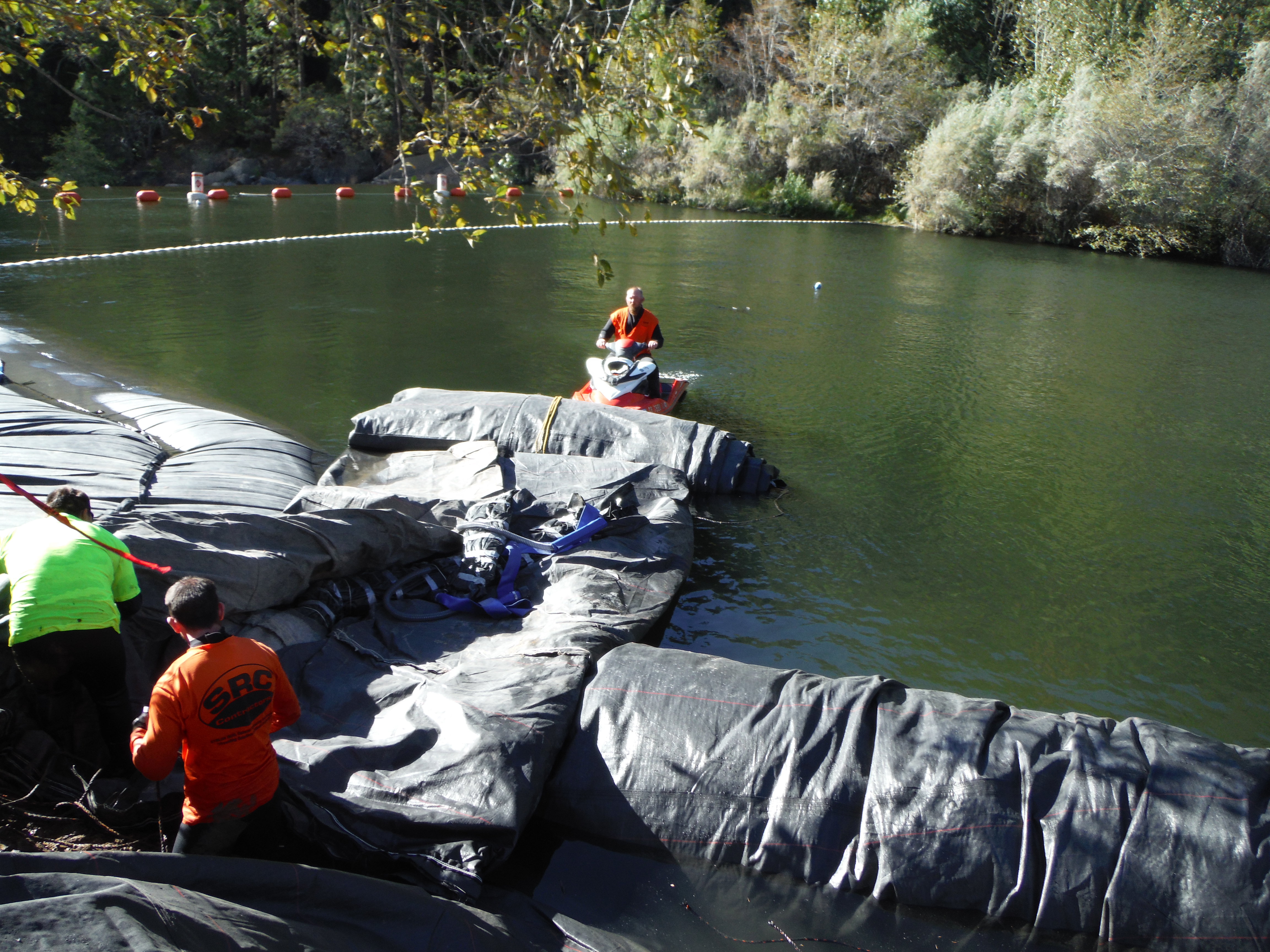
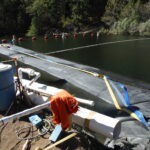
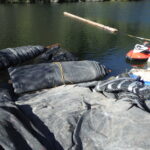
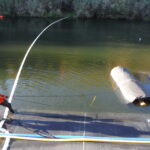
A jet ski is highly effective for positioning or maneuvering an AquaDam®. In this case, the goal is to align the unit parallel to the existing 8ft tall AquaDam®. Because AquaDams® are constructed from lightweight, flexible materials, they will float when empty in sufficiently deep water, making them easier to guide into position.
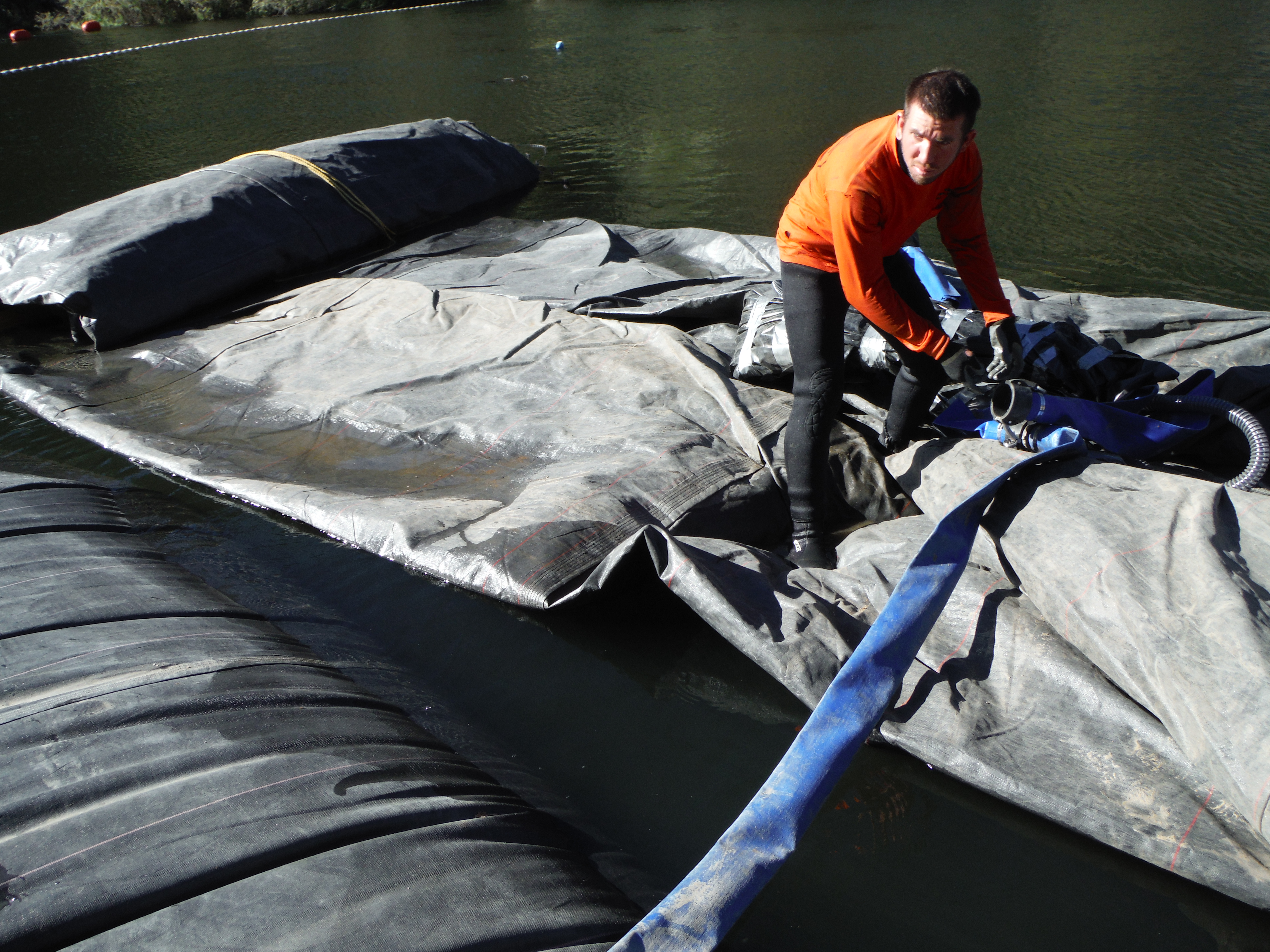
With the DCE AquaDam® now in position, the unit must be secured, after which the crew can assemble the discharge hoses and begin the filling process.
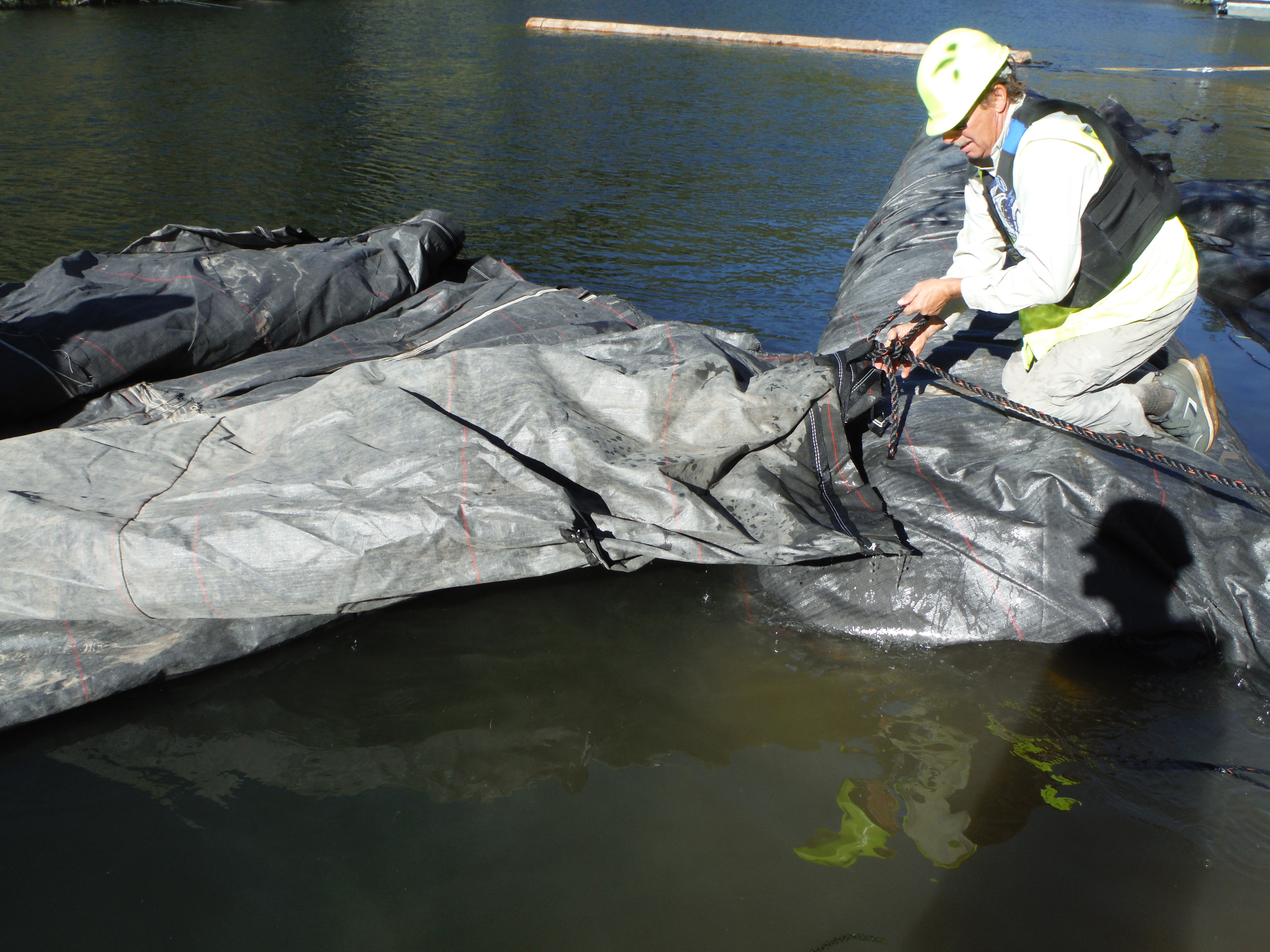
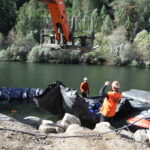
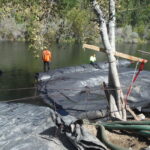
Workers secure ropes to loops pre-sewn into the outer layer of the AquaDam® to maintain its position during filling. The opposite ends of the ropes are anchored on shore, ensuring the unit remains stable as it fills.
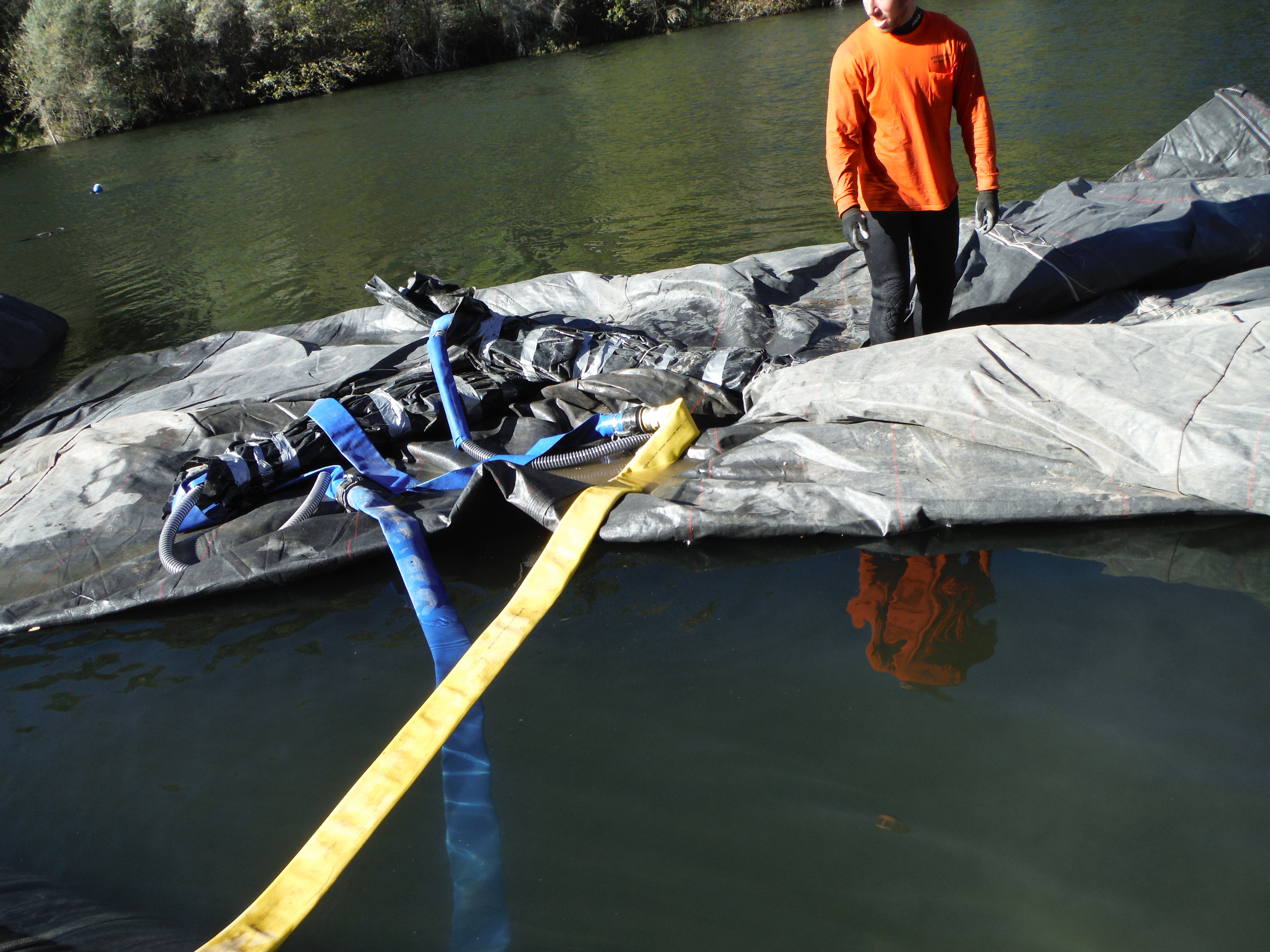
The crew has connected the discharge hoses from the pumps to the AquaDam®, and they can now begin the filling process.
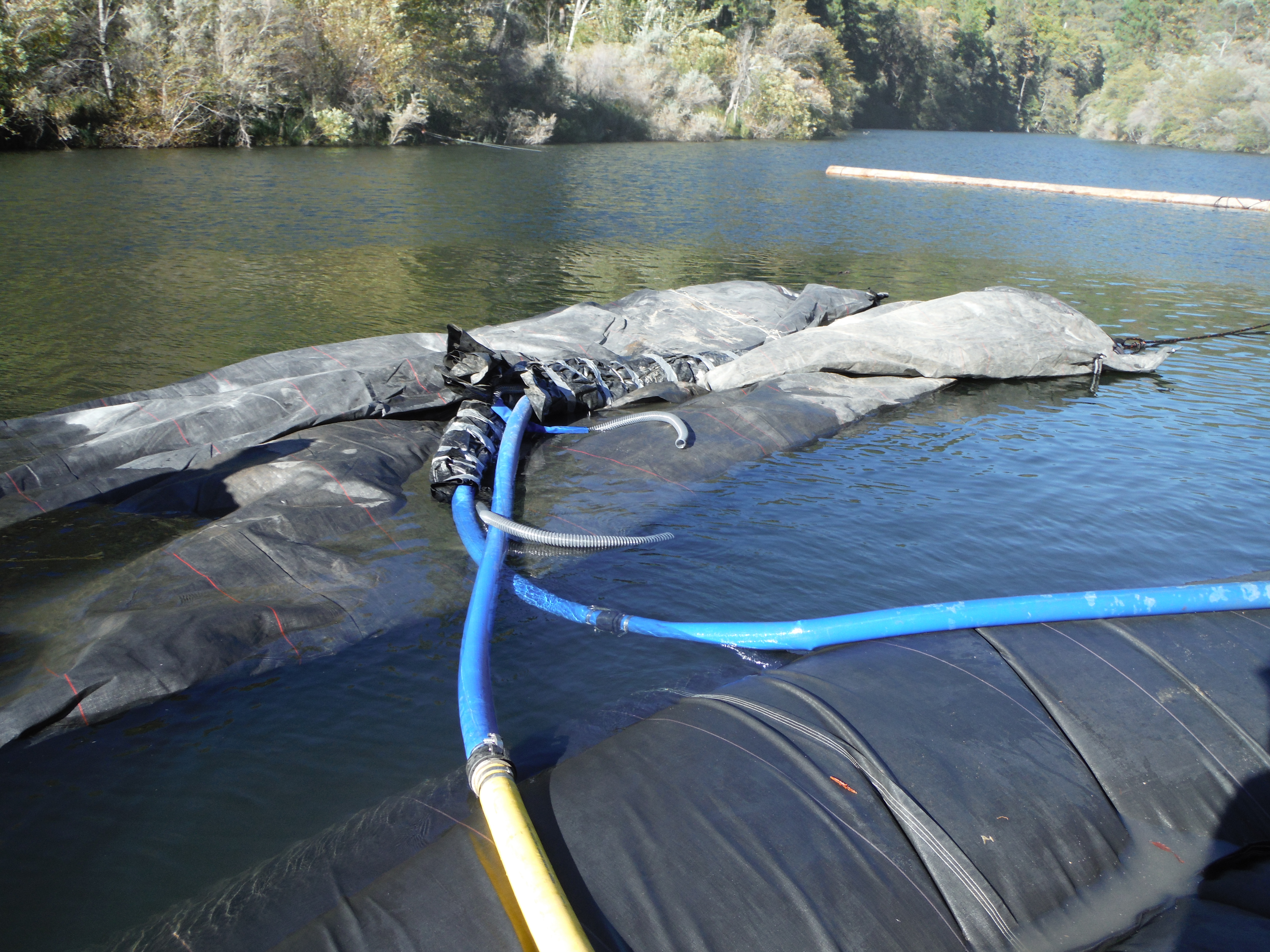
The discharge hoses are now fully pressurized, indicating that the AquaDam® is actively being filled with water.
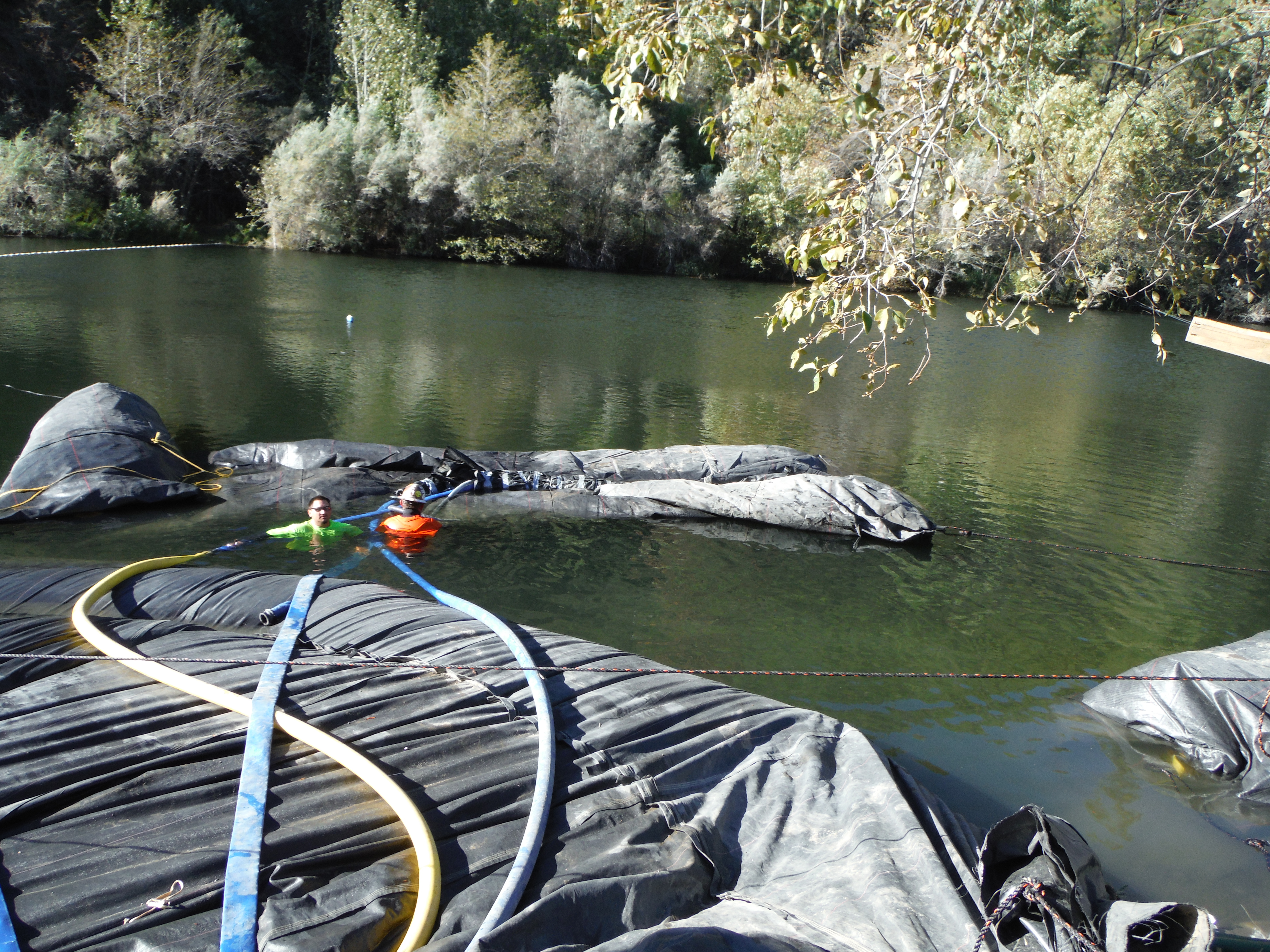
As the AquaDam® undergoes inflation, internal pressure within the fill-tubes exerts force against the coiled section, facilitating the unrolling process. To regulate deployment, ropes are tensioned between the bottom seam of the roll and the top seam of the deployed dam; this prevents unwinding and allows the unit to develop head above the exterior water level. Maintaining this differential elevation is critical, as it ensures the AquaDam® remains securely seated.
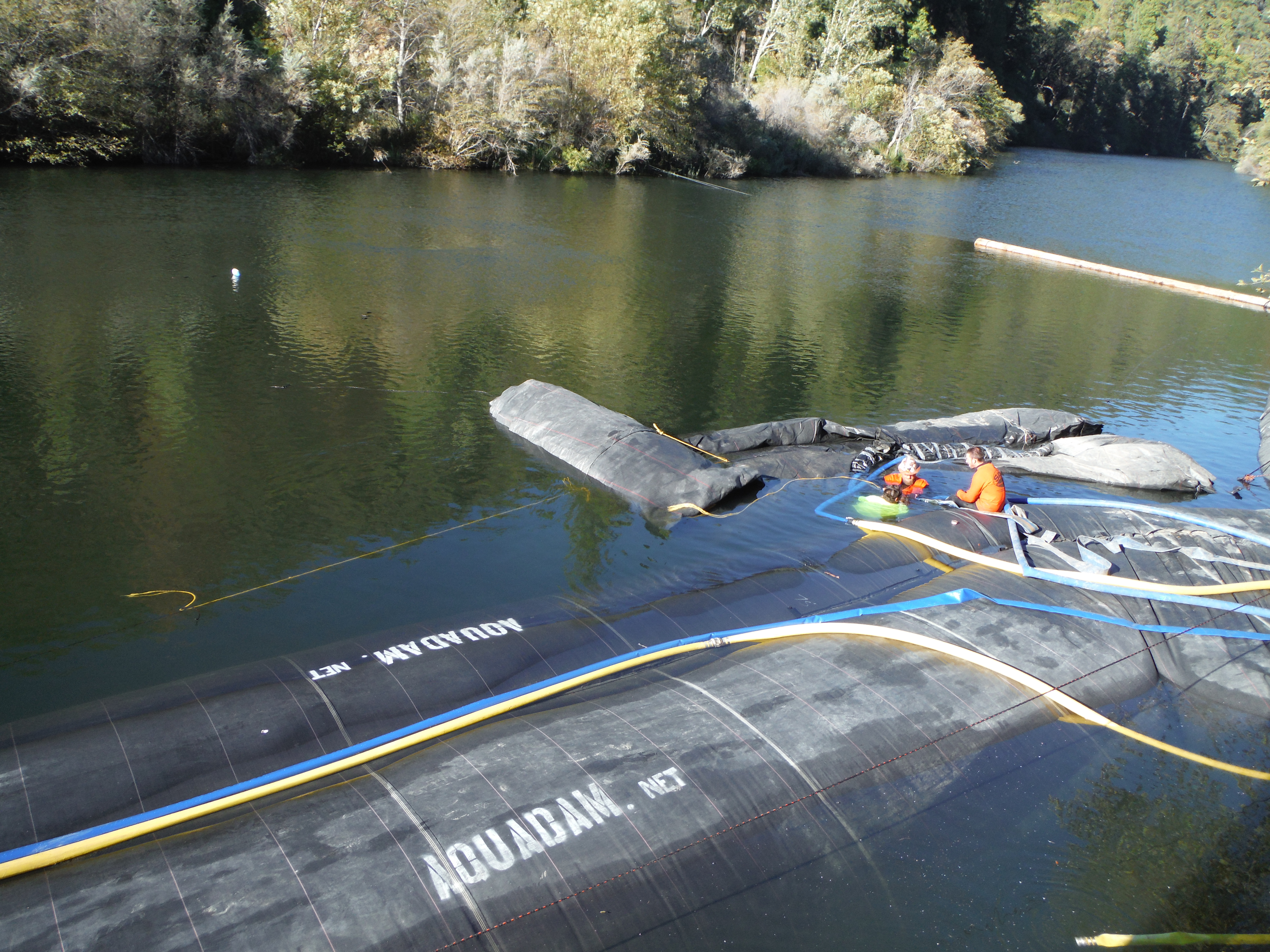
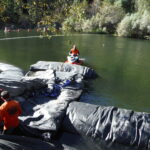
As the AquaDam® is filled, workers attach ropes to the unit and secure them back to shore to help keep it aligned along the intended path. While the 8ft tall DCE AquaDam® continued to fill, the crew redirected their attention to the 16ft tall DCE AquaDam®.
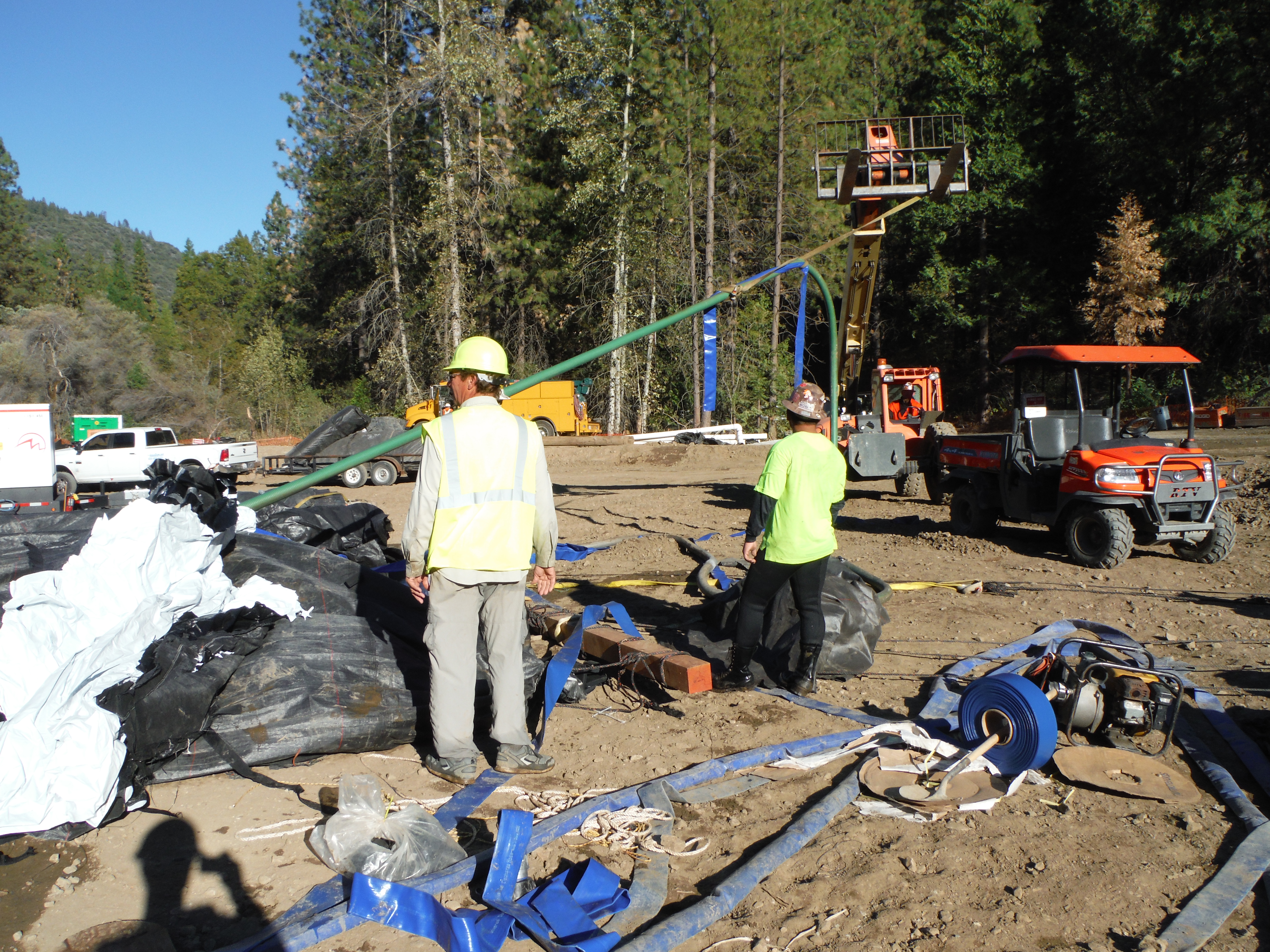
An initial attempt was made to deploy the 16ft tall DCE AquaDam® starting from the weir and unrolling upstream toward shore. However, during deployment, the closed end captured the river’s current at the weir, creating a trap. The resulting force pulled the unit over the weir, necessitating a cut at the closed end to release the pressure before the unit was retrieved. To mitigate, the crew reconfigured this end for deployment from an elevated bank, utilizing the unit as a SCE unit.
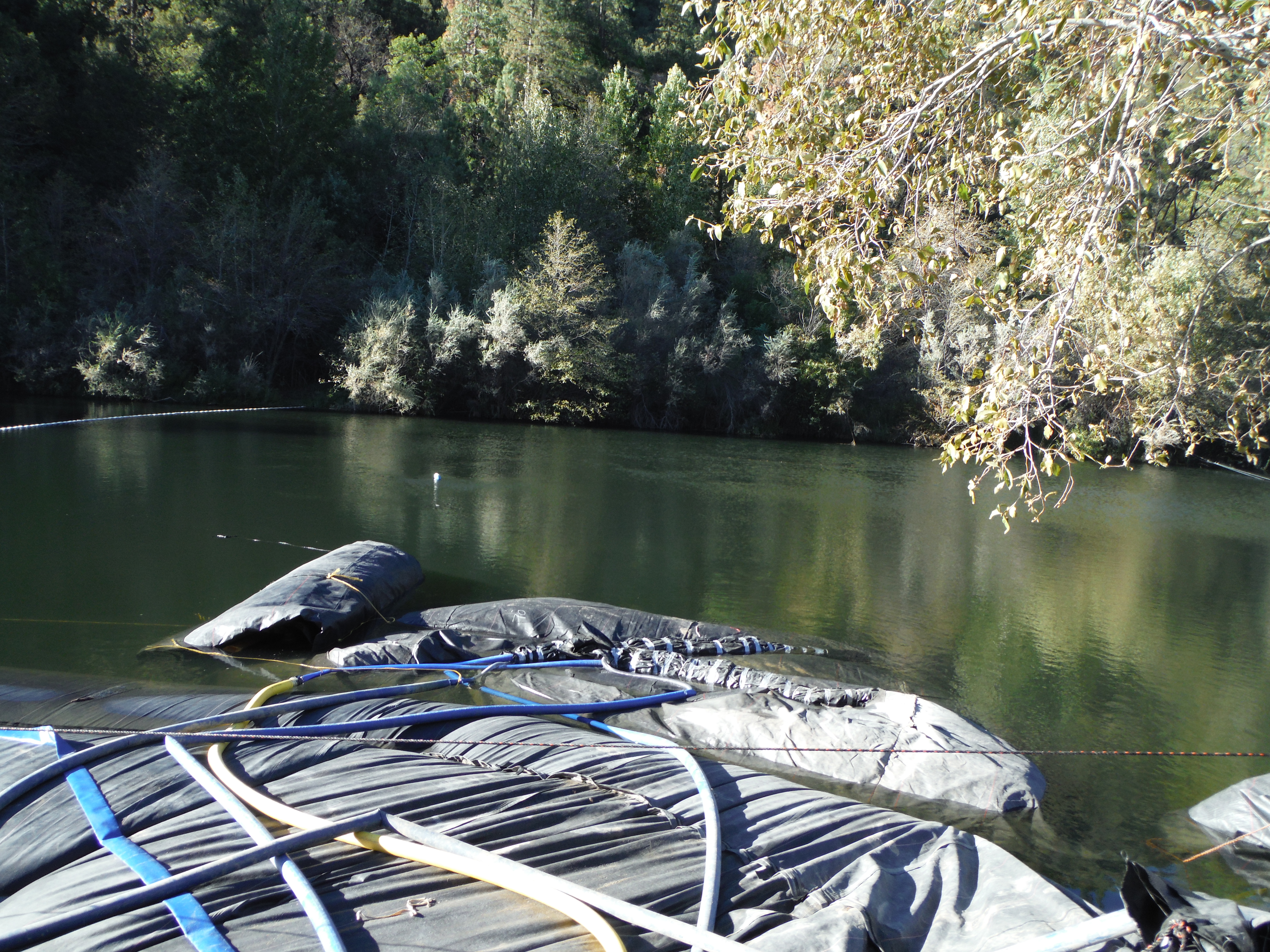
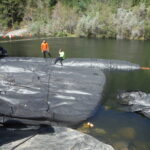
The 8ft tall DCE AquaDam® continues to fill, gradually developing hydraulic head. A buoy positioned in the center of the river marks the FERC line, which must not be crossed during installation.
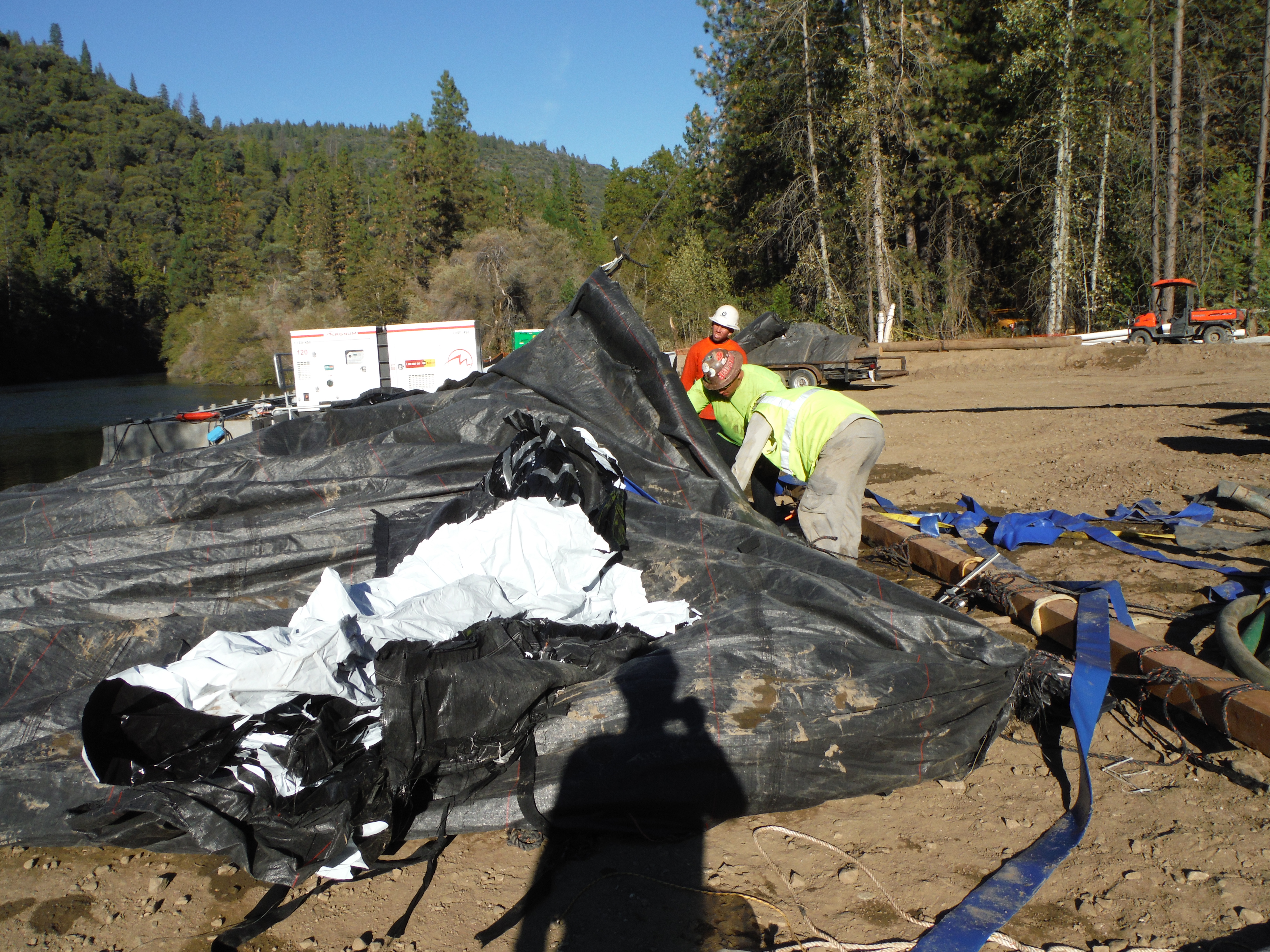
This 16ft tall AquaDam® required workers to cut through several layers of materials, to reach the innermost section where water is introduced. A 16ft tall AquaDam® typically contains seven layers of woven polypropylene surrounding the inner tubing. The inner tubing is composed of three layers of extruded polyethylene, reinforced with two layers of lightweight woven polypropylene. Additional outer layers are incorporated at the closed ends, as these areas experience higher stress.
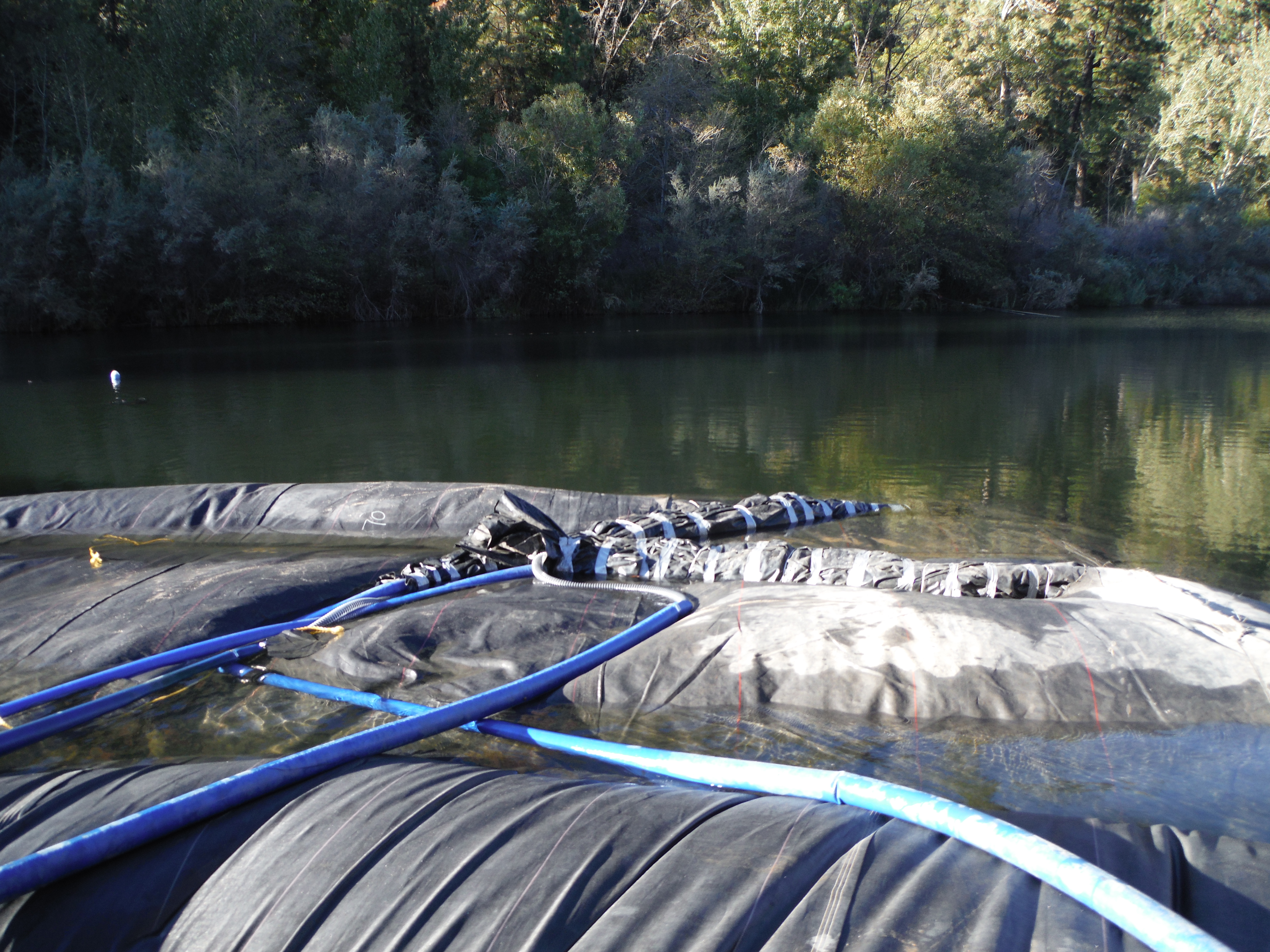
The time required to fill an AquaDam® is dictated by available pumping capacity. To expedite the process, the crew added two additional pumps to the 8f tall DCE AquaDam®. These pumps were connected to discharge water through the clear rigid vacuum hoses integrated into the fill-tubes.
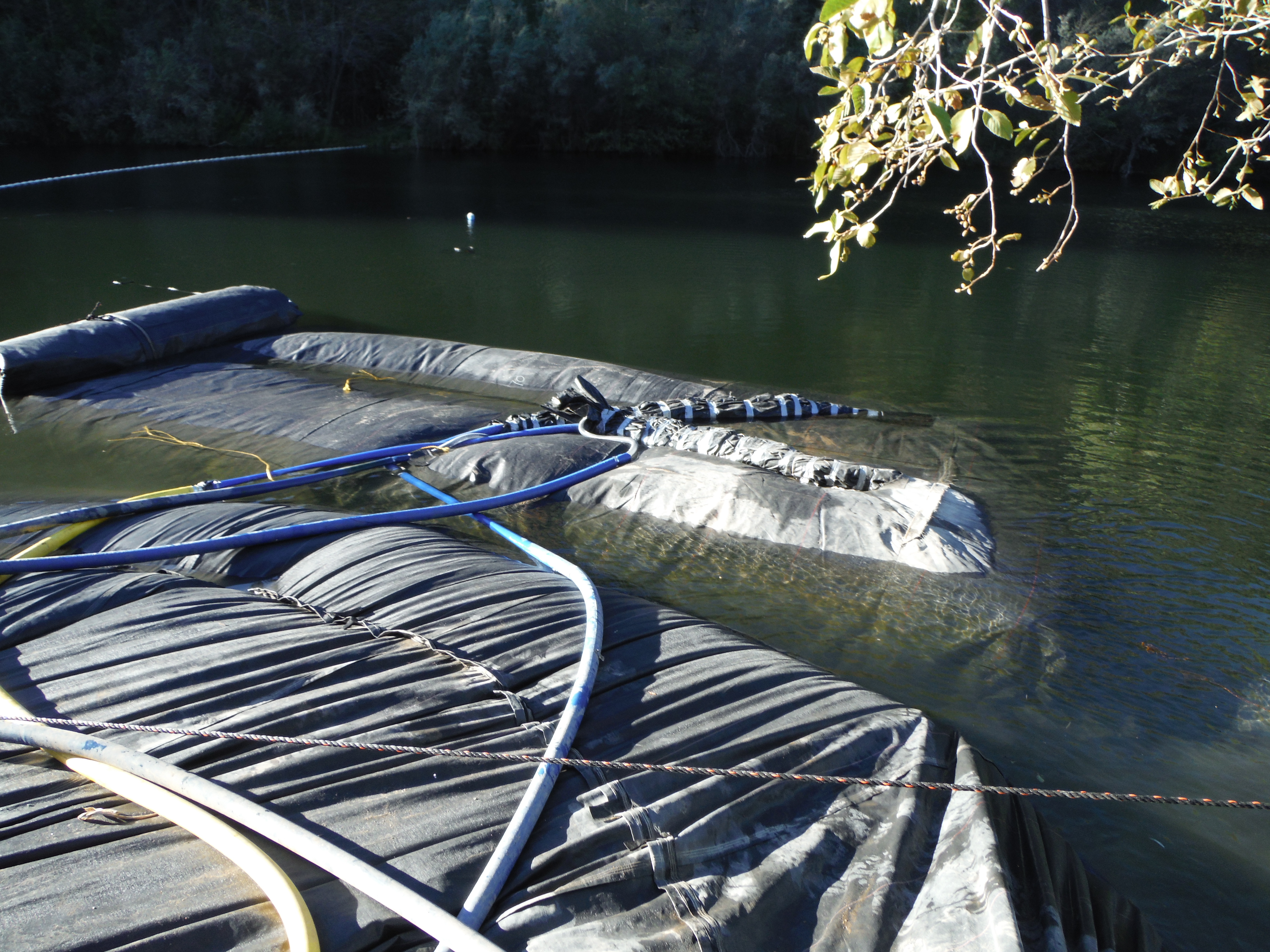
The 8ft tall 150ft long DCE AquaDam® continues to fill, and workers have now cut the rope that was previously used to restrain the roll. As water is pumped into the dam, internal pressure helps unwind the roll, while strategically placed ropes keep the roll aligned and positioned where it is needed.
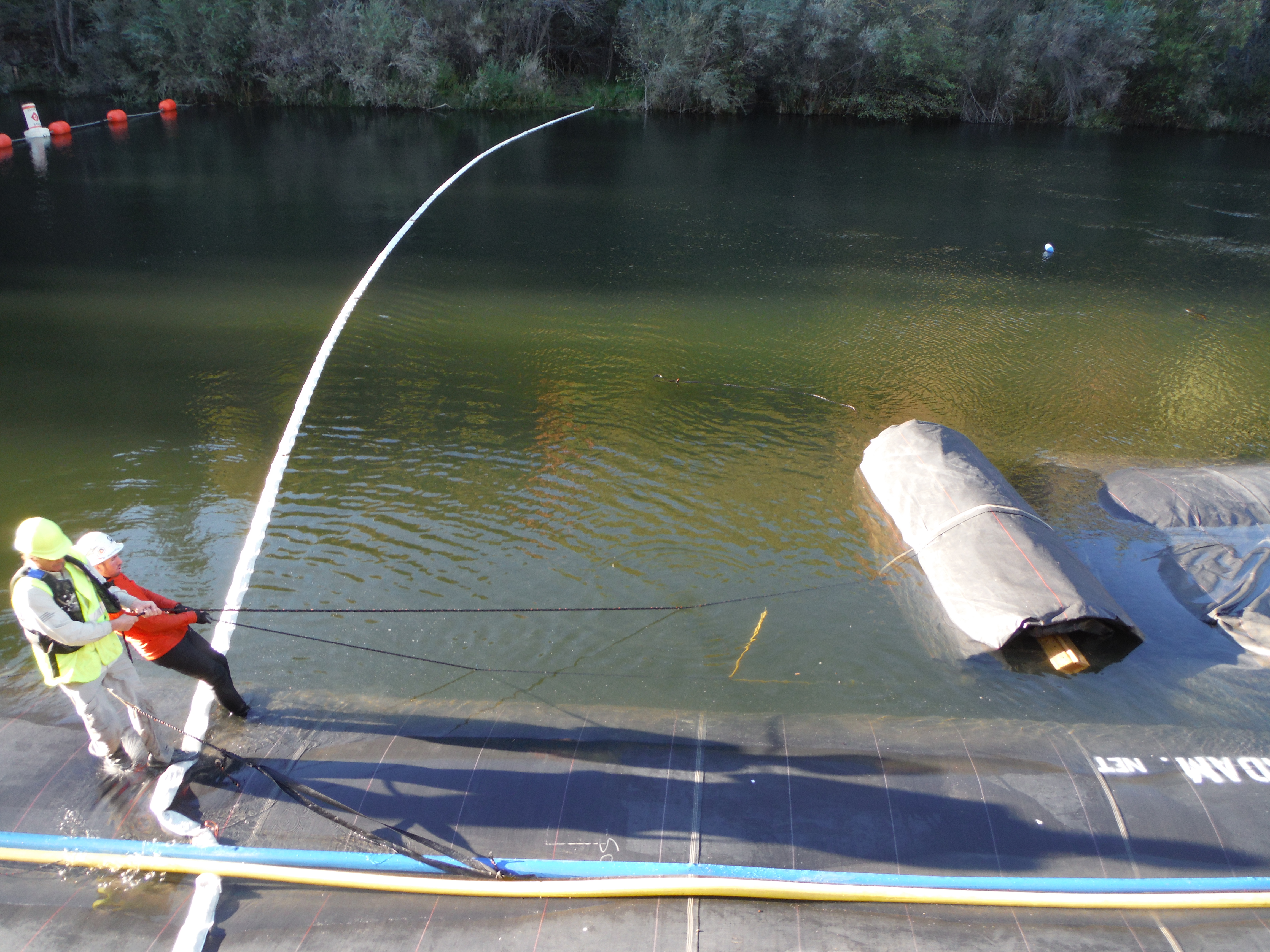
Workers attach ropes to the bottom seam of the AquaDam®, apply tension, and secure the opposite ends to shore-based anchor points. This method enables precise positioning of the material during installation, ensuring the AquaDam® follows the intended alignment.
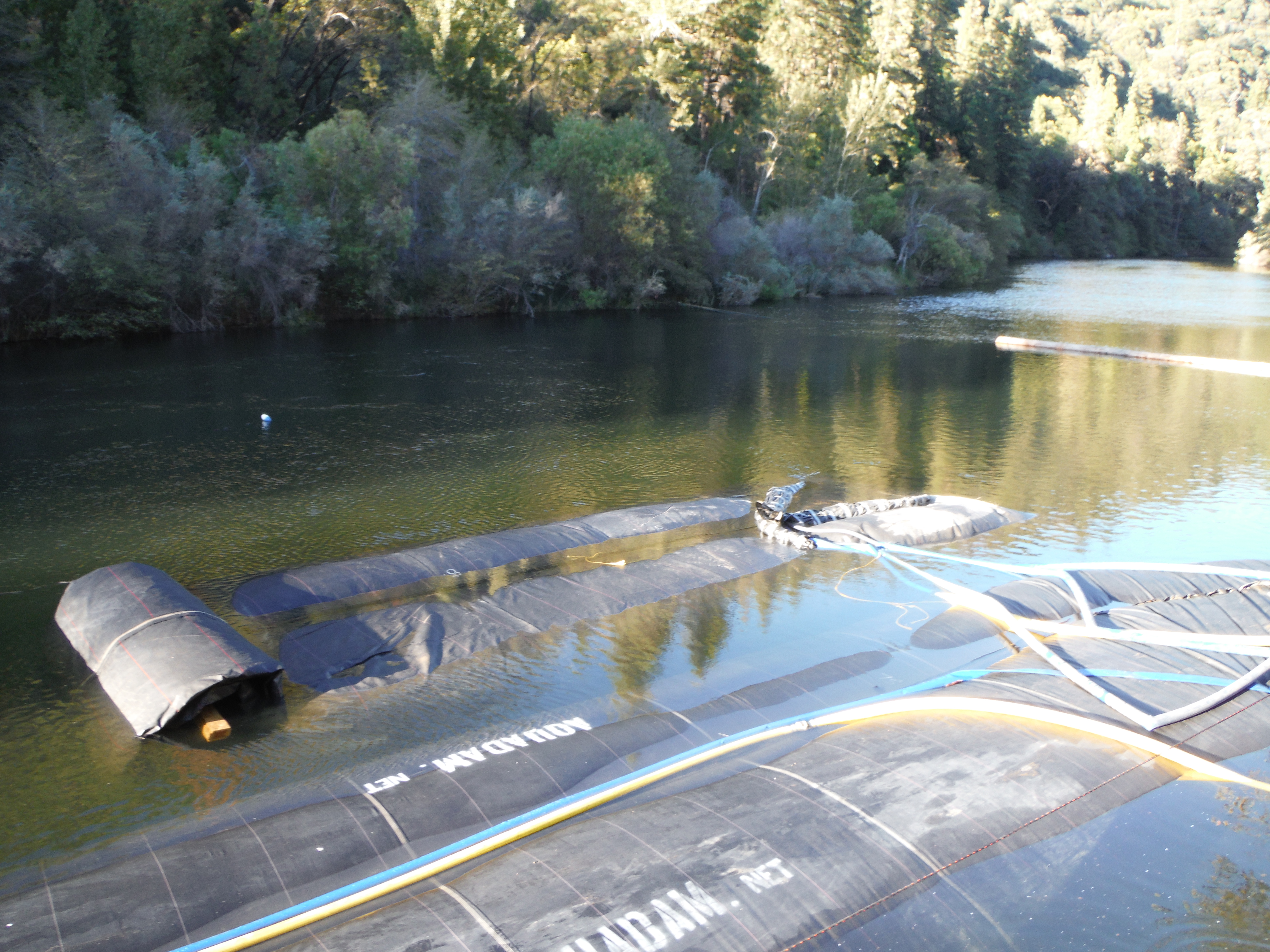
This AquaDam®, like the first 8ft tall unit, is being installed in water much deeper than its rated control depth. This 8ft tall DCE AquaDam® will serve as a support dam for the 16ft tall unit that will be installed afterward.

The 150ft long DCE AquaDam® has unrolled approximately half of its length. This photo was captured from the vantage point of the concrete intake structure undergoing repairs.

Infilling operations for the second 8ft tall DCE AquaDam® are nearing completion as the unit approaches the weir structure. The dam is currently maintaining its specified trajectory and is positioned to reach its terminal point at the weir.

Once the unrolled portion of the AquaDam® has developed a few inches of hydraulic head above the surrounding water, workers release several feet of rope to allow the dam to unroll a corresponding amount. They then re-tension the ropes and repeat this process, gradually advancing the dam until it reaches its final landing point just upstream of the weir.

The 8ft tall DCE AquaDam® has been unrolled to its required position. The crew is now securing the remaining roll back in place and allowing the unit to fill to its full rated height.

Now that the second 8ft tall AquaDam® if full, the fill-tubes need to be tied up and secured to prevent water from draining back out.

With the 8ft tall AquaDams® now in place, the crew can shift their full attention back to the 16ft tall unit. Having equipment available to help lift and separate the multiple layers of material proved extremely valuable during this stage of the installation.

To initiate the inflation phase, personnel must precisely route the discharge hoses through the multi-layered shell and into the primary internal containment liners. The hose terminals are then advanced down the embankment from which the AquaDam® is launched, ensuring the initial volume is introduced at the unit's lowest elevation.

The plan is to install the 16ft tall AquaDam® by launching it from the bank, extending it out to meet the second 8ft tall unit, and then continuing downstream toward the weir.

The second fill tube has been located, and workers are inserting the discharge hoses needed for filling. In total, eleven discharge hoses are being used; six routed into the left fill tube and five into the right.

The 16ft tall AquaDam®is now being filled with water, while workers carefully monitor the roll end and the developing hydraulic head along the unrolled section.

Workers have secured a series of ropes to both the AquaDam® and the log around which it is rolled, allowing them to steer the unit in the desired direction during deployment.

To secure the unit’s position during the filling phase, the crew established an anchoring system by spanning a heavy-timber log across the river channel. This temporary infrastructure served as a rigid anchor point, allowing for the distribution of tension across multiple rigging lines. By tethering the 16ft tall AquaDam® to this stable member, personnel were able to counteract the lateral forces of the river’s current and maintain the unit’s intended footprint as it reached its design volume.

Thousands of feet of rope were used to help hold the AquaDam® in position during filling and to assist with the controlled turn required as the unit was guided downstream.

The 16ft tall AquaDam® has unrolled past the second 8ft tall unit, and the crew is now preparing to navigate the turn downstream.

To navigate the turn, pumps filling the inner fill-tube were temporarily shut off. A worker on a jet ski applied pressure to the downstream end of the roll, while pumps continued filling the outer fill-tube. Simultaneously, the upstream end of the roll was pulled downstream to guide the AquaDam® around the curve.

The turn has been successfully completed, with ropes secured from the AquaDam® to shore to maintain alignment. Filling continues as all pumps are brought back online to restore full flow.

Once the unrolled section of the dam has developed several inches of head above the surrounding water, workers release a few feet of rope to allow the AquaDam® to unroll a corresponding amount. They then re-tension the ropes and repeat this process until the dam reaches its final landing point on the opposite bank.

As the AquaDam® fills, the internal water pressure pushes against the roll end, causing it to unroll. Ropes are used to restrain the roll, allowing the unrolled section to rise several inches above the surrounding water. This added height provides the necessary mass and stability to keep the AquaDam® securely in position.

The crew has installed a rope with pre-formed loops around the body of the 16-ft-tall AquaDam®. As the AquaDam® rolls over the rope and fills, these loops serve as anchor points for securing the roll of the unit in place.

A look back at the launch point of the 16ft tall AquaDam®. This unit was converted into an SCE AquaDam®, which requires the open end and fill-tubes to remain elevated above the dam’s full operating height along the entire installation path. An AquaDam® will only achieve its maximum height at the lowest elevation along that path, making proper elevation control essential during deployment.

The 300ft long now SCE AquaDam® has now almost completely unrolled. The total fill time for any AquaDam® is determined by the available pumping capacity. For this installation, the crew utilized eleven three-inch water pumps to fill the dam.

An aerial view of the completed installation shows the 16ft tall AquaDam® fully deployed and performing exactly as designed. Outstanding work by the entire crew.