
Emergency Water Storage Solutions for Disaster Relief
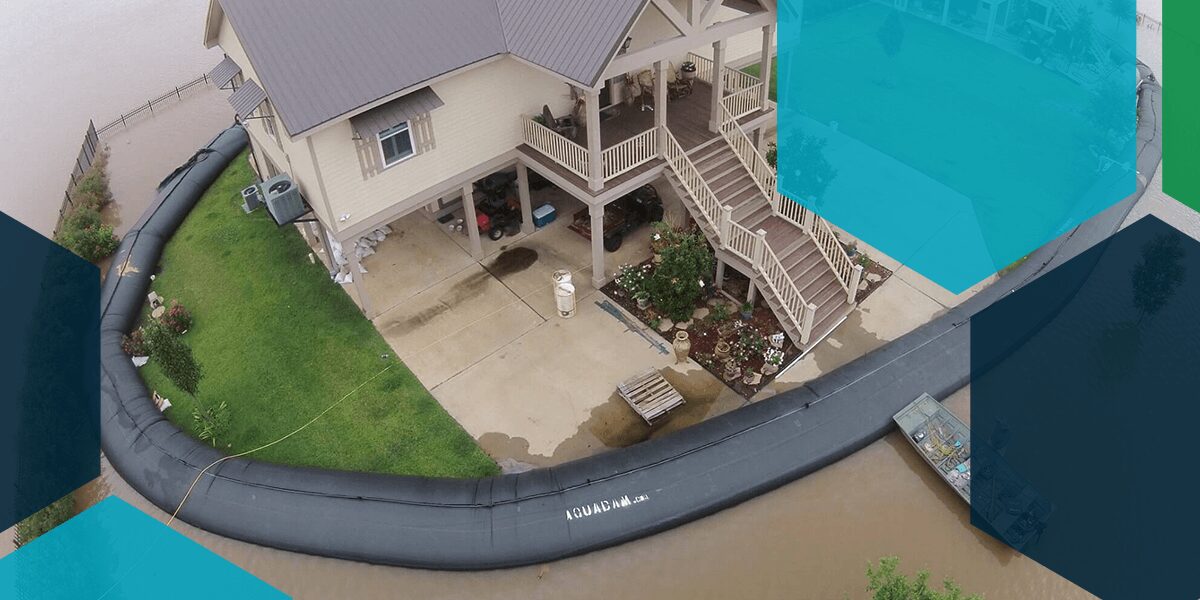
Temporary Water Barriers for Disaster Relief
In 2024 alone, 27 billion-dollar disaster events affected the United States, underscoring the need for infrastructure during events and for cleanup. Emergency managers, municipalities and humanitarian organizations use temporary barriers when they cannot construct, repair or activate permanent flood infrastructure fast enough. Temporary water barriers give crews the room to coordinate pumps, road closures, evacuations, repairs and recovery work without disruption.
Learn more about the types of temporary water barriers available, the logistical factors that shape barrier selection and how water-filled systems address operational demands.
What Are Temporary Water Barriers?
Temporary water barriers serve as deployable flood-protection systems for situations requiring immediate response or lacking permanent infrastructure. Teams use these barriers to contain or redirect floodwater around vulnerable sites during short-term flood events. Disaster response operations may deploy barriers before a forecasted flood or after water begins to rise to support urgent containment needs.
Permanent flood mitigation infrastructure remains the primary defense against recurring water threats. Temporary barriers provide planners with a flexible option for sites where permanent systems are unavailable, incomplete, under repair or unsuitable. For government and municipal planners, temporary barriers bridge the gap between long-term resilience work and the immediate operational demands of disaster relief.
Types of Temporary Water Barriers
Temporary water barriers vary. Site-specific conditions, including terrain characteristics, water volume, available deployment time, and logistical resources on hand, determine the best option.
1. Traditional Sandbag Methods
Sandbags are a common short-term flood-control method used for localized protection in accessible areas. Crews fill bags with sand, stack them by hand, and shape the wall around doors, low openings, driveways, building edges, or short stretches of exposed ground. Sites with irregular terrain, immediate access to fill material and sufficient labor to build the barrier before floodwater arrives can deploy sandbags with reasonable success.
When operations expand beyond localized doorways or building perimeters, a large sandbag wall requires significant labor for transport, staging, filling, stacking and cleanup after the flood event. During disaster relief operations, labor demands can pull crews away from other time-sensitive tasks. Sandbags may still have a role in emergency response for limited protection. However, agencies needing long, fast or repeatable flood protection find them less efficient than alternatives.
2. Modular and Rigid Panel Systems
Modular and rigid panel barriers consist of engineered systems that form a continuous flood wall. They’re often used in protection areas known in advance, such as building entrances, loading docks, warehouse doors, transit access points and short perimeter segments. Property managers and facility teams can protect mapped openings across multiple events when storage, access and deployment procedures have been planned.
When sites have unique layouts, challenges may arise. Fixed panels might be better suited to regular terrain conditions.
3. Water-Filled Barriers
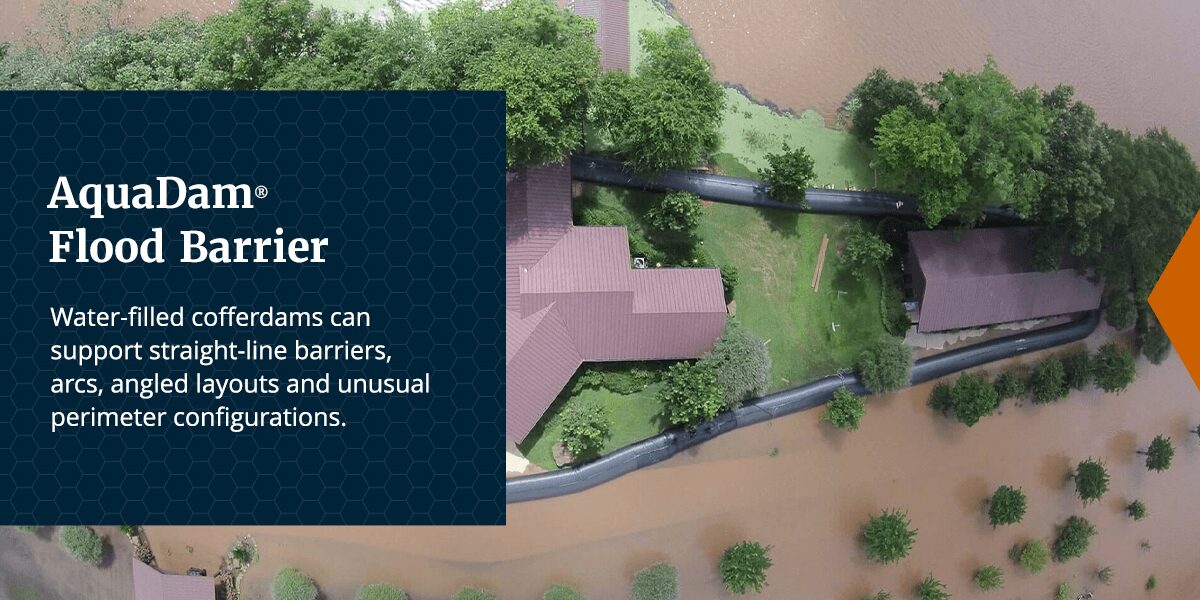
Water-filled barriers use water as ballast, making them useful when teams need large-scale flood protection without hauling heavy fill material. Teams transport these systems dry, place them along the barrier line and fill them with pumps using available water from site sources.
The AquaDam® flood barrier uses two watertight polyethylene inner tubes contained inside a woven polypropylene outer sleeve. When filled, the water mass and sleeve confinement help stabilize the temporary barrier against flood pressure.
The flood barriers range in height from 1 to 28 feet when filled, with custom lengths up to 1,200 feet available for site-specific needs. A standard 4-foot-by-100-foot water-filled cofferdam holds about 21,000 gallons when filled to capacity, providing solid protection against floodwater.
Water-filled cofferdams can support straight-line barriers, arcs, angled layouts and unusual perimeter configurations. Multiple units can also connect to create longer, continuous runs that enclose a wider area.
The dry-to-filled weight difference proves significant for transportation planning and equipment deployment scheduling. A 4-foot unit weighs 4.3 pounds per linear foot dry while holding 210 gallons per linear foot when filled.
Site conditions still matter for optimal performance throughout the deployment period. Slick mud, slopes, pond liners, oil-impregnated soils and vertical walls can reduce controllable water depth below rated capacity specifications.
Logistical Factors That Shape Temporary Barrier Selection
Choosing a temporary water barrier requires more than matching expected flood depth to barrier height specifications. Emergency teams need to evaluate how the system will move, deploy, perform and come back out under real disaster conditions.
- Deployment speed: Short response windows require systems that crews can position and activate quickly.
- Transport and logistics: Undeployed weight and storage footprint determine what vehicles, forklifts, trailers, staging areas and crew sizes teams require.
- Scalability: Barriers should match the expected protection length and allow extension when flood boundaries shift during an event.
- Terrain and site conditions: Each site needs assessment for low points, slopes, ground friction, surface slickness, curves, debris, excavation risks and seepage potential.
- Environmental considerations: Systems that avoid dirt, earth fill and sand placement can reduce site disturbance during installation and removal. Water-filled cofferdam systems use polyethylene and polypropylene materials that comply with Clean Water Act requirements.
- Budget impact: Annual U.S. flood costs range from $179.8 billion to $496 billion, including indirect costs. Barrier selection affects labor, equipment, storage, cleanup and continuity costs for agencies managing repeated flood exposure.
- Operational fit: Emergency teams should evaluate full support setup, including pumps, energy requirements, monitoring protocols, removal plans and seepage control measures.
Water-Filled Barriers in Humanitarian Aid and Disaster Relief Operations
By 2050, projected riverine flooding losses could reach $407 billion to $439 billion each year. Water-filled barriers can support humanitarian and disaster relief operations when teams need adaptable flood protection across large or irregular areas. Planners coordinate these systems with pumps, access routes, monitoring, seepage control and removal procedures to achieve optimal performance.
High-priority facilities that communities rely on during emergencies need protection to maintain essential services. Water treatment plants, hospitals, electrical substations, police stations, fire stations and emergency vehicle access routes can benefit from temporary water barrier protection. Operational value comes from using local water as fill. This approach reduces the need to transport sand, soil or other heavy ballast into constrained disaster zones.
Teams deploy water-filled cofferdams in flood control barrier applications, work area isolation for dewatering support, bridge and pier work, pipeline crossing, wetland restoration, remediation, and emergency water storage. The broader humanitarian need continues to grow as climate patterns shift and extreme weather events become more frequent.
Get a Custom Quote From AquaDam®
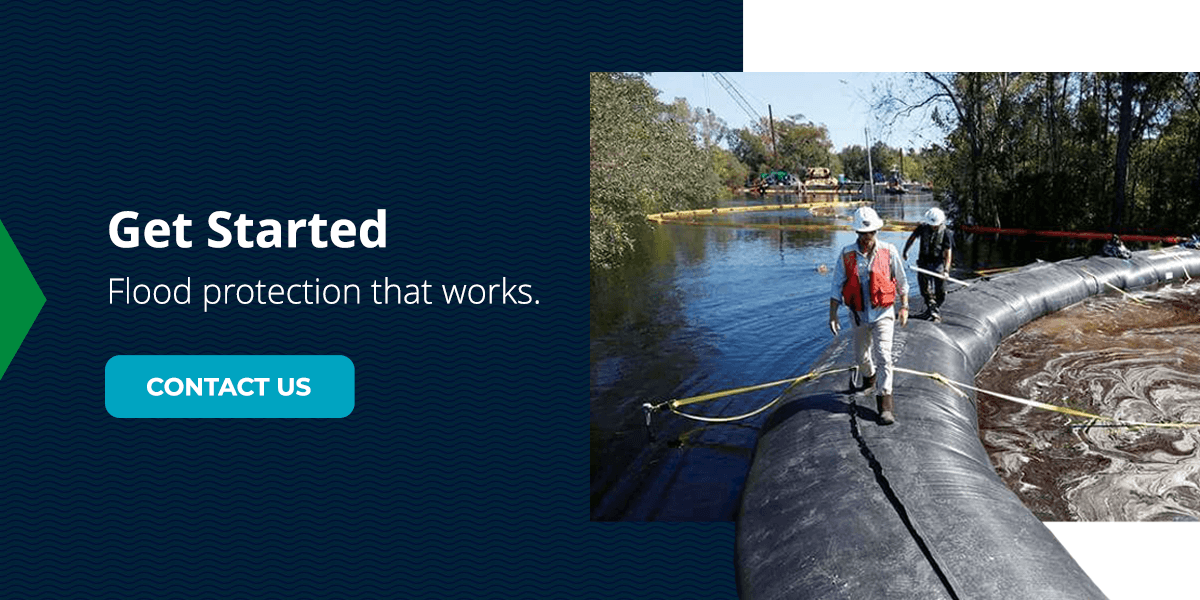
When planning temporary flood protection for your site, contact AquaDam®. We have over 30 years of experience in flood control deployments across diverse applications. Our team provides custom assessments for government agencies, municipalities and disaster response organizations.
To get started, request a quote with details about expected flood depth, protection length, terrain conditions and deployment timeline. AquaDam® representatives can help evaluate whether a water-filled barrier aligns with your disaster relief project needs.